Translate

Showing posts with label Harry Langdon. Show all posts

Sunday, September 17, 2023

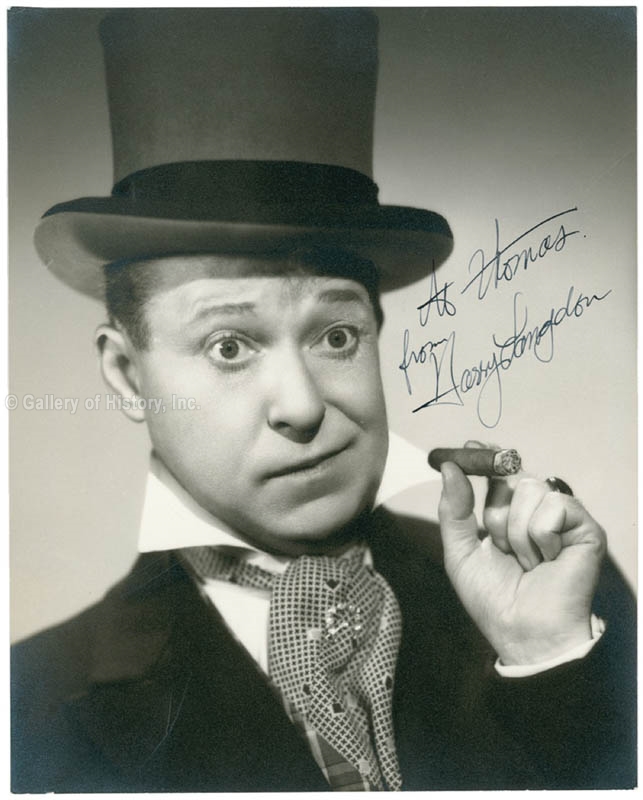
Zenobia a comedy that matched Oliver Hardy and ... Harry Langdon


By Doug Gibson

"Zenobia," a 1939 Hal Roach comedy feature is an charming film, albeit one that failed to attract audiences. It's mostly forgotten today, except for routine once-a-year airings on Turner Classic Movies. (It did, however, recently get a Blu-Ray release.) The film, from Hal Roach, pairs rotund Oliver Hardy with silent- and early-talkies era comedian Harry Langdon. This was because Hardy's iconic partner, Stan Laurel, was engaged in a contract dispute with Roach. Langdon, a close friend of both Laurel and Hardy, stepped in to film "Zenobia," with no real intention of taking Stan Laurel's place, although there was talk of a second Hardy/Langdon feature, that ended after "Zenobia" failed at the box office. Laurel eventually returned to Hal Roach, but soon after the pair left for good, moving to 20th Century Fox.

But let's talk about "Zenobia." It takes place in Carterville, Mississippi, in the post-Civil War deep South, although to be honest the residents there appear to have been spared the recent horrors of war. Hardy plays -- way out of character -- Dr. Henry Tibbett, a mild-mannered country doctor whose finances are a bit shaky because long ago he decided not to use his medical skills to get wealthy. Nevertheless, he lives in a rented mansion with Mrs. Tibbett (Billie Burke), his daughter Mary (Jean Parker) and their three servants, Zero (Stepin Fetchit) Dehlia (Hattie McDaniel) and their child Zeke (Phillip Hurlic). Daughter Mary is engaged to marry a rich young man, Jeff Carter, played by James Ellison. Jeff's snobbish mother, Mrs. Carter (Alice Brady) loathes the match is working to get back with a former girlfriend, Virginia, played by June Lang.
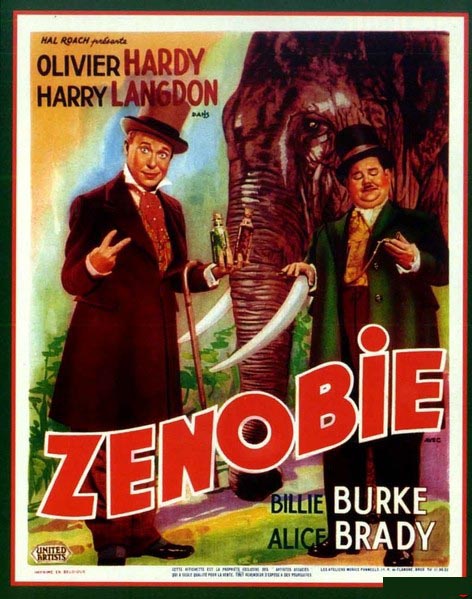


Despite this subplot, this is a gentle film, and no matter how dastardly the machination of Mrs. Carter and Virginia to dash Jeff and Mary's love, there's never any danger of the pair being split up. All ends well and even mean Mrs. Carter apologizes at the end. What's most interesting is that Burke -- who was Glinda the Good Witch in Wizard of Oz -- provides most of the comedy, and not Hardy. Burke proves herself adept at comedy, playing a scatterbrained but quick-witted, and loyal spouse to Hardy's gentle, good-natured Dr. Tibbetts.

This domestic set up is damaged by the performance of Fetch-it as the servant, Zero, who perpetuates a racist stereotype that unfortunately was a part of Hollywood in that era. "Zero" mumbles, whines, cowers and cringes throughout the film. However, the contrast between his performance and that of McDaniel is interesting. McDaniel, who won an Oscar as Mammy in Gone With the Wind, delivers a strong performance, in which she never surrenders her dignity or self-respect.

Now, time to mention the main plot and Harry Langdon's excellent contribution to "Zenobia." Langdon plays Professor McCrackle, a traveling tonic salesman who also has an elephant, named "Zenobia," who travels with him. One day, when Zenobia is feeling poorly, McCrackle begs Dr. Tibbetts to treat his elephant. Because he's such a nice man, Tibbetts treats Zenobia. His treatment works so well that the elephant becomes enamored of the doctor and won't leave him alone, following poor Hardy's doctor and occasionally picking him up. Upset that he's no longer number one with his elephant, Langdon's McCrackle is convinced, with some help by the scheming Mrs. Carter, to file an alienation of affection lawsuit against Dr. Tibbetts.

It's an amusing plot, and Langdon is excellent in scenes with Hardy. He's too good a comedian and actor to try to imitate Laurel. Instead, Langdon utilizes his understated comedic talents and blend of timidity, deadpan blank face and "Little Elf" voice to generate a fair share of laughs. His best scenes with Hardy are when Zenobia is being treated by the doctor, as well as his efforts to keep the elephant away from Hardy's Tibbetts. In the final courtroom scene, which is the strongest point of the film, Langdon is hilarious as he is constantly interrupted while trying to testify using a memorized script.

So why did the film fail? It cost $637,000 and grossed only $351,000 worldwide, according to the Langdon biography "Little Elf. " It's not Langdon's fault. One reason may be that audiences were so used to Laurel and Hardy comedies that they couldn't accept Oliver Hardy in a role that was mostly non-comedy. In fact, when he's treating Zenobia is the closest he gets to traditional "Hardy comedy" and audiences probably wanted more. Also, while Burke is very good in comedy, and witty, it must have seemed strange to audiences to see her, and not Oliver Hardy, getting the laughs. Another reason may be that there is very little drama in this comedy. As mean as Mrs. Carter, Virginia, and others are, you don't really feel that there's any tension in the film. The New York Times described Zenobia as "Gone With the Wind" as devised by Hal Roach, and there's truth to that. Carterville seems like somewhere in NeverLand, an alternative multiverse. Finally the biggest reason Zenobia failed so badly was that the public didn't want to see Hardy with anyone else other than Stan Laurel.


The New York Times also gave props to Langdon, writing (from Wikipedia) "...Harry Langdon has adopted the partnership prerequistes formerly reserved for Stan Laurel...Harry Langdon's pale and beautifuly [sic?] blank countenance...has probably already excited the professional jealousy of Mr. Laurel..."

However, Langdon never intended to attempt to supplant Laurel, a man who went out of his way to help Langdon through tough stretches in the 1930s, and is due a lot of credit for providing momentum that insured the last several years of Langdon's career was fairly busy, and prosperous. Scenes in the otherwise excellent film, "Stan and Ollie," that purport to show that Hardy was upset at Laurel for briefly leaving Hal Roach and saddling him with Langdon are fictional.

Zenobia is worth watching, and I'm glad it's frequently on TCM, as it provides both a glimpse at the versitility of Oliver Hardy and the comic talents of Harry Langdon. 

Thursday, November 4, 2021

Harry Langdon, Una Merkel a comedy pair in 'To Heir is Human'


 By Doug Gibson

"To Heir is Human" (imdb page is here) is one of comic legend Harry Langdon's more energetic late comedy shorts for Columbia, which featured other comic stars besides the Three Stooges. Released in early 1944, it stars Harry as window washer Harry Fenner, who is improbably located by telephone book deliverer Una, played by Una Merkel. It seems a sinister looking fellow asked Una to find Harry and deliver him to a forbidding domain where he'll inherit a fortune.The man, A Raven Sparrow, will give Una $1,000 to find Harry. Una drags a semi-reluctant Harry to the house, where naturally, a trio comprised of relatives and a thuggish handyman want to knock off Harry -- and Una -- and get all the inherited cash for themselves.

Although he's looking very old -- Langdon would die in December 1944 -- Harry is in excellent form the low-budget short, produced in Hugh McCollum's wing of Columbia's shorts studio. "The Elf" is in form in a few scenes, particularly during his initial refusal of Una's efforts to locate him, and more prominently in a later scene with his Vampish "kissing cousin," Velma, played by Christine McIntyre, who later gained iconic status as a Three Stooges regular. Langdon is hilarious with his mild surprise and resistance as Velma, one of the baddies, tries to provide him poisoned drinks. A Raven Sparrow, by the way, is played by Lew Kelly, who looked like a creepy cross between an aged Boris Karloff and John Carradine. The handyman is played by Bud Gribbon. His best scene is where he lowers a noose over Harry's head, who mistakes it for a tie. There are effective scenes in the house, particularly a room with an electric. Both A. Sparrow Raven and Una receive unpleasant but funny jolts as a result.

Now, I have not mentioned Una Merkel's contribution yet, because I've been saving it for her own paragraph or too. She absolutely marvelous in her role as dogged working girl Una. Merkel, who later gained a measure of consistent fame, had enjoyed a measure of stardom in the 1930s. However, by 1943 she was in a slump, and doing low-budget shorts. Nevertheless, her career slump doesn't show in this film.

Merkel has a tremendous eye for comedy, particularly slapstick, and she shows a lot of that in the film. She's literally manhandled in this film, getting thrown out of offices, having telephone directories thrown at her, being pulled by a thug who wants to kill her, fainting, and being electrocuted. Nevertheless, she never stops protecting her charge Harry, even if her main motivation for the $1,000 is to improve her appearance. Una Merkel reminds me of a slightly more intelligent version of Patsy Kelley in her shorts with Thelma Todd. Her pairing with the lower key Langdon works well. ... By the way, frequent Langdon co-star Vernon Dent has a cameo as a board chairman of a business. The scene is while Una is chasing Harry, and Langdon is funny as he intrudes into the speech.

This is an obscure film. A Langdon fan and film collector originally provided me a copy of the film, Look for it at Turner Classic Movies on the odd chance it will get on as an "extra." It is now on YouTube, however. Watch it here.

Sunday, August 23, 2020

Ella Cinders is one marvelous silent film and Colleen Moore is great in it


Review by Doug Gibson

My initial reason for watching Ella Cinders, a 1926 comedy take on Cinderella from First National Pictures, was because I knew that my favorite silent comedy screen star, Harry Langdon, had a cameo with the actor who starred as Ella Cinders, Colleen Moore.

The cameo was great, very funny; but the movie is even better. It's a comedy classic and it's understandable that the winsome -- timid-but-determined heroine with the expressive countenance and bobbed hair -- Moore became a star.

Ella Cinders was a cartoon strip for decades in the prior century. It involved a beautiful step-child bullied and virtually enslaved by her widowed step-mother and her two far less attractive (and that's being kind) step-sisters. That's a familiar tale, of course. The setting is Colorado. Besides her screen-presence beauty, Moore is a genuine comedian who inspires pathos. I'm not scholar enough to analyze her talents next to other women silent stars, but with her pluckiness I do feel comfortable comparing her to Mabel Normand in two films, Mickey and The Extra Girl. (One of the Ella Cinder comic strips is below.)


So, Ella is pretty friendless except for one champion, the delightfully named Waite Lifter, the local iceman. (He's as handsome as a prince, by the way). One day, while cleaning up at a local get-together at her home she discovers news of a photo contest. The winner gets a screen contract in Hollywood. Ella sees it as an escape. To get the $3 needed to enter she babysits. She lifts a magazine from her sister on eye movement while acting. Watching her practice is very funny and special effects -- impressive for that time -- are used to have eyeballs move from side to side in the sockets.

(In the two stills below Moore's Ella is seen with her step-mother, Ma Cinders, played by Vera Lewis, and with her "prince," Waite Lifter, played by Lloyd Hughes).


Ella gets her photos taken and wins the trip. She won not for her beauty but because her eyes crossed while a fly was on her nose. The judges loved the comic effect. Her family shuns her but Waite sees her off on the train to Hollywood.

In the train, Moore shines in a scene where Ella takes a nap while alone on the train and wakes up with the car filled with Native American men in traditional garb. They are smoking cigars and Ella, wanting to be a good sport, tries puffing on one with comic results. Her acting in the scene is on par with Lucille Ball.

Once the train arrives in Hollywood Ella is hit with another major setback. The contest was a scam; the promoters are in jail. She's urged to go home but realizing how dire her prospects are there and the derision she'd receive, Ella musters the courage and determination to go it alone in the movie world and try to get a foot in the door.

This eventually leads to a funny sequence of scenes where she attempts to get past the guard at a studio's gates and is eventually chased through the lot by him. This includes the laugh-out-loud funny scene where Ella encounters Harry Langdon and mistakes him for another studio gate-crasher. Langdon, in complete "Little Elf" mode, listens quietly, using his facial expressions to provide encouragement. To avoid detection, he advises her to contort her body so he can place a tablecloth over her so she can hide as a table. It's clear that Harry was filming "Tramp, Tramp, Tramp" at the time based on the clothes he was wearing. (1)

Ella is eventually discovered and caught. But she so impresses the director, played by Ella Cinders director Alfred E. Green, that she gets a film contract and favorable press notices in her hometown announcing she's a star.


I'll stop with the plot recap here except to mention we learn that iceman Waite Lifter is actually a national sports hero with a wealthy family. In a short scene we see him arguing with his father, who doesn't want him to marry Ella.

The film I watched clocks at 51 minutes. However, I believe the film is 74 or 75 minutes. Perhaps part of the film is lost and this is a shorter re-release print. It's still very enjoyable and with overall good pacing. The climax of the film involving a reunion of Ella and Waite seems a bit too abrupt and perhaps that is where cuts were made. I also wonder if a final resolution scene with Ella and her wicked step-family might be missing.

Colleen Moore had a long fascinating life. She retired from acting after starring in The Scarlet Letter in 1934. She was a shrewd investor, so much so that she was partner later in life with Merrill Lynch. Besides writing an autobiography, she also wrote a book on how to invest in the stock market. Born in 1899, she died in 1988.

Moore preserved her films through the Museum of Modern Art but was persuaded by Warner Brothers to give the nitrate films to the studio for preservation. Once there the films were ignored and not maintained. When Moore inquired about the films years later, she was deeply disappointed to learn that many had deteriorated beyond repair. She searched to replace the now-lost films with a little success.

As for Ella Cinders, it can be viewed at Amazon Prime and at EPIX network. However, neither of those prints have music. I recommend watching the YouTube print embedded below. Despite one odd scene of Moore "talking," it's an OK print with music that provides a fun 51 minutes for viewers. We can only hope that TCM Sunday Silents will provide a strong print, with Ben Model-quality music, in the future. If the longer version exists, that would be a treat to view as well.

1) During Ella Cinders, on a few occasions Moore brings her fingers to her mouth to express confusion or discomfort. The gesture is so much like Langdon that I can't help but wonder if he suggested to Moore that she use the gesture.

Monday, February 17, 2020

Harry Langdon as The Shrimp is an early-talkie comedy gem


Review and observations by Doug Gibson

During the years 1929 and 1930, Harry Langdon starred in eight talkie comedy shorts for Hal Roach Studios. A screen shot from the film, "The Shrimp," is above. Thanks to the "Frank Capra Fibs" legacy, Langdon's Roach shorts have been breezily derided and scorned for decades. The truth is, five of the six films I have seen (two have lost sound discs) I find better-than average examples of early-early sound comedy shorts.

And "The Shrimp," I believe Harry's penultimate film with Hal Roach, is a gem. I consider it a classic within its admittedly small genre, sound comedy shorts prior to the early 1930s. Co-stars include an already-established comedy star, Max Davidson, a budding star, Thelma Todd, and a reliable heavy of the genre, Jim Mason. I've read that Hal Roach Studios was a fun place for actors to work, and the cast seems as if it's having some energetic fun.

The plot involves Harry living in a boarding house. He's weak, timid and easily bullied. He does admire the daughter of the house (Nancy Drexel), and she seems to like him, urging him to stand up to his tormentors. Harry, in a halting sing-song, toddler-like voice, one that was used in his vaudeville appearances and some films during his entire career, says he will stand up to them.

However, dinner is a disaster as Harry is viciously and sadistically bullied by Jim (Mason), and his girlfriend (Todd). Most of the other boarders unfeelingly laugh at his plight. The cruelty does allow the talented Harry Langdon to create a lot of pathos. One particularly funny scene is Harry trying to get at least one bite as food is passed around the large table.

We soon find out that Harry works, or volunteers, as a product tester for a goofy, well-known scientist (Davidson). In a highly publicized event, courtesy of the experiment, Harry assumes the personality of a rambunctious dog. Harry quickly runs away from the event and returns to his boarding house with a whole new attitude, and aggression.

As mentioned, these are early talkies and somewhat crafted in the style of a silent film. I think the same movie, without changes, could also have been as effective as a silent with subtitles. I wonder if "The Shrimp" played older movie theaters as a silent?

I will not give away too many details of the hysterically funny climax of the film where Harry settles scores with, among others, the lazy father of the boarding house, and in a big fight, with Jim the bully. It is fast-paced and funny, and the credit goes to Langdon, who despite no changes in his body or even tone of voice, become head of the household, and "the boss," through the sheer brute will and tenacity of, say, a bulldog. In the last scene, Harry's focus is taken away by the presence of a cat, that, of course, needs to be chased. For a second, Harry eyes a telephone pole with interest, a nice subtle joke, the type of mild, off-color humor Langdon used in the late '20s, particularly in his penultimate silent feature, "The Chaser."

Readers can find "The Shrimp" on the Internet if one searches thoroughly. I'm not going to give a link for two reasons. One, I don't want it lifted, and two, Kit Parker Films (also known as Sprocket Vault Classic Films) is releasing via DVD, in April, Harry Langdon at Hal Roach: 1929-1930. It will have all eight films I have read, and that must mean the two without sound discs will be included. There will also be a Spanish version of one of the Roach shorts, which will be fascinating, and other extras. To my knowledge, this may be the first factory release of any of Langdon's talkie shorts. I am extremely excited about this release. I have already pre-ordered it.

Tuesday, October 1, 2019

A fun time was had at the Harry Langdon Film Festival


Forgive the selfie-like atmosphere of the photos on the blog. It's me preening for the camera, but I made them for social media. This past weekend, Saturday and Sunday, I was at The Niles Essanay Silent Film Museum (see photo below) for the Harry Langdon Film Festival. It was great.

I'm kneeling in front of a re-creation of the backdrop of Harry's famous vaudeville routine, Johnny's New Car, which was done by the very talented Nicole Arciola, a leader in the Harry fan societies. Nicole, Tim Greer, Frances Anchenta Becker, and Langdon  biographer Gabriella Oldham, were all at the museum for the film festival. Also, I was able to meet persons I knew only from social media, Trav SD, Bill Cassara, and Paul F. Etcheverry. Many others were there enjoying a weekend of Langdon films, from several early silents including "Smile Please" "All Night Long," and "Saturday Afternoon," two silent features, "Tramp Tramp Tramp," and "The Strong Man," a couple of his Roach sound shorts, including "The Shrimp," several of his Educational Shorts, including "The Hitch Hiker,' and a sample of later Columbia shorts.

Trav SD spoke of Langdon's vaudeville days. Oldham did an excellent recap of his life. Cassara introduced a couple of films. The Vernon Dent biographer also provided interesting details on Langdon's frequent co-star, Dent. Genre experts who introduced films included James Neibaur, Steve Massa, Langdon biographer Michael Hayde and Ben Model.


I spoke at the festival on Langdon's final film, "Pistol Packin' Nitwits." My address was not captured in video or audio. In order to preserve it, I am presenting it below. It was my final working draft. I improvised some but all the details in it were addressed.

Finally, the wonderful staff at the Niles Essanay Silent Film Museum were wonderful, and hard working, particularly Rena Kiehn and Paul Mular, both of whom seem to have an unlimited source of positive energy!

--

Here are my remarks:


“Pistol Packin’ Nitwits” is my favorite Harry Langdon comedy short. I know it’s not his best comedy short, but it has such a delirious, chaotic completeness to it. And I love the co-stars, El Brendel, Christine McIntyre, Dick Curtis as the villain, Rawhide Pete, Brad King as the hero.

And it’s bittersweet to watch. This is the last work on film Harry Langdon performed. Returning from the studio, he complained of a headache, and eventually was diagnosed with the cerebral hemorrhage that killed him. At times I have tears in my eyes watching Harry dance in the film.

“Pistol Packin’ Nitwits” still has a healthy dose of the old vaudeville. Semi-scrupulous salesmen Harry and El Brendel pitch “high-quality” soap to clean tough stains like “axle grease.” Christine McIntryre sings. And there’s the soft-shoe dance routine with Langdon and Brendel.

“Pistol Packin’ Nitwits” blends several film genres to create something unique. In literature, there’s a term called slipstream. It’s defined as non-realistic fiction that crosses conventional genre boundaries to create a new piece of art.

This applies to film as well. Gary Rhodes and Robert Guffey, in their book “Bela Lugosi and the Monogram Nine,” argue that the hastily made, deadline-intensive, low-budget film world created chaotic, unique slipstream film art. The result often created surrealism.
One description of surrealism, as described by the scholar Andre Breton, cited in the book, is to “write quickly, … fast enough that you will not remember what you’re writing …”

Many of the Columbia comedy shorts are examples of slipstream plots with surrealism. “Pistol Packin’ Nitwits” as noted, is part vaudeville. It’s also part western film. It is also an old “’penny-dreadful” film of a young lovely, the saloon keeper, being terrorized by a boorish, threatening villain. It is also part musical, with McIntyre belting out the weepy song, “Father, Dear Father.” Finally, “Pistol Packin’ Nitwits” is part superhero film with the cowboy hero smiling as bullets fired by the villain bounce off his chest.
“Pistol Packin’ Nitwits” was released in 1945. The Captain America serial was released in 1944. No coincidence there, I’m sure.

Let’s talk more about surrealism. Andre Breton also described surrealism as the real meeting the fantastic to create an alternate reality. There’s a lot of alternate reality in “Pistol Packin’ Nitwits.” In one scene a cowboy is moved to tears by the song “Father, Dear Father.” But his tears fall in bizarre fashion, more as a stream than drops. Another alternate reality: villain Dick Curtis shoots constantly into our hero’s chest. Despite the impossibility of bullets bouncing of a chest, Curtis doesn’t seem surprised that his gun doesn’t work like it should.

And I consider surreal a sequence of quick-cut scenes where the hero is on his horse, racing back to the saloon to the tune of the William Tell Overture. Each interlude is brief to the point of surreal absurdity, lasting about a second.

Finally, in closing, let me stress that director Harry Edwards, the writers, and Harry Langdon and cast didn’t huddle together and say, ‘hey, let’s blend genres to create a work of art that’s both unique and surreal!’

Just like a cult film can’t be intentionally planned and crafted as such, neither was “Pistol Packin’ Nitwits.” They made a film. They had to do it quickly. They were on very tight budgets. They had to be super creative and super innovative. The creators used all their talents, genre knowledge and experience. To get the film finished on time, they threw everything into the pot, and created something unique and wonderful.

Sunday, September 22, 2019

Three's a Crowd is Harry Langdon's costly masterpiece


Review by Doug Gibson

(This is our third original Plan9Crunch review this month of a Harry Langdon film. We are presenting these posts in recognition of the Harry Langdon Film Festival next weekend a the silent film history, Niles Film Museum in Fremont, Calif.)

There is a scene near the very end of "Three's A Crowd," 1927, that I find both heartbreaking and beautiful. Harry Langdon (No. 3) is about to lose No. 1, a beautiful young woman he has long pined for, and through a set of extraordinary events, managed to save the life of her and her newborn baby. For days she and the infant have recuperated at his meager tenement home up high above a long set of stairs. No. 3 (Harry) wishes for a fantasy. A charlatan has assured him that the young woman, who left an errant husband, will stay with Harry and both will raise the baby. But No. 2 (the prodigal husband) has returned, and No. 1 still loves him. They are leaving No. 3, and crushing a fantasy that deep down, he knows was impossible.


The minimalist comedian Harry Langdon, who ironically thrived in an era of slapstick, knockabout comedies, displays emotional chaos with his eyes, facial expressions, movements and other gestures. Once he looks down at the palm of his hand. The attentive viewer understands that is the palm the charlatan read before promising Harry romantic happiness with No. 2. Getting back to the crux of my point, just as the happy, reunited couple is leaving, with airy promises that No. 3 can visit them anytime, Harry clutches the sleeve of an overcoat draped over the woman. For just a moment, No. 3 caresses the wrist area of the sleeves. It's a fleeting moment, not noticed at all by the departing couple. But it's powerful, as it captures the deep reluctance and despair No. 3 has at losing what is literally his heart's desire.

Watch Three's a Crowd here.

I consider "Three's a Crowd" to be Harry Langdon's masterpiece silent film feature. He evolved his minimalist comic character -- who quietly through perhaps dumb luck and God's providence wins happiness and the girl in movies -- to a comic cipher who doesn't get the girl of his dreams, who doesn't find a place in the world, doesn't improve his financial means. In short, he is a survivor, who gets up every day and gets through it with a stoicism that only reveals emotion, and comedy appreciation, though gestures, both facial and body, and stubborn determination to both endure trials and create facsimiles of what he would like to have. (An example of this is found early in the film where Harry encounters a doll that looks a lot like him. Observing his boorish, bullying, and insecure, boss - Harry is an assistant to a trucker - playing with his young son, Harry imitates this by playing with his doll in the same manner.)

"Three's a Crowd" has a simple plot. No. 3, Harry, has a crush on a girl, No. 2, he has observed. Because she left her husband, No. 2, Harry is placed in a situation where he can both save her, get help for her when she gives birth, and provide her and baby space to recuperate. That leads to the climax previously discussed. There are greats bits of comedy in the film. Examples include Harry trying to get back through a trap door with a large curtain . Every time Harry tries to open the door to climb in, more curtain falls and he has to start over. More great comedy is Harry preparing a diaper for the infant. Daydreaming causes him to prepare it as a pie. There is a finale, epilogue scene that involves Harry returning to the false hypnotist's office. I won't give it away but it is laugh out loud comedy.


"Three's a Crowd" is a beautiful film to watch. The camera work of the surrounding area is perfect. As Gabriella Oldham notes in her biography, Harry Langdon: King of Silent Cinema, the star and director recreated a tenement neighborhood of three or four blocks on the studio, with 300 extras. Snow was realistically created in 90-degree California heat! The sights of tenement life, morning to evening, are captivating. I love the "snowstorm" scenes and individuals braving their way through the winds, bumping into poles, or the early-morning milk wagons, the busy late-morning afternoon streets, the lonely, steep staircase that leads to Harry's home.

I call "Three's a Crowd" a costly masterpiece. I acknowledge it has many detractors. It lost money and basically was the genesis of Harry Langdon's end as a leading features actor. Honestly, one can't blame First National Pictures for being angry with Langdon delivering a film so different from box office winners such as "Tramp, Tramp, Tramp," and "The Strong Man." And who can blame audiences, long accustomed to Langdon "Little Elfing-ing" his way to winning the girl and success, being nonplussed that the protagonist's lonely, dour life stays that way at the end?

But Langdon was evolving his character, and I think he succeeded. I urge readers to buy the KINO DVD release of "Three's a Crowd," paired with "The Chaser," and listen to David Kalat's commentary. He makes a strong case against the fabulist (when it came to Langdon) Frank Capra's criticisms that were, unfortunately, picked up by scholars like Leonard Maltin and others. "Three's a Crowd" was a financial bomb, but so was "The General," "Duck Soup" and many other films appropriately revered today. The late James Agee tabbed Langdon as one of the four comedy greats, along with Chaplin, Keaton and Lloyd. He merits that. Unfortunately, Langdon's silent features are virtually ignored by Turner Classic Movies. I've never seen a silent feature aired. Occasionally the Sennett shorts are aired, and some of his Hal Roach early talkie shorts. That indifference is a sin of omission by TCM that needs to be repented of.

"Three's a Crowd" is often described as a cloying attempt to duplicate Chaplin's "The Kid." I disagree. Langdon is not Chaplin's Tramp. He is a silent, ignored working-class cipher, with a dream that falls into his lap. Unlike Chaplin's Tramp, who is perceptive enough to understand the kid needs his mom, Harry assumes a fantasy -- with a palm reader's urging -- that can't realistically occur. Chaplin's Tramp also ends "The Kid" with a clear guarantee that he can have a relationship in the future. Despite promises from the reunited couple in "Three's a Crowd," there is no sense that No. 3 has a rewarding future with the couple and their baby. How can he? He's No. 3.

Also, despite Harry's hopes, there's an entertaining dream sequence by Harry where he is fighting the husband to protect the woman and child. Despite encouragement from the woman, Harry loses the bout. In his own dream, No. 3 loses. It underscores that "Three's a Crowd" is a sad tale of unrequited desires with comedy. It's hard to please audiences expecting slapstick to dominate.

Please watch "Three's a Crowd" above. Watch it more than once. Enjoy Harry Langdon providing great comedy in an understated, minimalist manner. And then e-mail TCM and urge them to show "Three's a Crowd" or another Langdon silent feature on a Sunday night. It's about time. As much as I love "The Kid," "The General" or "The Freshman" on TCM, they've probably played 100 times the past generation. Audiences merit a chance to sample Langdon's genius.


Sunday, September 15, 2019

Long Pants – Harry Langdon Dreams of Romance


Review by Steve D. Stones

Long Pants, also known as Johnny Newcomer, is a 1927 silent era comedy directed by Frank Capra and starring comic genius Harry Langdon. This is the second and final collaboration between Capra and Langdon. (This is Plan9Crunch's second original Harry Langdon post this month, in recognition of the upcoming Harry Langdon Film Festival later this month in Fremont, Calif.)

In the film, Langdon plays baby faced Harry Shelby, a youngster who dreams of romance by going to the Oak Grove Public Library to check out reading material, such as Desire Under The Elms, to read in the privacy of his house attic. His parents hope that he will get married one day. His mother (Gladys Brockwell) says to his father (Alan Roscoe) “Short pants are keeping him off the street.” Young Shelby eventually grows out of the short pants and his life changes when he starts to wear longer pants.

One day, a beautiful femme fatale named Bebe Blair (Alma Bennett) gets a flat tire in front of Shelby's home. The driver of the car leaves to get help with the flat tire. Shelby sees Blair in the car and immediately falls in love with her. Shelby rides his bike around Blair's car in an attempt to get her attention and impress her. Eventually the two have a long kiss in the car just before the driver returns.


After Blair and the driver leave, Shelby finds a note on the ground that mentions getting married. Shelby assumes it is addressed to him from Blair and starts to dance happily in the street. Little does he know that Blair has no interest in him even though they both kissed. Blair has a boyfriend in the mob.

Although Shelby is to be married to his childhood sweetheart - Priscilla (Priscilla Bonner) and attend a Egg Festival with her, he dreams of being with Blair. On his wedding day to Priscilla, Shelby sees a front page headline in the local newspaper that Blair has been arrested. Apparently Blair is mixed up in a big crime racket.

Watch Long Pants here.

On that same day of his wedding, Shelby asks his bride-to-be to take a walk with him out into the woods. He takes a gun with him in order to murder Priscilla. Some of the funniest sequences can be seen during this part of the film. He asks Priscilla to close her eyes and count to five hundred as he slowly backs away from her in the forest to pull out the gun and shoot her. The problem is, however, that the gun keeps sliding down his pant leg, and he eventually backs into a barbed wire fence, then steps into a bear trap. Great comic, slap stick sequences during this part of the film.

The wedding is called off as Shelby comes to Blair's aide to help her escape from jail. After the escape, Shelby carries Blair around in a large crate on his back. A basket of light bulbs placed on the crate by a street worker begin to slide off the crate one by one as Shelby and Blair think gun shots are being fired at them. Some more great comedy sequences.


I find some of the more subtle images in the opening sequences to be the most interesting in the film, such as a shot of a swinging wood gate in front of a house, wrinkled long pants blowing in the wind on a clothes line, and the closing of an attic opening as young Shelby retires to the attic to read romance novels. These images help to symbolize Shelby's fate in the film.

Although Long Pants was a box office flop and signaled a downward spiral for the career of Harry Langdon, it is still required viewing for any Langdon fan. Kino Video released a DVD of Long Pants in 2000 with two other Langdon films included on the DVD – The Strong Man and Tramp, Tramp, Tramp with Joan Crawford. Don't miss this release if you're a Langdon fan. Happy viewing.

Sunday, September 8, 2019

Aging Harry Langdon still carries comedy short Piano Mooner


Review by Doug Gibson

Harry Langdon certainly did his best comedy shorts work in the first half of the 1920, silents such as "All Night Long" "Saturday Morning," "Fiddlesticks, "Boobs in the Woods,"and many more. He made some above-average early sound shorts with Hal Roach's studio and with Educational and Paramount studios, often paired with Vernon Dent.

The last decade or so of his life, though, a healthy percentage of Langdon's screen acting credits were with Columbia making two-reel comedy shorts. Into the 1940s, the actor began to show his age. He still acted as the "Little Elf," but the face was puffy, with age lines and a paunch. I have a fondness for some of his late shorts though. He gamely carries on with low budgets, quick schedules and by-the-numbers plot. He brings magic to these films.

Watch Piano Mooner here.

That brings us to "Piano Mooner," released by Columbia in December 1942. Although it has the chaos and ultra slapsticky dosage of the Columbia shorts, it's an enjoyable 16-plus minutes, with a surprisingly concise plot. Harry plays Harry, a Little Elf-type piano tuner who really wants to marry his fiance, Mildred, (Gwen Kenyon) but only if he can do it with a proper set of dress tails. In the opening scene, Mildred is explaining this to her menacing, pistol-toting brother (Stanley Blystone) who threatens to use his pistol on Harry if the marriage does not occur by 3 p.m.

Harry put an ad in the paper, he'll tune a piano for a suit of tails. In a funny scene where he waits for a call, Harry sits on a couch and pushes springs back in the seat that keep springing out. A Mrs. Gibson (Betty Blythe) calls and says he can tune the family piano and she'll give him a suit and tails.

At the Gibson home, a wedding is being prepared for the family's daughter. Harry gets to work on the piano, which offers another funny scene of him discovering it's infested with birds. Although scenes in the short are helmed haphazardly by the director (Harry Edwards) Langdon adds to their value by underplaying the role. In the manner he made famous as a silent star, he uses his face to express befuddlement and mild emotion.

At the Gibson home is a marriage-obsessed maid (Fifi D'Orsay) who gets it in her mind that Langdon, who announced that he's getting married, plans to marry her. Employing a lot of physical comedy (which in the Columbia sense means she falls down a lot and generally takes a lot of lumps) she tries very hard to keep Harry from keeping the suit and tails that Mrs. Gibson has given him.

Orsay was a big star in the early days of talkies and obviously her wattage had diminished by late 1942. But she is a unique co-star for Langdon and does a good job in an obviously stereotypical role. (She has the kind of role that generally would have been played to less effect by say, Columbia comedy shorts regular Elsie Ames).

Interludes at the Gibson home include Harry and the bride-to-be at the Gibson place walking down the aisle as a practice role, only to be discovered by Mildred's violent brother, who goes after Harry with pistols blazing. Other comedy interludes involve Harry setting off a sprinkler, and losing his suit and tails (temporarily) to a man from the mission collecting used clothes. Another has Harry learning from a guest at the Gibson house that he's late for his own wedding. Another involves Harry taking back his suit and tails from a scheming Fifi; and finally, Harry and Mildred escaping from a chaotic wedding scene at the Gibson home on a motorcycle with sidecar.


Betty Blythe was a silent movie screen siren around 1920. She and Langdon co-starred in a very entertaining Producers Releasing Corp. 1940 film, "Misbehaving Husbands," They had excellent chemistry as a married couple dealing with the wife's suspicions that Harry was unfaithful. The film, I have read, was a successful B movie. It would have been interesting to see if Harry and Betty could have made a series of domestic comedies for PRC, but it was not to be.

Director Edwards, who among other credits, directed "Tramp, Tramp, Tramp," Langdon's first feature, was at the end of his career. Some say that alcoholism had damaged him professionally. The Three Stooges, and Vera Vague, refused to work with him on Columbia comedy shorts. Perhaps because of their long association, Edwards' best late Columbia work seems to be with Harry Langdon. Harry's signature brand of restrained comedy tempered any haphazard, sloppy directing work by Edwards. Soon after Langdon's death in late 1944, Edwards was let go by Columbia.

It's easy to find a lot of Langdon's Columbia shorts on the Internet. However, until someone produces a DVD of his Columbia shorts, what's available are ragged, choppy, faded prints. Nevertheless, watch Piano Mooner (here) and get past the tattered print and already-old slapstick and watch Harry Langdon elevate a one-week two-reeler by working well with an old movie-making partner, Harry Edwards.

Thursday, June 28, 2018

See America Thirst a pre-code comedy with Harry Langdon, Slim Summerville


Review by Doug Gibson

Back in California, and that means a trip to UCLA’s Film & Television Archive to view a mostly-lost film. Harry Langdon was the subject again (two years ago I saw and reviewed My Weakness). This time I viewed a version of Harry’s 1930 Universal “buddy-comedy” film, See America Thirst, directed by William James Craft. It’s a thrill for me to see Harry’s hard-to-find films; next on my bucket list will be a trip to the Library of Congress to see the Hal Roach shorts that lack sound discs.

Speaking of sound, one mild disappointment is that the archive’s print lacked any. And the print I viewed was clearly a sound print. There was way too much talking, and no titles that would have clued a silent version. I know that a version of See America Thirst with sound has played film festivals. I don’t know if UCLA has it or it was my fault when I requested the film. Did I choose a silent version?

The print was in very poor shape, muddy, blurry at times with a couple of vertical jumps and rough transitions. But that didn’t bother me, it adds to the excitement of  viewing a film that is virtually lost and appreciation to the archive for preserving it.

So, here’s my synopsis of the film. To help overcome the dialogue loss, I re-read my friend Ed Watz’ recap of the film in my friend Michael Hayde's biography of Langdon with Chuck Harter, The Little Elf. I also received some input from another friend, artist Nicole Arciola, who has seen the sound version of See America Thirst.

Harry and co-star Slim Summerville are hobos on a train. They get kicked off and try to regroup. They see some sheep and find ducks. Later they encounter an inquisitive police officer. Harry tries to hide the duck (similar to a scene in “Tramp Tramp Tramp”) and fails. The cop chases them and the hobos hide in the back of a truck that is carrying bootleg liquor and driven by hoodlums. A pair of other hoodlums in a vehicle chase them. Gunfire ensues. Harry and Slim are oblivious to it all. A carrying bag falls into the back. Alcohol leaks onto both hobos and they get drunk. A grenade in the back goes off and the vehicle explodes on a bridge. Harry and Slim fall into a river. Harry swims with exaggerated speed to the shore. (Reading Watz I learned that Harry said he couldn’t swim and Summerville said he’d better learn fast.) On the shore the pair discover the bag that fell into the back. It is stuffed with a fortune in cash. As Arciola noted to me, Harry says “Money money money” in much the same manner he did in the last film he made, Pistol Packin’ Nitwits.

Now rich, the former hobos are living it up, renting vehicles, dressed to the nines and going to gangster nightclubs. But the money belonged to the Spumoni crime family and the boss wants it back. After telling the hood who lost the money to take a gun and kill himself (which leads to a lame joke from the returning hood that he missed), Spumoni assigns a hired killer to take out Harry and Summerville at the nightclub.
Singing at the nightclub is a beautiful blonde, played by starlet of the era Bessie Love, who is also apparently a hoodlum’s moll. She’s very scantily dressed in the pre-code manner. After her song the killer approaches the pair. Once they are aware they are being hunted, Harry trembles. Ironically, shaking is a trait used by an even more fearsome killer who is hunting the hired killer. Believing that both Harry and Summerville want to kill them, the hoods pay a fortune to Harry and Summerville so THEY WON’T KILL THEM. (During this scene, a sign in the nightclub switches from TAXI, to AMBULANCE, and finally to HEARSE. The humorous sign switch is supposed to indicate the peril facing Harry and Summerville).


What follows is a series of sometimes amusing scenes where Harry and Summerville are catered to by the hoods, encounter “gangster-friendly” lodgings with armored protection for the beds and disguised platters of food that really contain weapons that fire when the covering is removed. One sequence that lasts way too long, losing its comedy value due to the poor pacing, is Summerville discovering cannons that move and jut outside the windows of a high-rise. Harry, sitting on a cannon, almost falls off, then Summerville almost falls off, and they eventually create a sort of bridge that allows them to hop to another floor. Also, the pair romance the beautiful blonde (Bessie Love) who tells then she’s really a law enforcement agent trying to gather evidence against the Spumonis.

As the film nears its climax, the Spumoni leader, vacationing in Florida, meets up with the real killer they think Harry is. As a result, all the gangsters in Chicago, Spumoni and the rival gang, team up to kill Harry and Summerville, who are in an armored vehicle on the street, expecting, with Bessie Love, to see and be protected from a gang fight. Instead all the gangsters head for the vehicle.

It seems all over for Harry and Summerville, except (and sans sound I’m unsure a bit of how this developed) a professor has invented knockout gas that can be sprayed on the bad guys. Harry and Slim manage to do this and leave all the gangsters unconscious on the streets. (Now Ed Watz is no fan of this film, but he acknowledges that a scene in which Harry, who has run out of the gas -- accepts that his finger used as a spray gun has knocked out the bad guys – is well done. Actually, Summerville is on a canopy spraying away. It is a funny “Little Elf” moment in the film.

Another strong moment in the film is when near the end where Harry, expecting to see his beloved Bessie Love, encounters her in the arms of her fiancé, the District Attorney. This is very similar in pathos to the same type of scene in “Three’s  A Crowd.”

The epilogue involves the pair, with ragged clothes after the battle, discovering that the carrying case full of money now has no money; they lost it. In another decent “Little Elf” moment, Harry wags his finger in disapproval at Summerville, and money comes out of his cuffs. It’s discovered that the money is sown into Harry’s clothes. The pair leave still rich. The End.

Watz is correct in his assessment that the 75-minute film is at times poorly paced. Some of the gags are very forced but the last 10 minutes, in my opinion, are very strong. Watz believes the film is one of Harry’s worst performances. I can’t agree or disagree without hearing the sound. Just watching the visual action, Harry seems more expressive than Summerville, who is more of a straight man. Bessie Love is a very attractive presence, but her part is very small for a third-billed leading lady. Reviews that are cited in “The Little Elf” range from acceptable to the reviewers quite liking the film.


The viewer gets the impression that some of the comedy scenes may be based on vaudeville skits that Harry and Summerville maybe performed in the past. At least scenes are played as if they might have been vaudeville skits. Some of the pair’s banter when romancing Bessie Love plays like that as well as scenes such as the boys getting drunk.

The sets and locations in See America Thirst are above average. There are modernistic sets, particularly in the lodgings of the gangsters. The hoods are played for laughs, as is prohibition, which existed when the film was made. Even with a muddy print, Harry looks healthy and young in the film.

Some old hands in the cast include Stanley Fields and Tom Kennedy as well as a very young Walter Brennan.

If you are in Southern California, go to UCLA and see this film, and My Weakness. It’s not at all difficult to make an appointment to see these almost-lost movies, and the staff at the university library is very helpful. 

(The See America First photos used in this review are courtesy of Richard Finegan).

Friday, June 15, 2018

My Weakness with Harry Langdon as Cupid


By Doug Gibson

I emptied a small part of my bucket list today. As readers of this blog know, I am a big fan of Harry Langdon, and I've long wanted to see one of his films that is generally off limits to the general public. "My Weakness," a 1933 Fox film that's heavily influenced by "Pygmalion" -- in which Harry plays "Dan Cupid," and serves to narrate and both fronts and bookends the film's tale -- is an almost lost film, preserved by UCLA's film archive, and sometimes shown at festivals, but not Turner Classic Movies. (I know, I've kept a close eye hoping it'd show on the schedule.)

With the Gibson family in Southern California this week, I contacted UCLA several weeks ago, asking for a chance to see "My Weakness." I was surprised at how easy it was, after a couple of emails, I had reserved a two week window to see the film.


Today, I went to the Powell library to the film section, presented my "credentials," and I was ushered into a small viewing room with a DVD remote. The film came on the screen on its own, I was able to start, stop, rewind, and so on. My smart phone was not allowed, so no still shots in this review are from me.

Because the film is not available for easy-access viewing, this review will contain a synopsis of sorts, along with my observations, most at the end. First, "My Weakness" is a sexy, pre-code comedy/romance musical, with several scenes that include attractive women in their underclothes (see still below this paragraph), scenes that would be forbidden in just a couple of years. It's one of the Berkeley-like romps where all the characters are generally harmless and despite the travails, one never doubts that things will work out in the end. Witty repartee mingles with romantic triangles and intrigue, and rhymes and songs join in.


Harry Langdon starts the film off as Cupid, walking out from the clouds, playing his harp and speaking in rhymes. With the familiar white makeup, he looks as young as the Little Elf of the Sennett years. He introduces a tale of love that required a lot of work.


We enter into the domain of Ellery Gregory (Henry Travers), owner of a bra company. Ellery, who proves later to be a bit of a randy old man, is telling his nephew, Ronnie Gregory (Lew Ayres, a star of "All Quiet On The Western Front") that he's cut him off money-wise, and by the way, he's engaged to Ronnie's old squeeze, Jane Holman (Irene Bentley). Ronnie is a playboy, you see, always with what Ellery calls a "harem."

With both is a spunky but rather bedraggled maid named Looloo Blake (Lilian Harvey) who tells them almost fiercely that she wants "to get up in the world" and marry a rich man. Ellery, amused by the maid, tells Ronnie he'll put him back on the payroll if he can turn Looloo into a high-society woman and get her married to a rich man.


Initially, Ronnie isn't too impressed with Looloo, who complains about her taxi-driving boyfriend Maxie, (Sid Silvers). In fact, Ronnie brushes her off after a quick observation of her trying to attract men.

We go back to Harry Langdon as Cupid, who observing the affairs, says "I kind of feel something for this gal." Harry is also eating what looks like a candy bar.

Meanwhile, Ronnie goes to his frumpy, humorless cousin Gerald (Charles Butterworth) to plead his case and gets a firm "No. No. No." from Gerald whose passions are stamp collecting and carrots. Langdon's Cupid has already informed us that he's given up on Gerald. Later, while Ronnie is relating his money problems with a group of beautiful women friends (one is played by Irene Ware, of "The Raven), he gets the idea to take up Ellery's challenge. He'll try to match Looloo with his drab cousin Gerald. They think it will be a great joke on Ellery.

Looloo is walking with Maxie, in the rain, with Maxie only keeping himself dry under the umbrella. Looloo tells him she wants the cream of life. He replies, "Don't forget, the cream of today is the cheese of tomorrow."

Looloo goes back to Ronnie and pleads her case for him to help her. "OK, you win, come here," Ronnie says. He takes her to his girlfriends, who cluck over how dowdy she looks but agree that there are possibilities for her. What's interesting about this scene as it unfolds is that Ronnie and the girls talk in rhyme. Oftentimes in the film characters, including Langdon, speak in couplets. It reminds of the Langdon film "Hallelujah I'm a Bum."

At this point the film delves into pre-code as Looloo undresses for the girls while Ronnie discreetly has his back turned.

Two months have passed, and Looloo has been transformed into a stunning beauty. She's also carrying a torch for Ronnie. She often talks to his picture, and in a scene that's quite funny and poignant, she takes every opportunity to learn to kiss, using Ronnie to learn. Ronnie, however, is oblivious to the romantic signs Looloo is giving. All he can think about is making sure Looloo appeals to Gerald so he'll be back in good financial graces with uncle. About as far as his emotion will go is to say, "Hello Looloo, the girls tell me you've been making great headway."

Before the kissing scene, Harry Langdon's Cupid appears again in a well-shot scene, I think when the girls are making over Looloo, where he flies (with wings) into a room and leads a chorus of singing figurines, human and animals, flasks, salt shakers, figures of frogs, etc., even Rodin's The Thinker, all are singing, even photos of stars, including Will Rogers and Clara Bow.


The group goes to a fashion show, where Looloo will hopefully successfully woo Gerald. As Looloo, looking beautiful, moves down the stairway, she stumbles and falls. When she asks Ronnie if anyone noticed, he says "only 300 or 400."

Ronnie preps Looloo to woo Gerald. "If he asks you anything you don't understand, just say, 'what do you think.'"  There is a song and then a procession of fashion models. Looloo is introduced to Gerald, and later goes outside with him. She tries to get him attracted to her but he is uninterested in her until she tells him she loves carrots at midnight. So does Gerald, and he falls madly in love with Looloo.

Harry Langdon's Cupid occasionally comes in to offer commentary with lines such as "Didn't I tell you he was a tough guy" and "Now let's look at the old softie." As the plot continues, Looloo gets a marriage proposal from Gerald she really doesn't want.

After being brushed off by Ronnie, who is still unaware of her feelings, a hurt and angry Looloo swears off all men, causing both Gerald and Maxie to go off and cry together as men who love Looloo in vain. In an amusing scene, Gerald asks Maxie advice on suicide, but it only results in Gerald getting slugged and falling on Maxie.

Eventually old man Ellery also falls in love with Looloo, (He doesn't know she's the maid who sparked his challenge to Ronnie, although he learns it later.) Ellery, drunk on a highball, even proposes to Looloo. Ronnie starts to feel regret as to how he brushed off Looloo, and tells the old man he's now ready to take a job. I'm condensing a lot here but it all ends in a rather witty fashion with Ronnie, now in love, using advice he once gave Looloo to win her heart.( This includes pulling up his pant leg and telling her he has a rip in his stocking. ...)

In the penultimate scene, Ronnie and Looloo share a long kiss of requited love and in the final scene, Harry, framed in a heart, tells the audience, "Well, I put it over, didn't I," and promises to do it again, and again, and again.

I had 12 pages of synopsis notes and left out most of the latter pages but for a more complete plot outline, go to the Langdon biography, Little Elf: A Celebration of Harry Langdon. Langdon, fourth billed, is very good in a relatively small role. This was in an era where Harry was testing the waters as an actor in large-budget films. He was in "A Soldier's Plaything," "Hallelujah I'm a Bum," and "See America Thirst" besides "My Weakness." Harry was already working in comedy shorts with Educational, and eventually he'd move out of bigger-budgets, doing shorts for Columbia as well as roles, starring and otherwise, in a succession of B films, with the exception of A-picture "Zenobia" with Oliver Hardy.

Although I have no complaints with Harry as Cupid, it might have been intriguing to see him as the bland brother Gerald. It would have been interesting to see that character as the "elf," guided by situations and developments with little outward emotion except small gestures. However, the elf would have had to end with some woman, if not Looloo, at least one of Ronnie's harem. Gerald, of course, gets no girl in this film.

British-born Lilian Harvey was being groomed for stardom by Fox. It never occurred. She has screen presence and is very beautiful, and sings well, but her speaking voice seems a tad weak. However, I was watching a poor quality DVD of "My Weakness" with at times fuzzy resolution and jumps in the film, so she might have been better on the big screen. Her screen career ended about 1940. She was a contract player with Germany's UFA and World War II made her a foe of the Nazis.

Lew Ayres was made a star in "All Quiet On the Western Front" and does fine as the romantic lead, although he's no competition for Clark Gable. Ayres had a remarkably long career, working until a couple of years of his death, in roles so diverse as guest spots on "The Love Boat" and a "Hart to Hart" TV movie.

Another good role was Adrian Rosley as Baptiste, a valet or manservant who provides moral support for the leads. And Bentley as Jane Holman is tartly good too. The film was directed by David Butler, who also directed Shirley Temple movies, as well as "The Road to Morocco" with Hope and Crosby and did a lot of TV directing, including "Leave It to Beaver."

This is a nice movie with a choice role for Langdon as Cupid. It deserves to have easier access for fans of pre-code musical comedies and Harry Langdon. I urge readers to keep placing it on a request list on TCM website and maybe we'll get a high-quality, cleaned up print on TCM in the near future.

Below is a song, "Gather Lip Rouge While You May," which was sung in "My Weakness."

Saturday, January 6, 2018

Pistol Packin' Nitwits -- Harry Langdon's last film


Review by Doug Gibson

I've probably seen "Pistol Packin' Nitwits" about 40 times; even though its circulation days are long over. With a YouTube dupe and my own duped DVD, courtesy of a kind fellow Harry Langdon fan, I have easy access to this Columbia comedy short via a DVD-R print.

There's pathos involved in my interest and fascination. It's sad but compelling. Harry died after completing the film. Although not the last released, this was the final film Harry made. According to his wife, Mabel Langdon, he came home feeling very ill after a day of shooting, citing in particular a soft shoe dance routine he did with co-star El Brendel. (The dance, by the way, is one of the highlights of the short). Watching the dance, you realize it's more or less the last work this comedy genius ever did.

Harry was 60 and there seemed to be a history in his family of dying relatively young. His doctor diagnosed a cerebral hemorrhage, and Harry unfortunately quickly declined, dying on Dec. 22, 1944. Besides Mabel, he was survived by his son, Harry Jr., who still lives and has enjoyed an excellent career as a photographer.

There's another reason I enjoy "Pistol Packin' Nitwits," even though it's far from Harry's best sound short, or even his best Columbia short. It's a wildly free-ranging film, a blunt spoof that's 90 percent western and 10 percent "old-time serial superhero with amazing powers."

The plot: In Hangman's Gulch, Nevada, the beautiful Queenie Lynch (Christine McIntyre) owns Queenie's Place," a saloon. Her future is threatened by thuggish and buffoonish Rawhide Pete (Dick Curtis) who owns the mortgage on the saloon and will foreclose if Queenie won't marry him by midnight. Queenie appeals to the handsome cowboy Jack (Brad King) to help her and he promises to have $2,500 by midnight.

Harry and "Professor" Brendel are grifter salesmen peddling fake cleaning fluid. With Pete as a volunteer, they mistakenly put real axle grease on his clothes and make a huge mess. This so amuses Queenie that she hires the hapless duo to "help run the place." Inside the saloon, Pete, when he isn't falling over and threatening Harry and El Brendel, tries to kill Jack with a gun. In the "superhero" spoof portion of the film, the bullets bounce of the chest of a smiling Jack. Harry and El Brendel think Pete was firing blanks but almost lose their lives learning that he is using real bullets.


The middle portion of the film has two shining moments; the aforementioned soft shoe dance of the comedy duo (see screen shot above) and a solo song, "Father, Dear Father," by McIntyre. She has a beautiful singing voice, as anyone who has seen the Three Stooges short, "Micro-phonies," already knows.

In between are the gag scenes, with El Brendel hitting the jackpot on a machine, Harry avoiding an unfunny stereotypical old cowboy, the duo trying to use a test-your-punching-strength machine to steal the mortgage from Pete, and Pete being generally buffoonish, at one time having a bumblebee fly into his collar.

IMDB incorrectly lists Edward Bernds as the director. It's actually Harry Edwards, a one-time major talent who had sunk to mediocrity by this time. While this is better than a host of Langdon 1940s Columbia efforts, it still suffers from poorly presented gags and editing is poor. An example is inclusion shots of Jack racing on his horse to get back to the saloon. They play to The William Tell Overture but the inserts last about one second and are place clumsily in the film. (Bernds has co-credit with Langdon for the story).

There's a showdown at the end with Jack, Pete, Harry, El Brendel and Queenie. I'll let readers watch the film and be surprised.

As mentioned, I have a fondness for the film. It's quirky and has some good song and dance routines. Harry is funny; El Brendel is less funny but some of the gags work, including the cleaning fluid demonstration and the efforts to rid Pete of the mortgage.

Langdon enjoyed the security of working at Columbia (he called them "O-Ouch-O" comedies). He was looking his age, though, and starting to get overshadowed in shorts by lesser talents, such as El Brendel and even Elsie Ames. On the other hand, he was working in B movies, as well as sometimes on the stage and writing. This was the happiest time of his life, with a comfortable home, a loving wife and a son growing up.

Both Edwards and El Brendel only lasted about a year with Columbia after "Pistol Packin' Nitwits." Although Curtis died at 49 in 1952 of pneumonia, he made about 250 films, and was active in Columbia shorts as well as early television. McIntyre (see below) had a long association with Columbia shorts, particularly with the Three Stooges. In fact, today she is iconic for her association with the trio as their co-star.


"Pistol Packin' Nitwits" was remade as "Out West," in 1947, with the Three Stooges as the stars. McIntyre reprises the role of the damsel in distress. "Out West" is directed by Bernds. The probable reason Bernds is listed as director in IMDB is because Columbia goofed in their release posters for "... Nitwits," listing Bernds as director. I must confess, of the pair, I prefer "Pistol Packin' Nitwits." Give it 17 minutes of your time, and watch Harry Langdon gamely finish the scenes and wrap his final film.