Translate

Showing posts with label Irene Ware. Show all posts

Friday, June 15, 2018

My Weakness with Harry Langdon as Cupid


By Doug Gibson

I emptied a small part of my bucket list today. As readers of this blog know, I am a big fan of Harry Langdon, and I've long wanted to see one of his films that is generally off limits to the general public. "My Weakness," a 1933 Fox film that's heavily influenced by "Pygmalion" -- in which Harry plays "Dan Cupid," and serves to narrate and both fronts and bookends the film's tale -- is an almost lost film, preserved by UCLA's film archive, and sometimes shown at festivals, but not Turner Classic Movies. (I know, I've kept a close eye hoping it'd show on the schedule.)

With the Gibson family in Southern California this week, I contacted UCLA several weeks ago, asking for a chance to see "My Weakness." I was surprised at how easy it was, after a couple of emails, I had reserved a two week window to see the film.


Today, I went to the Powell library to the film section, presented my "credentials," and I was ushered into a small viewing room with a DVD remote. The film came on the screen on its own, I was able to start, stop, rewind, and so on. My smart phone was not allowed, so no still shots in this review are from me.

Because the film is not available for easy-access viewing, this review will contain a synopsis of sorts, along with my observations, most at the end. First, "My Weakness" is a sexy, pre-code comedy/romance musical, with several scenes that include attractive women in their underclothes (see still below this paragraph), scenes that would be forbidden in just a couple of years. It's one of the Berkeley-like romps where all the characters are generally harmless and despite the travails, one never doubts that things will work out in the end. Witty repartee mingles with romantic triangles and intrigue, and rhymes and songs join in.


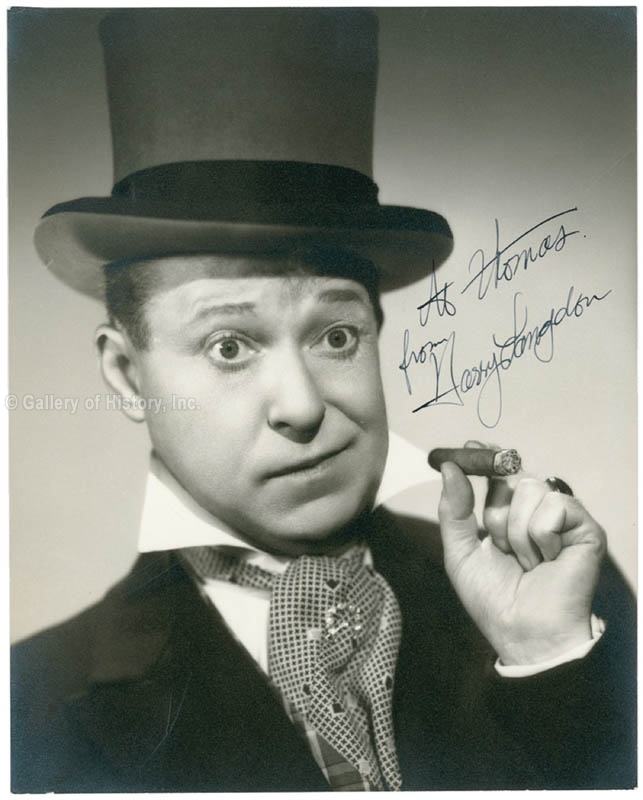
Harry Langdon starts the film off as Cupid, walking out from the clouds, playing his harp and speaking in rhymes. With the familiar white makeup, he looks as young as the Little Elf of the Sennett years. He introduces a tale of love that required a lot of work.


We enter into the domain of Ellery Gregory (Henry Travers), owner of a bra company. Ellery, who proves later to be a bit of a randy old man, is telling his nephew, Ronnie Gregory (Lew Ayres, a star of "All Quiet On The Western Front") that he's cut him off money-wise, and by the way, he's engaged to Ronnie's old squeeze, Jane Holman (Irene Bentley). Ronnie is a playboy, you see, always with what Ellery calls a "harem."

With both is a spunky but rather bedraggled maid named Looloo Blake (Lilian Harvey) who tells them almost fiercely that she wants "to get up in the world" and marry a rich man. Ellery, amused by the maid, tells Ronnie he'll put him back on the payroll if he can turn Looloo into a high-society woman and get her married to a rich man.


Initially, Ronnie isn't too impressed with Looloo, who complains about her taxi-driving boyfriend Maxie, (Sid Silvers). In fact, Ronnie brushes her off after a quick observation of her trying to attract men.

We go back to Harry Langdon as Cupid, who observing the affairs, says "I kind of feel something for this gal." Harry is also eating what looks like a candy bar.

Meanwhile, Ronnie goes to his frumpy, humorless cousin Gerald (Charles Butterworth) to plead his case and gets a firm "No. No. No." from Gerald whose passions are stamp collecting and carrots. Langdon's Cupid has already informed us that he's given up on Gerald. Later, while Ronnie is relating his money problems with a group of beautiful women friends (one is played by Irene Ware, of "The Raven), he gets the idea to take up Ellery's challenge. He'll try to match Looloo with his drab cousin Gerald. They think it will be a great joke on Ellery.

Looloo is walking with Maxie, in the rain, with Maxie only keeping himself dry under the umbrella. Looloo tells him she wants the cream of life. He replies, "Don't forget, the cream of today is the cheese of tomorrow."

Looloo goes back to Ronnie and pleads her case for him to help her. "OK, you win, come here," Ronnie says. He takes her to his girlfriends, who cluck over how dowdy she looks but agree that there are possibilities for her. What's interesting about this scene as it unfolds is that Ronnie and the girls talk in rhyme. Oftentimes in the film characters, including Langdon, speak in couplets. It reminds of the Langdon film "Hallelujah I'm a Bum."

At this point the film delves into pre-code as Looloo undresses for the girls while Ronnie discreetly has his back turned.

Two months have passed, and Looloo has been transformed into a stunning beauty. She's also carrying a torch for Ronnie. She often talks to his picture, and in a scene that's quite funny and poignant, she takes every opportunity to learn to kiss, using Ronnie to learn. Ronnie, however, is oblivious to the romantic signs Looloo is giving. All he can think about is making sure Looloo appeals to Gerald so he'll be back in good financial graces with uncle. About as far as his emotion will go is to say, "Hello Looloo, the girls tell me you've been making great headway."

Before the kissing scene, Harry Langdon's Cupid appears again in a well-shot scene, I think when the girls are making over Looloo, where he flies (with wings) into a room and leads a chorus of singing figurines, human and animals, flasks, salt shakers, figures of frogs, etc., even Rodin's The Thinker, all are singing, even photos of stars, including Will Rogers and Clara Bow.


The group goes to a fashion show, where Looloo will hopefully successfully woo Gerald. As Looloo, looking beautiful, moves down the stairway, she stumbles and falls. When she asks Ronnie if anyone noticed, he says "only 300 or 400."

Ronnie preps Looloo to woo Gerald. "If he asks you anything you don't understand, just say, 'what do you think.'"  There is a song and then a procession of fashion models. Looloo is introduced to Gerald, and later goes outside with him. She tries to get him attracted to her but he is uninterested in her until she tells him she loves carrots at midnight. So does Gerald, and he falls madly in love with Looloo.

Harry Langdon's Cupid occasionally comes in to offer commentary with lines such as "Didn't I tell you he was a tough guy" and "Now let's look at the old softie." As the plot continues, Looloo gets a marriage proposal from Gerald she really doesn't want.

After being brushed off by Ronnie, who is still unaware of her feelings, a hurt and angry Looloo swears off all men, causing both Gerald and Maxie to go off and cry together as men who love Looloo in vain. In an amusing scene, Gerald asks Maxie advice on suicide, but it only results in Gerald getting slugged and falling on Maxie.

Eventually old man Ellery also falls in love with Looloo, (He doesn't know she's the maid who sparked his challenge to Ronnie, although he learns it later.) Ellery, drunk on a highball, even proposes to Looloo. Ronnie starts to feel regret as to how he brushed off Looloo, and tells the old man he's now ready to take a job. I'm condensing a lot here but it all ends in a rather witty fashion with Ronnie, now in love, using advice he once gave Looloo to win her heart.( This includes pulling up his pant leg and telling her he has a rip in his stocking. ...)

In the penultimate scene, Ronnie and Looloo share a long kiss of requited love and in the final scene, Harry, framed in a heart, tells the audience, "Well, I put it over, didn't I," and promises to do it again, and again, and again.

I had 12 pages of synopsis notes and left out most of the latter pages but for a more complete plot outline, go to the Langdon biography, Little Elf: A Celebration of Harry Langdon. Langdon, fourth billed, is very good in a relatively small role. This was in an era where Harry was testing the waters as an actor in large-budget films. He was in "A Soldier's Plaything," "Hallelujah I'm a Bum," and "See America Thirst" besides "My Weakness." Harry was already working in comedy shorts with Educational, and eventually he'd move out of bigger-budgets, doing shorts for Columbia as well as roles, starring and otherwise, in a succession of B films, with the exception of A-picture "Zenobia" with Oliver Hardy.

Although I have no complaints with Harry as Cupid, it might have been intriguing to see him as the bland brother Gerald. It would have been interesting to see that character as the "elf," guided by situations and developments with little outward emotion except small gestures. However, the elf would have had to end with some woman, if not Looloo, at least one of Ronnie's harem. Gerald, of course, gets no girl in this film.

British-born Lilian Harvey was being groomed for stardom by Fox. It never occurred. She has screen presence and is very beautiful, and sings well, but her speaking voice seems a tad weak. However, I was watching a poor quality DVD of "My Weakness" with at times fuzzy resolution and jumps in the film, so she might have been better on the big screen. Her screen career ended about 1940. She was a contract player with Germany's UFA and World War II made her a foe of the Nazis.

Lew Ayres was made a star in "All Quiet On the Western Front" and does fine as the romantic lead, although he's no competition for Clark Gable. Ayres had a remarkably long career, working until a couple of years of his death, in roles so diverse as guest spots on "The Love Boat" and a "Hart to Hart" TV movie.

Another good role was Adrian Rosley as Baptiste, a valet or manservant who provides moral support for the leads. And Bentley as Jane Holman is tartly good too. The film was directed by David Butler, who also directed Shirley Temple movies, as well as "The Road to Morocco" with Hope and Crosby and did a lot of TV directing, including "Leave It to Beaver."

This is a nice movie with a choice role for Langdon as Cupid. It deserves to have easier access for fans of pre-code musical comedies and Harry Langdon. I urge readers to keep placing it on a request list on TCM website and maybe we'll get a high-quality, cleaned up print on TCM in the near future.

Below is a song, "Gather Lip Rouge While You May," which was sung in "My Weakness."

Thursday, June 9, 2016

My Weakness, a rarely seen film with Harry Langdon


By Doug Gibson

I emptied a small part of my bucket list today. As readers of this blog know, I am a big fan of Harry Langdon, and I've long wanted to see one of his films that is generally off limits to the general public. "My Weakness," a 1933 Fox film that's heavily influenced by "Pygmalion" -- in which Harry plays "Dan Cupid," and serves to narrate and both fronts and bookends the film's tale -- is an almost lost film, preserved by UCLA's film archive, and sometimes shown at festivals, but not Turner Classic Movies. (I know, I've kept a close eye hoping it'd show on the schedule.)

With the Gibson family in Southern California this week, I contacted UCLA several weeks ago, asking for a chance to see "My Weakness." I was surprised at how easy it was, after a couple of emails, I had reserved a two week window to see the film.


Today, I went to the Powell library to the film section, presented my "credentials," and I was ushered into a small viewing room with a DVD remote. The film came on the screen on its own, I was able to start, stop, rewind, and so on. My smart phone was not allowed, so no still shots in this review are from me.

Because the film is not available for easy-access viewing, this review will contain a synopsis of sorts, along with my observations, most at the end. First, "My Weakness" is a sexy, pre-code comedy/romance musical, with several scenes that include attractive women in their underclothes (see still below this paragraph), scenes that would be forbidden in just a couple of years. It's one of the Berkeley-like romps where all the characters are generally harmless and despite the travails, one never doubts that things will work out in the end. Witty repartee mingles with romantic triangles and intrigue, and rhymes and songs join in.


Harry Langdon starts the film off as Cupid, walking out from the clouds, playing his harp and speaking in rhymes. With the familiar white makeup, he looks as young as the Little Elf of the Sennett years. He introduces a tale of love that required a lot of work.


We enter into the domain of Ellery Gregory (Henry Travers), owner of a bra company. Ellery, who proves later to be a bit of a randy old man, is telling his nephew, Ronnie Gregory (Lew Ayres, a star of "All Quiet On The Western Front") that he's cut him off money-wise, and by the way, he's engaged to Ronnie's old squeeze, Jane Holman (Irene Bentley). Ronnie is a playboy, you see, always with what Ellery calls a "harem."

With both is a spunky but rather bedraggled maid named Looloo Blake (Lilian Harvey) who tells them almost fiercely that she wants "to get up in the world" and marry a rich man. Ellery, amused by the maid, tells Ronnie he'll put him back on the payroll if he can turn Looloo into a high-society woman and get her married to a rich man.


Initially, Ronnie isn't too impressed with Looloo, who complains about her taxi-driving boyfriend Maxie, (Sid Silvers). In fact, Ronnie brushes her off after a quick observation of her trying to attract men.

We go back to Harry Langdon as Cupid, who observing the affairs, says "I kind of feel something for this gal." Harry is also eating what looks like a candy bar.

Meanwhile, Ronnie goes to his frumpy, humorless cousin Gerald (Charles Butterworth) to plead his case and gets a firm "No. No. No." from Gerald whose passions are stamp collecting and carrots. Langdon's Cupid has already informed us that he's given up on Gerald. Later, while Ronnie is relating his money problems with a group of beautiful women friends (one is played by Irene Ware, of "The Raven), he gets the idea to take up Ellery's challenge. He'll try to match Looloo with his drab cousin Gerald. They think it will be a great joke on Ellery.

Looloo is walking with Maxie, in the rain, with Maxie only keeping himself dry under the umbrella. Looloo tells him she wants the cream of life. He replies, "Don't forget, the cream of today is the cheese of tomorrow."

Looloo goes back to Ronnie and pleads her case for him to help her. "OK, you win, come here," Ronnie says. He takes her to his girlfriends, who cluck over how dowdy she looks but agree that there are possibilities for her. What's interesting about this scene as it unfolds is that Ronnie and the girls talk in rhyme. Oftentimes in the film characters, including Langdon, speak in couplets. It reminds of the Langdon film "Hallelujah I'm a Bum."

At this point the film delves into pre-code as Looloo undresses for the girls while Ronnie discreetly has his back turned.

Two months have passed, and Looloo has been transformed into a stunning beauty. She's also carrying a torch for Ronnie. She often talks to his picture, and in a scene that's quite funny and poignant, she takes every opportunity to learn to kiss, using Ronnie to learn. Ronnie, however, is oblivious to the romantic signs Looloo is giving. All he can think about is making sure Looloo appeals to Gerald so he'll be back in good financial graces with uncle. About as far as his emotion will go is to say, "Hello Looloo, the girls tell me you've been making great headway."

Before the kissing scene, Harry Langdon's Cupid appears again in a well-shot scene, I think when the girls are making over Looloo, where he flies (with wings) into a room and leads a chorus of singing figurines, human and animals, flasks, salt shakers, figures of frogs, etc., even Rodin's The Thinker, all are singing, even photos of stars, including Will Rogers and Clara Bow.


The group goes to a fashion show, where Looloo will hopefully successfully woo Gerald. As Looloo, looking beautiful, moves down the stairway, she stumbles and falls. When she asks Ronnie if anyone noticed, he says "only 300 or 400."

Ronnie preps Looloo to woo Gerald. "If he asks you anything you don't understand, just say, 'what do you think.'"  There is a song and then a procession of fashion models. Looloo is introduced to Gerald, and later goes outside with him. She tries to get him attracted to her but he is uninterested in her until she tells him she loves carrots at midnight. So does Gerald, and he falls madly in love with Looloo.

Harry Langdon's Cupid occasionally comes in to offer commentary with lines such as "Didn't I tell you he was a tough guy" and "Now let's look at the old softie." As the plot continues, Looloo gets a marriage proposal from Gerald she really doesn't want.

After being brushed off by Ronnie, who is still unaware of her feelings, a hurt and angry Looloo swears off all men, causing both Gerald and Maxie to go off and cry together as men who love Looloo in vain. In an amusing scene, Gerald asks Maxie advice on suicide, but it only results in Gerald getting slugged and falling on Maxie.

Eventually old man Ellery also falls in love with Looloo, (He doesn't know she's the maid who sparked his challenge to Ronnie, although he learns it later.) Ellery, drunk on a highball, even proposes to Looloo. Ronnie starts to feel regret as to how he brushed off Looloo, and tells the old man he's now ready to take a job. I'm condensing a lot here but it all ends in a rather witty fashion with Ronnie, now in love, using advice he once gave Looloo to win her heart.( This includes pulling up his pant leg and telling her he has a rip in his stocking. ...)

In the penultimate scene, Ronnie and Looloo share a long kiss of requited love and in the final scene, Harry, framed in a heart, tells the audience, "Well, I put it over, didn't I," and promises to do it again, and again, and again.

I had 12 pages of synopsis notes and left out most of the latter pages but for a more complete plot outline, go to the Langdon biography, Little Elf: A Celebration of Harry Langdon. Langdon, fourth billed, is very good in a relatively small role. This was in an era where Harry was testing the waters as an actor in large-budget films. He was in "A Soldier's Plaything," "Hallelujah I'm a Bum," and "See America Thirst" besides "My Weakness." Harry was already working in comedy shorts with Educational, and eventually he'd move out of bigger-budgets, doing shorts for Columbia as well as roles, starring and otherwise, in a succession of B films, with the exception of A-picture "Zenobia" with Oliver Hardy.

Although I have no complaints with Harry as Cupid, it might have been intriguing to see him as the bland brother Gerald. It would have been interesting to see that character as the "elf," guided by situations and developments with little outward emotion except small gestures. However, the elf would have had to end with some woman, if not Looloo, at least one of Ronnie's harem. Gerald, of course, gets no girl in this film.

British-born Lilian Harvey was being groomed for stardom by Fox. It never occurred. She has screen presence and is very beautiful, and sings well, but her speaking voice seems a tad weak. However, I was watching a poor quality DVD of "My Weakness" with at times fuzzy resolution and jumps in the film, so she might have been better on the big screen. Her screen career ended about 1940. She was a contract player with Germany's UFA and World War II made her a foe of the Nazis.

Lew Ayres was made a star in "All Quiet On the Western Front" and does fine as the romantic lead, although he's no competition for Clark Gable. Ayres had a remarkably long career, working until a couple of years of his death, in roles so diverse as guest spots on "The Love Boat" and a "Hart to Hart" TV movie.

Another good role was Adrian Rosley as Baptiste, a valet or manservant who provides moral support for the leads. And Bentley as Jane Holman is tartly good too. The film was directed by David Butler, who also directed Shirley Temple movies, as well as "The Road to Morocco" with Hope and Crosby and did a lot of TV directing, including "Leave It to Beaver."

This is a nice movie with a choice role for Langdon as Cupid. It deserves to have easier access for fans of pre-code musical comedies and Harry Langdon. I urge readers to keep placing it on a request list on TCM website and maybe we'll get a high-quality, cleaned up print on TCM in the near future.

Below is a song, "Gather Lip Rouge While You May," which was sung in "My Weakness."

Friday, February 19, 2016

Chandu the Magician -- Bela Lugosi plays the bad guy


By Doug Gibson

Several days ago, the astute, knowledgeable Steve D. Stones reviewed the 1934 serial "The Return of Chandu," in which Bela Lugosi is the stout-hearted, good magician. We promised a follow-up review of the bigger-budgeted 1932 "Chandu the Magician," in which the now-forgotten "big star" Edmund Lowe played the magician hero, and Lugosi the foil, the evil Roxor, who plans to destroy the world with a powerful ray machine.

Now Chandu was a popular radio show of that long-ago era, and plots generally need to stay close to the scripts. Chandu is Frank Chandler, he has a sort of chaste romance with the Princess Nadji, played by Irene Ware, and he's protecting the same family, in the film called "The Regents," dad, mom and two teenage kids named Bobby and Betty Lou. What's happened is that Roxor has kidnapped the Regent patriarch so he can get the information on his death ray (why would anyone invent a death ray that can destroy the world, or turn it into a mindless, brute era??)

But he does, and he wants Nadji as well and Roxor also is not above selling the kids into slavery, anything to get dad to cough up the formula. The relatively short film, 70-plus minutes, has Chandu doing his best to foil Roxor's plans.

"Chandu the Magician" is a better film than the serial, which drags and drags, and it has some cool special effects of that era. A couple involve escapes from stone-enclosed prison rooms and from the ocean. Lowe is not too great as Chandu but he's OK. (Why didn't anyone conceive of having Lugosi play two roles: Chandu and Roxor?!)


A key problem with "Chandu the Magician" is that it doesn't know whether it wants to be a comic spoof of the fantasy genre or a dark fantasy. It tries to be both. That indecision makes a secondary character played for laughs, Miggles, sort of misfire. It's a little jarring to laugh at Chandu having sport with the constantly whimpering Miggles and then cut to a scene where kidnapped, very nubile teenager Betty Lou, played by June Lang, is being sold at auction, in a revealing costume, as a sex slave. The pre-code clashes with the kid code.

Yet "Chandu" is a lot of fun, with scene after scene after scene of good people being rescued by Chandu and his allies. Despite the occasional dark detour it can be enjoyed by kids. Watch it before "The Return of Chandu" if you can. It's easy to buy. The ending is a bit of a letdown. I'm not giving away any surprise that Chandu wins but I kind of wish he had vanquished Lugosi's Roxor in a more exciting manner. Lugosi is, by the way, excellent in his bad guy role.

"Chandu the Magician" was released by the Fox Film Corporation and it had a relatively large budget for that time, $349,000. Director William Cameron Menzies would later direct two science fiction classics, "Things to Come," and "Invaders From Mars." Watch a clip below.

Tuesday, October 7, 2014

The Raven: Bela Lugosi at his most maniacal evil


                                                                  By Doug Gibson

Simply put, "The Raven" (1935) is a masterpiece. And credit for its perfection belongs to star Bela Lugosi, who is magnificent as the brilliant, deranged, courtly and insane Dr. Richard Vollin, who is so obsessed with Edgar Allan Poe that he has built real Poe-inspired torture devices in his dungeon.

"The Raven" is almost as good as "The Black Cat" that starred Lugosi and Boris Karloff, but it lacks the subtle sadism and velvet touch that director Edgar Ulmer gave to the other "Poe tale."

Lugosi's Vollin is implored upon to save the life of a beautiful dancer, Jean Thatcher, Irene Ware. Once he restores her to health, he fall in lust with her and wants her for himself. Rebuffed by Thatcher's father, Samuel Hinds, he hatches a plan to invite the dancer, her father, her fiance, and others to be tortured and murdered. In his feverish mind, Vollin believes that by killing, he can be released from his Poe obsessions, that to torture will relieve his torture.

Vollin's unwilling helper is Edmond Bateman, (Karloff) a murderer on the lam who bewails his ugly face. He begs Vollin to bring beauty to his countenance. Instead, Vollin makes him uglier and then promises to fix his ugliness after he kills his guests.

Lugosi is just brilliant. He's gentlemanly and manic, polite and cruel,  courteous and a raving lunatic. The short, 61-minute film is tightly directed by Lew Landers. It is an example of Universal's consistent fiscal cruelty to Lugosi that he received only half as much as Karloff earned, although Lugosi's Vollin is the real star, the real villain.

In this film, Lugosi proved that he could play the essential mad scientist, obsessed, insane, unfeeling, sadistic, perverted and, of course, brutal and murderous. In fact, Lugosi and Karloff play almost the same type of roles they would play in The Body Snatchers a decade later, with Karloff the weaker one in The Raven.

This is a film that should not be missed by any horror film fan. Its history is interesting; early reviews were appropriately positive, but then the Breen-era morals kicked in and there was a flurry of bad reviews decrying the sadism of the film. As a result, its profit was lower than expected and the film would damage the pocketbooks of Karloff and particularly Lugosi as it prompted the British horror ban on the latter half of the 1930s.

Fortunately, the film's excellence survived the prissy reviews and it's appropriately regarded as a classic and a Lugosi film with Karloff as a secondary character. The trailer is below: