Translate

Showing posts with label Lost films. Show all posts

Thursday, June 28, 2018

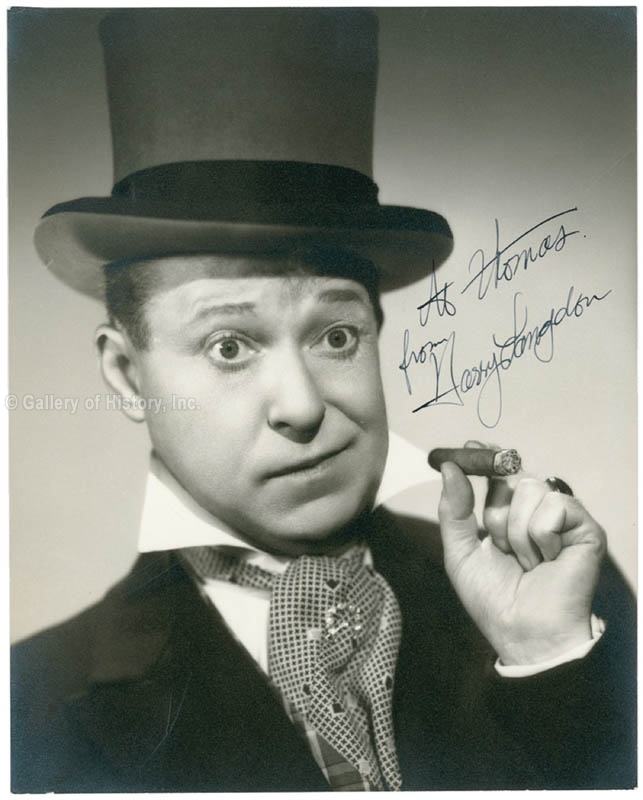
See America Thirst a pre-code comedy with Harry Langdon, Slim Summerville


Review by Doug Gibson

Back in California, and that means a trip to UCLA’s Film & Television Archive to view a mostly-lost film. Harry Langdon was the subject again (two years ago I saw and reviewed My Weakness). This time I viewed a version of Harry’s 1930 Universal “buddy-comedy” film, See America Thirst, directed by William James Craft. It’s a thrill for me to see Harry’s hard-to-find films; next on my bucket list will be a trip to the Library of Congress to see the Hal Roach shorts that lack sound discs.

Speaking of sound, one mild disappointment is that the archive’s print lacked any. And the print I viewed was clearly a sound print. There was way too much talking, and no titles that would have clued a silent version. I know that a version of See America Thirst with sound has played film festivals. I don’t know if UCLA has it or it was my fault when I requested the film. Did I choose a silent version?

The print was in very poor shape, muddy, blurry at times with a couple of vertical jumps and rough transitions. But that didn’t bother me, it adds to the excitement of  viewing a film that is virtually lost and appreciation to the archive for preserving it.

So, here’s my synopsis of the film. To help overcome the dialogue loss, I re-read my friend Ed Watz’ recap of the film in my friend Michael Hayde's biography of Langdon with Chuck Harter, The Little Elf. I also received some input from another friend, artist Nicole Arciola, who has seen the sound version of See America Thirst.

Harry and co-star Slim Summerville are hobos on a train. They get kicked off and try to regroup. They see some sheep and find ducks. Later they encounter an inquisitive police officer. Harry tries to hide the duck (similar to a scene in “Tramp Tramp Tramp”) and fails. The cop chases them and the hobos hide in the back of a truck that is carrying bootleg liquor and driven by hoodlums. A pair of other hoodlums in a vehicle chase them. Gunfire ensues. Harry and Slim are oblivious to it all. A carrying bag falls into the back. Alcohol leaks onto both hobos and they get drunk. A grenade in the back goes off and the vehicle explodes on a bridge. Harry and Slim fall into a river. Harry swims with exaggerated speed to the shore. (Reading Watz I learned that Harry said he couldn’t swim and Summerville said he’d better learn fast.) On the shore the pair discover the bag that fell into the back. It is stuffed with a fortune in cash. As Arciola noted to me, Harry says “Money money money” in much the same manner he did in the last film he made, Pistol Packin’ Nitwits.

Now rich, the former hobos are living it up, renting vehicles, dressed to the nines and going to gangster nightclubs. But the money belonged to the Spumoni crime family and the boss wants it back. After telling the hood who lost the money to take a gun and kill himself (which leads to a lame joke from the returning hood that he missed), Spumoni assigns a hired killer to take out Harry and Summerville at the nightclub.
Singing at the nightclub is a beautiful blonde, played by starlet of the era Bessie Love, who is also apparently a hoodlum’s moll. She’s very scantily dressed in the pre-code manner. After her song the killer approaches the pair. Once they are aware they are being hunted, Harry trembles. Ironically, shaking is a trait used by an even more fearsome killer who is hunting the hired killer. Believing that both Harry and Summerville want to kill them, the hoods pay a fortune to Harry and Summerville so THEY WON’T KILL THEM. (During this scene, a sign in the nightclub switches from TAXI, to AMBULANCE, and finally to HEARSE. The humorous sign switch is supposed to indicate the peril facing Harry and Summerville).


What follows is a series of sometimes amusing scenes where Harry and Summerville are catered to by the hoods, encounter “gangster-friendly” lodgings with armored protection for the beds and disguised platters of food that really contain weapons that fire when the covering is removed. One sequence that lasts way too long, losing its comedy value due to the poor pacing, is Summerville discovering cannons that move and jut outside the windows of a high-rise. Harry, sitting on a cannon, almost falls off, then Summerville almost falls off, and they eventually create a sort of bridge that allows them to hop to another floor. Also, the pair romance the beautiful blonde (Bessie Love) who tells then she’s really a law enforcement agent trying to gather evidence against the Spumonis.

As the film nears its climax, the Spumoni leader, vacationing in Florida, meets up with the real killer they think Harry is. As a result, all the gangsters in Chicago, Spumoni and the rival gang, team up to kill Harry and Summerville, who are in an armored vehicle on the street, expecting, with Bessie Love, to see and be protected from a gang fight. Instead all the gangsters head for the vehicle.

It seems all over for Harry and Summerville, except (and sans sound I’m unsure a bit of how this developed) a professor has invented knockout gas that can be sprayed on the bad guys. Harry and Slim manage to do this and leave all the gangsters unconscious on the streets. (Now Ed Watz is no fan of this film, but he acknowledges that a scene in which Harry, who has run out of the gas -- accepts that his finger used as a spray gun has knocked out the bad guys – is well done. Actually, Summerville is on a canopy spraying away. It is a funny “Little Elf” moment in the film.

Another strong moment in the film is when near the end where Harry, expecting to see his beloved Bessie Love, encounters her in the arms of her fiancĂ©, the District Attorney. This is very similar in pathos to the same type of scene in “Three’s  A Crowd.”

The epilogue involves the pair, with ragged clothes after the battle, discovering that the carrying case full of money now has no money; they lost it. In another decent “Little Elf” moment, Harry wags his finger in disapproval at Summerville, and money comes out of his cuffs. It’s discovered that the money is sown into Harry’s clothes. The pair leave still rich. The End.

Watz is correct in his assessment that the 75-minute film is at times poorly paced. Some of the gags are very forced but the last 10 minutes, in my opinion, are very strong. Watz believes the film is one of Harry’s worst performances. I can’t agree or disagree without hearing the sound. Just watching the visual action, Harry seems more expressive than Summerville, who is more of a straight man. Bessie Love is a very attractive presence, but her part is very small for a third-billed leading lady. Reviews that are cited in “The Little Elf” range from acceptable to the reviewers quite liking the film.


The viewer gets the impression that some of the comedy scenes may be based on vaudeville skits that Harry and Summerville maybe performed in the past. At least scenes are played as if they might have been vaudeville skits. Some of the pair’s banter when romancing Bessie Love plays like that as well as scenes such as the boys getting drunk.

The sets and locations in See America Thirst are above average. There are modernistic sets, particularly in the lodgings of the gangsters. The hoods are played for laughs, as is prohibition, which existed when the film was made. Even with a muddy print, Harry looks healthy and young in the film.

Some old hands in the cast include Stanley Fields and Tom Kennedy as well as a very young Walter Brennan.

If you are in Southern California, go to UCLA and see this film, and My Weakness. It’s not at all difficult to make an appointment to see these almost-lost movies, and the staff at the university library is very helpful. 

(The See America First photos used in this review are courtesy of Richard Finegan).

Friday, June 15, 2018

My Weakness with Harry Langdon as Cupid


By Doug Gibson

I emptied a small part of my bucket list today. As readers of this blog know, I am a big fan of Harry Langdon, and I've long wanted to see one of his films that is generally off limits to the general public. "My Weakness," a 1933 Fox film that's heavily influenced by "Pygmalion" -- in which Harry plays "Dan Cupid," and serves to narrate and both fronts and bookends the film's tale -- is an almost lost film, preserved by UCLA's film archive, and sometimes shown at festivals, but not Turner Classic Movies. (I know, I've kept a close eye hoping it'd show on the schedule.)

With the Gibson family in Southern California this week, I contacted UCLA several weeks ago, asking for a chance to see "My Weakness." I was surprised at how easy it was, after a couple of emails, I had reserved a two week window to see the film.


Today, I went to the Powell library to the film section, presented my "credentials," and I was ushered into a small viewing room with a DVD remote. The film came on the screen on its own, I was able to start, stop, rewind, and so on. My smart phone was not allowed, so no still shots in this review are from me.

Because the film is not available for easy-access viewing, this review will contain a synopsis of sorts, along with my observations, most at the end. First, "My Weakness" is a sexy, pre-code comedy/romance musical, with several scenes that include attractive women in their underclothes (see still below this paragraph), scenes that would be forbidden in just a couple of years. It's one of the Berkeley-like romps where all the characters are generally harmless and despite the travails, one never doubts that things will work out in the end. Witty repartee mingles with romantic triangles and intrigue, and rhymes and songs join in.


Harry Langdon starts the film off as Cupid, walking out from the clouds, playing his harp and speaking in rhymes. With the familiar white makeup, he looks as young as the Little Elf of the Sennett years. He introduces a tale of love that required a lot of work.


We enter into the domain of Ellery Gregory (Henry Travers), owner of a bra company. Ellery, who proves later to be a bit of a randy old man, is telling his nephew, Ronnie Gregory (Lew Ayres, a star of "All Quiet On The Western Front") that he's cut him off money-wise, and by the way, he's engaged to Ronnie's old squeeze, Jane Holman (Irene Bentley). Ronnie is a playboy, you see, always with what Ellery calls a "harem."

With both is a spunky but rather bedraggled maid named Looloo Blake (Lilian Harvey) who tells them almost fiercely that she wants "to get up in the world" and marry a rich man. Ellery, amused by the maid, tells Ronnie he'll put him back on the payroll if he can turn Looloo into a high-society woman and get her married to a rich man.


Initially, Ronnie isn't too impressed with Looloo, who complains about her taxi-driving boyfriend Maxie, (Sid Silvers). In fact, Ronnie brushes her off after a quick observation of her trying to attract men.

We go back to Harry Langdon as Cupid, who observing the affairs, says "I kind of feel something for this gal." Harry is also eating what looks like a candy bar.

Meanwhile, Ronnie goes to his frumpy, humorless cousin Gerald (Charles Butterworth) to plead his case and gets a firm "No. No. No." from Gerald whose passions are stamp collecting and carrots. Langdon's Cupid has already informed us that he's given up on Gerald. Later, while Ronnie is relating his money problems with a group of beautiful women friends (one is played by Irene Ware, of "The Raven), he gets the idea to take up Ellery's challenge. He'll try to match Looloo with his drab cousin Gerald. They think it will be a great joke on Ellery.

Looloo is walking with Maxie, in the rain, with Maxie only keeping himself dry under the umbrella. Looloo tells him she wants the cream of life. He replies, "Don't forget, the cream of today is the cheese of tomorrow."

Looloo goes back to Ronnie and pleads her case for him to help her. "OK, you win, come here," Ronnie says. He takes her to his girlfriends, who cluck over how dowdy she looks but agree that there are possibilities for her. What's interesting about this scene as it unfolds is that Ronnie and the girls talk in rhyme. Oftentimes in the film characters, including Langdon, speak in couplets. It reminds of the Langdon film "Hallelujah I'm a Bum."

At this point the film delves into pre-code as Looloo undresses for the girls while Ronnie discreetly has his back turned.

Two months have passed, and Looloo has been transformed into a stunning beauty. She's also carrying a torch for Ronnie. She often talks to his picture, and in a scene that's quite funny and poignant, she takes every opportunity to learn to kiss, using Ronnie to learn. Ronnie, however, is oblivious to the romantic signs Looloo is giving. All he can think about is making sure Looloo appeals to Gerald so he'll be back in good financial graces with uncle. About as far as his emotion will go is to say, "Hello Looloo, the girls tell me you've been making great headway."

Before the kissing scene, Harry Langdon's Cupid appears again in a well-shot scene, I think when the girls are making over Looloo, where he flies (with wings) into a room and leads a chorus of singing figurines, human and animals, flasks, salt shakers, figures of frogs, etc., even Rodin's The Thinker, all are singing, even photos of stars, including Will Rogers and Clara Bow.


The group goes to a fashion show, where Looloo will hopefully successfully woo Gerald. As Looloo, looking beautiful, moves down the stairway, she stumbles and falls. When she asks Ronnie if anyone noticed, he says "only 300 or 400."

Ronnie preps Looloo to woo Gerald. "If he asks you anything you don't understand, just say, 'what do you think.'"  There is a song and then a procession of fashion models. Looloo is introduced to Gerald, and later goes outside with him. She tries to get him attracted to her but he is uninterested in her until she tells him she loves carrots at midnight. So does Gerald, and he falls madly in love with Looloo.

Harry Langdon's Cupid occasionally comes in to offer commentary with lines such as "Didn't I tell you he was a tough guy" and "Now let's look at the old softie." As the plot continues, Looloo gets a marriage proposal from Gerald she really doesn't want.

After being brushed off by Ronnie, who is still unaware of her feelings, a hurt and angry Looloo swears off all men, causing both Gerald and Maxie to go off and cry together as men who love Looloo in vain. In an amusing scene, Gerald asks Maxie advice on suicide, but it only results in Gerald getting slugged and falling on Maxie.

Eventually old man Ellery also falls in love with Looloo, (He doesn't know she's the maid who sparked his challenge to Ronnie, although he learns it later.) Ellery, drunk on a highball, even proposes to Looloo. Ronnie starts to feel regret as to how he brushed off Looloo, and tells the old man he's now ready to take a job. I'm condensing a lot here but it all ends in a rather witty fashion with Ronnie, now in love, using advice he once gave Looloo to win her heart.( This includes pulling up his pant leg and telling her he has a rip in his stocking. ...)

In the penultimate scene, Ronnie and Looloo share a long kiss of requited love and in the final scene, Harry, framed in a heart, tells the audience, "Well, I put it over, didn't I," and promises to do it again, and again, and again.

I had 12 pages of synopsis notes and left out most of the latter pages but for a more complete plot outline, go to the Langdon biography, Little Elf: A Celebration of Harry Langdon. Langdon, fourth billed, is very good in a relatively small role. This was in an era where Harry was testing the waters as an actor in large-budget films. He was in "A Soldier's Plaything," "Hallelujah I'm a Bum," and "See America Thirst" besides "My Weakness." Harry was already working in comedy shorts with Educational, and eventually he'd move out of bigger-budgets, doing shorts for Columbia as well as roles, starring and otherwise, in a succession of B films, with the exception of A-picture "Zenobia" with Oliver Hardy.

Although I have no complaints with Harry as Cupid, it might have been intriguing to see him as the bland brother Gerald. It would have been interesting to see that character as the "elf," guided by situations and developments with little outward emotion except small gestures. However, the elf would have had to end with some woman, if not Looloo, at least one of Ronnie's harem. Gerald, of course, gets no girl in this film.

British-born Lilian Harvey was being groomed for stardom by Fox. It never occurred. She has screen presence and is very beautiful, and sings well, but her speaking voice seems a tad weak. However, I was watching a poor quality DVD of "My Weakness" with at times fuzzy resolution and jumps in the film, so she might have been better on the big screen. Her screen career ended about 1940. She was a contract player with Germany's UFA and World War II made her a foe of the Nazis.

Lew Ayres was made a star in "All Quiet On the Western Front" and does fine as the romantic lead, although he's no competition for Clark Gable. Ayres had a remarkably long career, working until a couple of years of his death, in roles so diverse as guest spots on "The Love Boat" and a "Hart to Hart" TV movie.

Another good role was Adrian Rosley as Baptiste, a valet or manservant who provides moral support for the leads. And Bentley as Jane Holman is tartly good too. The film was directed by David Butler, who also directed Shirley Temple movies, as well as "The Road to Morocco" with Hope and Crosby and did a lot of TV directing, including "Leave It to Beaver."

This is a nice movie with a choice role for Langdon as Cupid. It deserves to have easier access for fans of pre-code musical comedies and Harry Langdon. I urge readers to keep placing it on a request list on TCM website and maybe we'll get a high-quality, cleaned up print on TCM in the near future.

Below is a song, "Gather Lip Rouge While You May," which was sung in "My Weakness."

Sunday, November 26, 2017

The first vampire of the screen - Theda Bara


Theda Bara as The Vampire in the film A FOOL THERE WAS (1915)

By Steve D. Stones

The lovely Theda Bara in A Fool There Was is not so much a vampire who wears a cape and sucks the blood from victims, like Bela Lugosi in Dracula (1931) or Max Shreck in Nosferatu (1922). She is a seductress who sucks the life out of married men – who then lose everything, including their wives, children and social status. A Fool There Was is a tale of lust, infidelity and seduction.


John Schuyler, played by Edward Jose, is a wealthy Wall Street lawyer and statesman called by the President of The United States to sail to England as a special envoy to settle claims with Great Britain. His mistress, played by Bara, joins him on the voyage. Soon, Schuyler's friends and wife find out about his affair. His life quickly begins to crumble, as his friends and loved ones turn their back on him.


Bara was born Theodosia Burr Goodman in Cincinnati, Ohio on July 29th, 1885. She is considered cinema's first female “sex symbol” and “femme fatale.” Her career spanned 40 films between 1914 – 1926. Most of these films are considered lost from a 1937 vault fire at Fox Studios in Fort Lee, New Jersey – where Bara shot most of the films.


In 1917, Bara moved to Hollywood to film Cleopatra. Hollywood at that time was quickly becoming the entertainment capital of America. Hollywood was the place to be if you were an actor at that time. A Production Code was not enforced until 1930, so Bara was known for wearing very revealing costumes in her films. This may be one of many reasons why some refer to Bara as a “vamp.”

Only six of her forty films are said to exist today, including: The Stain (1914), A Fool There Was (1915), East Lynne (1916), The Unchastened Woman (1925) and two short comedies made for Hal Roach Studios – Madame Mystery and 45 Minutes From Hollywood. Some footage of Cleopatra (1917) managed to survive at the Museum of Modern Art's film collection in New York. Bara never appeared in a sound film, which adds to her sense of mystique and intrigue.


Bara eventually got tired of being typecast as variations of the vamp character. When her contract ended in 1919 with Fox studios, she assumed other roles would be forthcoming. This did not happen. She instead headed to Broadway in 1920 to star in "The Blue Flame." The performance was a success, but the critics thought it was terrible.


The Fort Lee Film Commission in New Jersey dedicated Main Street and Linwood Avenue as “Theda Bara Way.” Her image also appeared on postage stamps in 1994. A 2006 documentary – The Woman With The Hungry Eyes – was made about Bara's career.


For further information about the career of Theda Bara, refer to Phil Hall's book – In Search of Lost Films (Bear Manor Media 2016). Hall's book is reviewed here on Plan 9 Crunch. Happy viewing.


Friday, December 9, 2016

Drakula Halala -- the first filmed Dracula


Recap by Doug Gibson

"Drakula Halala," a 1921 Hungarian/Austrian film, is considered the first "adaptation" of the Bram Stoker novel. The film is lost; all that remains are stills and news reports, including a small novelization of the film. Above are the stars of the film, Paul Askonas as Drakula, and Margit Lux as Mary Land, the young lovely he menaces.

Scholar Gary D. Rhodes has the past several years become the man who fills in the pieces of a 50,000-word puzzle of the history of Dracula, Bela Lugosi and Ed Wood. Rhodes recently wrote an essay on the history of "Drakula Halala," which more or less means "Dracula's Death." He also translated the novella from the Hungarian.

I've always been fascinated with this film, and I am appreciative of Rhodes' essay, which will be the template for this post. The essay is part of a new book that Rhodes has co-edited with Olaf Brill, Expressionism in the Cinema, published by Edinburgh University Press.


Rhodes is the postgraduate director for Film Studies at the Queens University in Belfast, Northern Ireland. Brill is a German writer on film with an impressive resume. Rhodes notes that from his research, it seems that "Drakula Halala" was an expressionistic film. In what makes one ache to see this lost film, he sees similarities with "The Cabinet of Dr. Caligari." Certainly, the novella compares to Caligari in plot.

I urge readers to buy Expressionism in the Cinema and learn more about "Drakula Halala." I will present a short recap of Rhodes' translation of the novella and afterwards mention a few facts unearthed by Rhodes in the chapter.

The melodrama, suffering, despair and pessimism that is ingrained in the Hungarian culture is represented in Rhodes' translation. Mary Land lives alone, a seamstress working long hours to support her father, confined to a mental institution after the death of his wife. The family was once happy and wealthy, but all that is gone. Mary's boyfriend, a woodcutter named George, implores her to rest but Mary will not.

Eventually, Mr Land's death appears near and Mary and George travel to the asylum. Left there by George, Mary talks with Dr. Tillner. Left alone she is accosted by several of the inmates, including a sadistic man, Drakula, who believes he is immortal. Another, who laughs, is called the "Funny Man." Mary visits her father, who dies. Overcome by sorrow and the fear of Drakula and other inmates who visit her and pretend to be doctors, Mary is advised to spend the night in the asylum.

That night, alone, Mary is kidnapped by Drakula and taken to his castle, where he says, they will be married. Mary's revulsion, her cross and the light push Drakula away from her. He promises to return for their wedding when night comes. That evening there is an elaborate wedding ceremony prepared with other brides of Drakula. It's a strange ceremony, with elaborate lights, shrill music and flowers flowing from the ceiling. Just before Drakula kisses her, Mary pushes the cross toward him. Everyone flees, including Mary.

Outside the castle, Mary is rescued by a family. An attempt by Drakula to recapture her fails. A real doctor cares for her until he is led away on a fool's errand by Drakula. He returns to Mary before any harm can come to her. Nevertheless, thoughts of Drakula torture her in her bed, and seeking relief, she runs out of the house and into the cold snow.

We then cut back to the asylum, where Dr. Tillner is conducting his rounds. Mary is sleeping. The nurse informs the doctor she's had a terrible night of bad dreams.

Mary's kidnapping, attempted marriage and flight was all a dream.

Outside, in the courtroom, the mental patients are gathered. The "Funny Man" has a gun. Seizing an opportunity to prove his immortality, Drakula goads the "Funny Man" into shooting him. He does and Drakula dies.

George returns to gather Mary. They return home to a lifetime of happiness.  Mary requests that no one ever speak of Drakula, and asks that a manuscript of his be burnt. (Below is a still of the wedding scene in "Dracula Halala.")


The film, if the novella is correct, is hardly Stoker's "Dracula." Maybe they wanted to exploit the Dracula cultural sensation without paying any royalties to Stoker's widow, Florence. In later years, she would shut down "Nosferatu" and nearly destroy every print due to copyright violation.

The director of "Drakula Halala" was Karoly Lajthay, who acted in films with a young Bela Lugosi. It was shot mostly in Vienna but created by Hungarians. Interiors were shot in Budapest. Askonas had also played the sinister, mesmerizing Svengali in a 1912 version of "Trilby." Lux has appeared in the Mihaly Kertesz co-directed "Alraune."

Kertesz later became the famous director Michael Curtiz. He worked with Lugosi, his future expatriate, in Hungarian cinema. Curtiz was one of three screen writers credited for "Drakula Halala."

Rhodes' recounts publicity and advertising efforts for the film. There were expectations of a long showing of the film in Hungary. But that didn't happen. The film premiered in Vienna in 1921 but only played briefly in Budapest during the spring of 1921.

It's anyone guess as to why the film had a limited showing. Rhodes merits our appreciation for unearthing the information he has discovered. It may be that tucked away, forgotten in an Eastern European film vault, exists a print of "Dracula Halala." Only time well tell. Rhodes, nevertheless, has intrigued us enough to want to know more about the "first Dracula film."


Friday, September 30, 2016

An interview with In Search of Lost Films author Phil Hall

Interview by Doug Gibson

Recently, we reviewed Phil Hall's fascinating new book from BearManor Media, "In Search of Lost Films." You can read our review here. Phil's book provides us all hope that our fondest and most-hoped-for lost films may surface, whether in dusty foreign archives, the end shelf of a private collection, or even at a yard sale.

Today, he answers several questions related to his work, providing readers more insight into the search for lost films. You can buy Phil's book here and here. On with the interview!
---
1  
            If someone with unlimited resources was looking for a typical lost film of the 20s or early 30s, one that was fairly widely distributed, where are the best locations to search


             Hall: If we are talking about American films, the best places would be foreign archives. A lopsided majority of recovered American films turned up in Europe and many have emerged in Australia, most likely because the distributors for those films didn’t bother to recover the prints from their overseas releases. If you are talking about Asian films, the same answer would apply: Indian and Chinese films that disappeared in their respective countries have turned up in archives and collections with a significant Asian expatriate population.

1    Why was silent film so disregarded by film companies so quickly? Did sound film make it seem obsolete quickly?


           Hall: The popularity of sound films was fast and furious, catching many film companies off-guard. Indeed, “The Jazz Singer” and the early talkies were initially seen as novelties by the Hollywood studios and many film critics. But audiences were the ones that ultimately decided what they wanted to see and once dialogue and synchronized music was incorporated into films there was no turning back.

          In retrospect, this was curious because so many early talkies were not very good, while many silent films from the 1927-1929 period represented the apex of screen art. But obsolescence did not occur over immediately: many small town U.S. cinemas were not able to afford a rewiring for sound until the early 1930s, so there were still venues for silent movies. Silent production continued in Russia, Japan, China and other nations well into the mid-1930s, while many independent and avant-garde U.S. productions remained silent well into the 1940s

Why were motion picture companies so lax for so many decades at preserving their products? I refer mainly to allowing nitrate film to store inefficiently and corrupt, and allowing these old films’ prints to be stored in the same location?

Hall: Because they never saw films as anything more than a disposable commodity. Prior to the advent of television, once a film ran its course in release there was no place for it to go, unless it was a mega-hit that could be re-released every few years. Plus, storage was expensive (especially off-site in warehouses). Unfortunately, the film companies lacked contemporary prescience in realizing the cultural, historic and commercial value of the older films.

1    In your opinion, what are five “lost” films that you think are likely to be found?

Hall: That’s hard to say, because films that were considered to be irretrievably lost, such as Orson Welles’ footage for “Too Much Johnson,” have miraculously turned up in the least likely places. I would like to imagine that Welles’ footage for his unfinished “Moby Dick Rehearsed” is still out there (it was last seen in the late 1960s), and I would hope that the Kubrick preserved the deleted pie fight climax from “Dr. Strangelove.” Otherwise, I would wager that three long-lost silent comedies – Harry Langdon’s “Heart Trouble,” Laurel and Hardy’s “Hats Off” and the first Marx Brothers film “Humor Risk” are resting in the dusty corner of a private collection or a foreign archive.

1    Why is so much excess footage, edited out of features, not preserved? I refer to "The Wizard of Oz," "Greed," "Frankenstein Meets the Wolfman," etc. It amazes me that a director like Stroheim would not have saved his first cut of "Greed," for example.
      
                Hall: There was no perceived commercial value for deleted sequences – the whole notion of including deleted sequences as part of a film’s release only occurred when home video came into the forefront. Plus, as stated earlier, storage of film is expensive, and storage of footage that was cut from a release was not considered practical. With “Greed,” von Stroheim had no control of the footage that he shot – that was an MGM production, and he actually reneged on his original contract by going far over the original budget. I am surprised the film was ever completed, let alone released. 

1    There are a lot of grindhouse films that are lost, particularly Andy Milligan films. Where’s the best places to look to discover these non-nitrate lost films.


             Hall: Those are most likely in private American collections – very few theatrical prints were made from those releases, and the lucky people that snagged the prints after their releases were over probably put them away and forgot about them.

      What are three key things you learned from researching this book?


            Hall: First, I have the most patient publisher on Earth: the book was delivered a year late because of the extraordinary level of research and fact-checking required. Second, I never truly realized the depth and scope of lost films until I started doing research on the subject. And, third, many people are unaware that so many films are lost, and I honored to be able to introduce them to this issue.

1    Finally, what advice do you give to the average person on find a location to stumble across a lost film? Where should they?

     Hall: Lost films have  turned up in the strangest places – garbage bins, garden sheds, basements, and even in archives and museums under the wrong label. If you are in the U.S. and find a rare print, get in touch with a reputable archive, such as the Library of Congress, the Museum of Modern Art or the George Eastman House, to ensure that the film is properly stored and can receive the appropriate restorative care.

       Although you mention in the book that the Medved brothers wrote about the gay porn film, "Him," why do you think they did?

     Hall“Him” was included in “The Golden Turkey Awards” in the chapter on bad porn concepts. I don’t know if the Medveds actually saw “Him” or read about it from a trade journal review. I assume they didn’t see the film – I can’t imagine Michael Medved in a gay porn venue. When the book came out in 1979, the film was not considered lost. It wasn’t until the early 2000s that people started to realize that no print of “Him” was in circulation or available from any adult film sources, and it was only then that it was declared a lost film. Of course, had it not been for the Medveds, we would never have known it existed in the first place.

    Thanks very much for your time, Phil. 


Friday, September 9, 2016

Review: In Search of Lost Films -- by Phil Hall


Review by Steve D. Stones

In his recent book, In Search of Lost Films (published by Bear Manor Media), author Phil Hall gives an interesting analysis for why so many important films have been lost over time. Two reasons, with regard to the silent era, have to do with the easy destruction of nitrate (nitrocellulose) film catching fire and the fact that the artists who made these early films may have seen them simply as a disposable commodity to make money, with no desire to want to preserve the films as works of art for future audiences. 

As Hall points out, sculptures, paintings and manuscripts are usually the work of an individual artist. Films, however, are a collaborative process involving many individuals. This makes it all the more puzzling as to why great effort was not taken to preserve these old films. No art medium is permanent, unfortunately. Even in our internet, digital age, images are subject to being lost forever over time. 

The book contains sections on not only lost films, but also lost film careers and lost scenes from well known films.  Actress Theodosia Goodman, later known as Theda Bara, dreamed of being a big star on Broadway, but it never happened. Fox Studios cast her in her first role in The Stain in 1914. She disappeared for a short time, then starred in A Fool There Was (1915) where her name was marketed at Theda Bara. With this film, Bara established a strong sex appeal, and perhaps became cinema's first female "sex symbol." Today, only five of Bara's films have survived. 

Although many films of Lon Chaney are still with us today, Hall discusses Chaney's most sought after film - London After Midnight (1927) which was directed by Tod Browning and is considered lost. Some critics and film historians have suggested that the film may have been confusing, boring, and did not appeal to silent era audiences. Nevertheless, London After Midnight is considered one of the most sought after films in cinema history. What remained of the film is thought to have been burned in a fire in Vault #7 at MGM studios in 1967. 

Of particular interest to me was Hall's mention of two lost Phil Tucker films - Space Jockey (1953) and Pachucco (1956). In the world of "bad" cult movies, Tucker is best know for his delightful anti-masterpiece - Robot Monster (1953). Tucker states that Space Jockey was his worst film, but fans like myself would still love to see the film, but likely never will. Space Jockey was made prior to Robot Monster. Elmer Bernstein, a respected composer in Hollywood, and composer of the Robot Monster score, is said to have composed the music for Space Jockey. 

Ed Wood's gritty porn film Necromania (1971) is also mentioned in the book. Necromania was thought to have been lost, until a print was discovered at a yard sale in 1992. 

Speaking of Wood, some internet buzz in recent years has suggested that Wood may have had something to do with the gay porn film Him (1974), also discussed in Hall's book. The Medved brothers' 1980 book The Golden Turkey Awards mentions that Him is "the most unerotic concept in pornography." The Medveds mention Ed D. Louie as the director of Him, which may be a screen pseudonym for Ed Wood. This has never been confirmed. 

My view is - Why would Ed Wood make a gay porn film in the first place? He may have made heterosexual porn films, and he may have liked to dress in women's clothing, but that does not give any reasoning for him to journey into the gay porn genre. It's safe to say that Wood had nothing to do with the film - Him. 

Chapter six of Hall's book discusses sequences missing or taken out of known films, such as Greed (1925), The Wizard of Oz (1939), The Magnificent Ambersons (1942), Frankenstein Meets The Wolf Man (1943), and Dr. Strangelove: or How I Learned to Stop Worrying and Love the Bomb (1964). 
Test audiences viewing Frankenstein Meets The Wolf Man laughed at Bela Lugosi's spoken dialogue as the monster. His Hungarian accent will forever be associated with Dracula (1931), which may be one of many reasons why the test audience did not like Lugosi's sequences of spoken dialogue. Lugosi's talking sequences were removed from the film, trimming its length down considerably.

Stanley Kubrick's Cold War parody - Dr. Strangelove: or How I Learned to Stop Worrying and Love the Bomb had a scene cut from the film in the War Room. The scene is said to be a Mack Sennett style, slapstick comedy sequence in which dignitaries at the war room table throw cream filled pies at each other. Studio executives were skeptical of the scene, and requested that it be shot in one take. Kubrick later eliminated the pie fight scene from the film. 

Hall ends the book on a positive note in saying there is always great hope that lost films of great cinematic and artistic significance will be rediscovered somewhere, whether it's in someone's basement, a lost Hollywood vault, or perhaps at a yard sale. Rediscovering old, lost films is a very fluid situation, as Hall points out, but there is always hope that more and more films will be discovered in the future. 

In the meantime, we can only hope that a print of London After Midnight will show up one day. I'm still waiting for a print of Andy Milligan's lost film - The Naked Witch (1967) to turn up.  Happy reading! 

Thursday, June 9, 2016

My Weakness, a rarely seen film with Harry Langdon


By Doug Gibson

I emptied a small part of my bucket list today. As readers of this blog know, I am a big fan of Harry Langdon, and I've long wanted to see one of his films that is generally off limits to the general public. "My Weakness," a 1933 Fox film that's heavily influenced by "Pygmalion" -- in which Harry plays "Dan Cupid," and serves to narrate and both fronts and bookends the film's tale -- is an almost lost film, preserved by UCLA's film archive, and sometimes shown at festivals, but not Turner Classic Movies. (I know, I've kept a close eye hoping it'd show on the schedule.)

With the Gibson family in Southern California this week, I contacted UCLA several weeks ago, asking for a chance to see "My Weakness." I was surprised at how easy it was, after a couple of emails, I had reserved a two week window to see the film.


Today, I went to the Powell library to the film section, presented my "credentials," and I was ushered into a small viewing room with a DVD remote. The film came on the screen on its own, I was able to start, stop, rewind, and so on. My smart phone was not allowed, so no still shots in this review are from me.

Because the film is not available for easy-access viewing, this review will contain a synopsis of sorts, along with my observations, most at the end. First, "My Weakness" is a sexy, pre-code comedy/romance musical, with several scenes that include attractive women in their underclothes (see still below this paragraph), scenes that would be forbidden in just a couple of years. It's one of the Berkeley-like romps where all the characters are generally harmless and despite the travails, one never doubts that things will work out in the end. Witty repartee mingles with romantic triangles and intrigue, and rhymes and songs join in.


Harry Langdon starts the film off as Cupid, walking out from the clouds, playing his harp and speaking in rhymes. With the familiar white makeup, he looks as young as the Little Elf of the Sennett years. He introduces a tale of love that required a lot of work.


We enter into the domain of Ellery Gregory (Henry Travers), owner of a bra company. Ellery, who proves later to be a bit of a randy old man, is telling his nephew, Ronnie Gregory (Lew Ayres, a star of "All Quiet On The Western Front") that he's cut him off money-wise, and by the way, he's engaged to Ronnie's old squeeze, Jane Holman (Irene Bentley). Ronnie is a playboy, you see, always with what Ellery calls a "harem."

With both is a spunky but rather bedraggled maid named Looloo Blake (Lilian Harvey) who tells them almost fiercely that she wants "to get up in the world" and marry a rich man. Ellery, amused by the maid, tells Ronnie he'll put him back on the payroll if he can turn Looloo into a high-society woman and get her married to a rich man.


Initially, Ronnie isn't too impressed with Looloo, who complains about her taxi-driving boyfriend Maxie, (Sid Silvers). In fact, Ronnie brushes her off after a quick observation of her trying to attract men.

We go back to Harry Langdon as Cupid, who observing the affairs, says "I kind of feel something for this gal." Harry is also eating what looks like a candy bar.

Meanwhile, Ronnie goes to his frumpy, humorless cousin Gerald (Charles Butterworth) to plead his case and gets a firm "No. No. No." from Gerald whose passions are stamp collecting and carrots. Langdon's Cupid has already informed us that he's given up on Gerald. Later, while Ronnie is relating his money problems with a group of beautiful women friends (one is played by Irene Ware, of "The Raven), he gets the idea to take up Ellery's challenge. He'll try to match Looloo with his drab cousin Gerald. They think it will be a great joke on Ellery.

Looloo is walking with Maxie, in the rain, with Maxie only keeping himself dry under the umbrella. Looloo tells him she wants the cream of life. He replies, "Don't forget, the cream of today is the cheese of tomorrow."

Looloo goes back to Ronnie and pleads her case for him to help her. "OK, you win, come here," Ronnie says. He takes her to his girlfriends, who cluck over how dowdy she looks but agree that there are possibilities for her. What's interesting about this scene as it unfolds is that Ronnie and the girls talk in rhyme. Oftentimes in the film characters, including Langdon, speak in couplets. It reminds of the Langdon film "Hallelujah I'm a Bum."

At this point the film delves into pre-code as Looloo undresses for the girls while Ronnie discreetly has his back turned.

Two months have passed, and Looloo has been transformed into a stunning beauty. She's also carrying a torch for Ronnie. She often talks to his picture, and in a scene that's quite funny and poignant, she takes every opportunity to learn to kiss, using Ronnie to learn. Ronnie, however, is oblivious to the romantic signs Looloo is giving. All he can think about is making sure Looloo appeals to Gerald so he'll be back in good financial graces with uncle. About as far as his emotion will go is to say, "Hello Looloo, the girls tell me you've been making great headway."

Before the kissing scene, Harry Langdon's Cupid appears again in a well-shot scene, I think when the girls are making over Looloo, where he flies (with wings) into a room and leads a chorus of singing figurines, human and animals, flasks, salt shakers, figures of frogs, etc., even Rodin's The Thinker, all are singing, even photos of stars, including Will Rogers and Clara Bow.


The group goes to a fashion show, where Looloo will hopefully successfully woo Gerald. As Looloo, looking beautiful, moves down the stairway, she stumbles and falls. When she asks Ronnie if anyone noticed, he says "only 300 or 400."

Ronnie preps Looloo to woo Gerald. "If he asks you anything you don't understand, just say, 'what do you think.'"  There is a song and then a procession of fashion models. Looloo is introduced to Gerald, and later goes outside with him. She tries to get him attracted to her but he is uninterested in her until she tells him she loves carrots at midnight. So does Gerald, and he falls madly in love with Looloo.

Harry Langdon's Cupid occasionally comes in to offer commentary with lines such as "Didn't I tell you he was a tough guy" and "Now let's look at the old softie." As the plot continues, Looloo gets a marriage proposal from Gerald she really doesn't want.

After being brushed off by Ronnie, who is still unaware of her feelings, a hurt and angry Looloo swears off all men, causing both Gerald and Maxie to go off and cry together as men who love Looloo in vain. In an amusing scene, Gerald asks Maxie advice on suicide, but it only results in Gerald getting slugged and falling on Maxie.

Eventually old man Ellery also falls in love with Looloo, (He doesn't know she's the maid who sparked his challenge to Ronnie, although he learns it later.) Ellery, drunk on a highball, even proposes to Looloo. Ronnie starts to feel regret as to how he brushed off Looloo, and tells the old man he's now ready to take a job. I'm condensing a lot here but it all ends in a rather witty fashion with Ronnie, now in love, using advice he once gave Looloo to win her heart.( This includes pulling up his pant leg and telling her he has a rip in his stocking. ...)

In the penultimate scene, Ronnie and Looloo share a long kiss of requited love and in the final scene, Harry, framed in a heart, tells the audience, "Well, I put it over, didn't I," and promises to do it again, and again, and again.

I had 12 pages of synopsis notes and left out most of the latter pages but for a more complete plot outline, go to the Langdon biography, Little Elf: A Celebration of Harry Langdon. Langdon, fourth billed, is very good in a relatively small role. This was in an era where Harry was testing the waters as an actor in large-budget films. He was in "A Soldier's Plaything," "Hallelujah I'm a Bum," and "See America Thirst" besides "My Weakness." Harry was already working in comedy shorts with Educational, and eventually he'd move out of bigger-budgets, doing shorts for Columbia as well as roles, starring and otherwise, in a succession of B films, with the exception of A-picture "Zenobia" with Oliver Hardy.

Although I have no complaints with Harry as Cupid, it might have been intriguing to see him as the bland brother Gerald. It would have been interesting to see that character as the "elf," guided by situations and developments with little outward emotion except small gestures. However, the elf would have had to end with some woman, if not Looloo, at least one of Ronnie's harem. Gerald, of course, gets no girl in this film.

British-born Lilian Harvey was being groomed for stardom by Fox. It never occurred. She has screen presence and is very beautiful, and sings well, but her speaking voice seems a tad weak. However, I was watching a poor quality DVD of "My Weakness" with at times fuzzy resolution and jumps in the film, so she might have been better on the big screen. Her screen career ended about 1940. She was a contract player with Germany's UFA and World War II made her a foe of the Nazis.

Lew Ayres was made a star in "All Quiet On the Western Front" and does fine as the romantic lead, although he's no competition for Clark Gable. Ayres had a remarkably long career, working until a couple of years of his death, in roles so diverse as guest spots on "The Love Boat" and a "Hart to Hart" TV movie.

Another good role was Adrian Rosley as Baptiste, a valet or manservant who provides moral support for the leads. And Bentley as Jane Holman is tartly good too. The film was directed by David Butler, who also directed Shirley Temple movies, as well as "The Road to Morocco" with Hope and Crosby and did a lot of TV directing, including "Leave It to Beaver."

This is a nice movie with a choice role for Langdon as Cupid. It deserves to have easier access for fans of pre-code musical comedies and Harry Langdon. I urge readers to keep placing it on a request list on TCM website and maybe we'll get a high-quality, cleaned up print on TCM in the near future.

Below is a song, "Gather Lip Rouge While You May," which was sung in "My Weakness."