Translate

Showing posts with label Peter Cushing. Show all posts

Tuesday, January 7, 2025

OPINION: Van Helsing Has Outlived His Usefulness


By Joe Gibson


While I like the original book and enjoy most adaptations, there are some things that annoy me about how the franchise has developed over the years. Any given version seldom has all three of Lucy Westenra’s suitors (Arthur Holmwood, Quincey Morris and Dr. Jack Seward), and if it does (Coppola’s film), it has other drastic alterations that prevent it from being faithful to the text. Jonathan Harker is usually present, but he is either dumbed down or incidentally killed off, and the script is usually not smart enough to do so in such a way that doesn’t just also subtract from Mina Murray’s journey. Yet, there is one character that has only grown in focus and importance over the years. Where there is Dracula, there must always be Van Helsing for some reason.


Frankly, my problem is not with the character but with his oversaturation in the Dracula story. He is but one character in an ensemble yet leeches the focus away from all the rest to the point that in my cursory research in straight adaptations (excepting prequel, sequel or midquel scenarios like Dracula Untold, Son of Dracula or The Last Voyage of The Demeter), he never sits out whatever final fight occurs with Dracula even while Harker or even Mina die in acts one or two far more commonly. Think about how many times Jonathan Harker dies just to prop up Van Helsing, even while Van Helsing changes into a younger vampire-hunting leading man that Harker otherwise would be. It has been done well, and it has been done poorly, but it gets to a certain point where I wonder why it is done at all and begin to think of alternatives, alternatives that I find more engaging.


Let me pitch to you a scenario for a Dracula adaptation where it starts as the book does (so that's Jonathan Harker at Castle Dracula not Renfield, Lucy having three suitors propose back to back, the juxtaposition of Mina and Lucy's sexuality with Lucy getting bitten first, the arrival of Van Helsing, and return of Harker) but crucially, Harker with his capacity for self obfuscation and the suitors in general aren't taking it seriously so Van Helsing dies. It is then that they finally step up to defeat Dracula. As I started this article, Van Helsing overrides these other relationships, and maybe the simplest way to mitigate that problem is to eliminate him. It automatically raises the stakes to get rid of the sagelike mentor whose instruction surely would have prevailed.


The thing that I've realized recently is that the other members of this little fellowship altogether are capable of replacing Van Helsing if they align their strengths together. Technically, that shouldn't be surprising since depictions of Van Helsing have warped so as to replace every single one of them, but in this ensemble cast of iconic characters, it gives more of them more payoffs to follow the natural consequences of killing him off in the next adaptation.


If any of the characters in the original Dracula actually qualify as vampire slayers, it would be Jonathan Harker and Quincey Morris for being the ones to track down and kill Dracula. In terms of familiarity with vampires, Van Helsing's knowledge is only theoretical, but Harker's knowledge is personal due to his cold open section at the castle. A purist should acknowledge that Harker makes more sense as the vampire hunter on account of track record, but even so, Harker and Quincey are the ones in the party to kill Dracula in actuality, a role given to Van Helsing that they deserve to reclaim.


Seward is the doctor conducting his own investigation into Renfield, a case that blends science and supernatural (Van Helsing is also literally a mentor character to Seward, so the application of having to keep the former alive through following his example is a very minor change). Poising Van Helsing as the expendable mentor that Seward has to learn from is a simple change that keeps Seward relevant and memorable in the story. Van Helsing would no longer be around to treat Mina, which means that the scientific trial and error of how Seward studies Renfield and assists in treating Lucy at the beginning of the story would be more relevant for how he would treat Mina at the end of it. (Again without this throughline, it becomes easier to see why Seward is demoted in many adaptations, but I hope you can see how merely reducing Van Helsing increases Seward immensely.)


Arthur, interestingly, also has a concrete relationship with Van Helsing that lends itself so easily to a death for the old doctor. First, they are upper-class men (Van Helsing by reputation at least) and notably the most dignified. Arthur directly contrasts the other suitors with this category, since they are an awkward doctor and an American cowboy, while the positive reputation of foreigner Van Helsing directly contrasts the 1897-based xenophobia that exists toward Dracula. However, it also goes deeper than that. In the text, Arthur resembles an adult version of Van Helsing’s deceased son, creating a fatherly fondness for Arthur particularly in this group from Van Helsing. At the same time, one of Arthur’s most important moments in the novel is when his father dies so Arthur takes up the title of Lord Godalming. The motif of taking on the role of a father figure who dies already exists for Arthur, so it should be easy to see how Arthur could step up to be the leader of this fellowship following the death of another father figure. If this all sounds like a lot for a film, it really isn't especially since people already know the general story, but, if adapting these characters in a context that does them justice is too much for a film, then Dracula shouldn't be just films (not that the various miniseries take full advantage of all the members of the fellowship).


From the simple alteration of killing Van Helsing, Harker, Seward, Arthur, and Quincey Morris can all take on new life, and it really baffles me that I have not seen an adaptation do this yet (if one exists, please direct me to it). It would be so efficient within the existing framework of adapting the novel that I kind of think it should be obvious, but there is a reason off the top of my head for reticence to commit to something like this: Van Helsing is an exciting foil to Dracula.


 As I hope to have demonstrated, dialing back Van Helsing’s screentime in this way would only benefit the other characters, but the next challenge is that aforementioned rivalry. While it absolutely does raise the stakes to kill off the character who would have the easiest time defeating Dracula, the Dracula and Van Helsing rivalry has been iconic since at least the 1931 film (for all my talk of prioritizing other characters, I love a good “your will is strong, Van Helsing” moment). All that said, for one thing, it’s not technically in the book as strongly as it is in the 1931 film onward if at all, and I would also argue that there are several characters more suited for that archenemy role than Van Helsing.


As I already detailed, Harker and Quincey are the vampire slayers of this story. Harker is the obvious choice for archenemy, being the vehicle for our introduction to Dracula as well as the vehicle for the vampire’s death in the book, while also being Dracula’s persistent romantic rival. Despite this, many adaptations still diminish Harker’s role to favor Van Helsing, but the presence of Hutter in the Nosferatu films means that some form of Harker is one of the main universal constants of this story. Still, maybe Harker is too commonly killed off to justify setting him up as Dracula’s opposite; in that case, Quincey has so much potential.


Despite very few adaptations remembering Quincey, he has the most franchise potential as a vampire-slaying cowboy from yesteryear (if Abraham Lincoln: Vampire Hunter can be a real movie, why not explore Quincey Morris fighting vampires in Texas?) or perhaps a modern cowboy cop as Rebecca Quincy (child of Morris Quincy) is in Renfield 2023. Another idea off the top of my head would circumvent the immortality problem of Dracula, where, in any given continuity, Dracula gets killed by methods that should work but then returns to life for the next movie. Since the deaths of Dracula and Quincey are so intertwined in the original novel, why wouldn’t whatever revives Dracula also revive Quincey? In the event of that story, Dracula and Quincey are on a level playing field while avoiding the “power creep” that occurs from the modern conception of Van Helsing being an accomplished vampire hunter that still somehow struggles against a vampire. 


(Power creep is essentially when the skills and weaponry necessary early on in the story become superfluous later on because of increasing improvement and innovation, and  having a character that specializes in taking down vampires struggling for a whole film to take down a vampire can very easily make all or much of the story redundant and unnecessary. It does not necessarily have to play out that way, but there is no arms race necessary in the battle between vampire and normal laypeople as this story is in the book or the faithful adaptations.)


Just because the release of Nosferatu 2024 has reminded me of it, The Last Voyage of the Demeter features a character, Black doctor Clemens, who gradually comes to put together what is happening on the ship and organizes the most tenable resistance to the Count he can. Clemens is implicitly the closest thing to the Van Helsing in that film’s continuity, and the film is so much more interesting for making a new character that we slowly learn about while he grows more dynamic in the fight to stay alive (he does not seek out the vampire but does seek out the ship and helps the victims on board for reasons we learn over the runtime). However, I do not want to spoil too much of that film and character since its low box office (like Renfield 2023) and lack of significant success on streaming (unlike Renfield 2023) means that most of you reading have not seen it, so let us proceed to the most tenable option.


As the Nosferatu films demonstrate, the most substantive stakes and therefore most cogent dichotomy often are found in the battle between Mina/Ellen and Dracula/Orlok. Outside of Renfield, Mina is the clearest demonstration of what Dracula’s will can do to a person, with the strength in Mina’s character coming from how she resists the changes (this is more present in the book than the 1931 film), and Ellen is the one that manages to kill Nosferatu. One aspect I very much like about the Mina Dracula rivalry in its various forms is that Mina is both the best equipped (an entire fellowship of men fighting for her as well as a connection to Dracula she can sometimes exploit) and worst equipped (often a physically weak sexually repressed woman slowly falling victim to his curse) person to defeat him, and that is where the best drama comes from (a fight that can go either way based on the characters' strengths and weaknesses is more compelling than a fight with a foregone conclusion). The advantage to selecting Mina as the counterbalance to Dracula in a story is that she is relevant throughout the whole story, whereas Van Helsing usually has to be summoned to help.


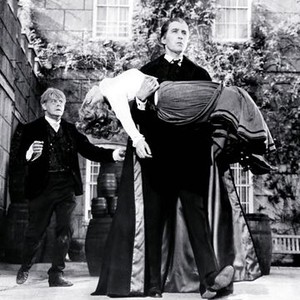
Though I have argued Van Helsing’s true modern utility is in passing on the torch, I should say that I do very much appreciate his functionality in the original book as well as the Edward Van Sloan and Peter Cushing versions of the character. It is just also true that each of those and the following great adaptations of the character leeched away focus and importance from the remainder of the cast in ways that either are now or someday may prove detrimental to the Dracula IP.


Saturday, January 8, 2022

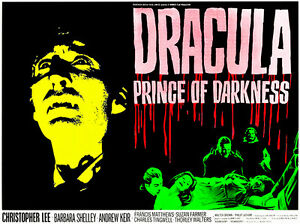
Dracula: Prince of Darkness -- Lee and Shelley shine in Hammer horror


Dracula: Prince of Darkness, 1966, 80 minutes, Hammer, Color. Directed by Terence Fisher. Starring Christopher Lee as Dracula, Barbara Shelley as Helen Kent, Andrew Keir as Father Sandor, Francis Matthews as Charles Kent, Suzan Farmer as Diana Kent, Charles ÿBudÿ Tingwell as Alan Kent, Thorley Waters as Ludwig, Philip Latham as Klove and John Maxim as the coach driver. Schlock-Meter rating: 9 stars out of 10.

This is a magnificent horror film. Two English couples are vacationing in Eastern Europe. They are warned by a priest (Keir, who is great) to stay away from Carlsbad, and above all, an unmarked castle. Of course, they ignore the priest's advice and enter the castle. There, with the help of an evil assistant (Latham), Count Dracula (Lee) is resurrected from dust and the night turns to terror for the couples.

The acting is superb, and director Fisher's economical pacing prevents the film from dragging and maintains suspense. Keir, as Father Sandor, is a great vampire hunter, and carries much of the film with his commanding presence. Barbara Shelley as the ill-fated Helen Kent, undergoes an effective transition within the film. The first half of the film she's a repressed, shrewish early-middle-aged wife. However, after falling prey to Dracula's curse, Shelley becomes a beautiful, passionate woman with full cleavage. She literally looks 15 years younger and deserves credit for pulling off the transformation. Waters as Ludwig, an imbecile who helps Dracula, is a capable Renfield clone, and Latham is sinister and eerie as Dracula's living servant Klove.


The film opens with a final shot from Hammer's classic The Horror of Dracula, where Peter Cushing destroys Lee's Dracula. It was the third Hammer Dracula film, but Lee's second playing the man with a cape. Lee produces scares, despite never uttering a word in the film. He is sinister, yet commanding. Not human, he prefers to communicate with snarls and shrieks of rage or triumph. I won't give away the entire ending, but Dracula meets his fate in a rather unusual manner.

One minor quibble: I wish the Hammer films were shot in black and white rather than color. I understand that it worked well in the 1960s, but today the Hammer films are a bit dated because of the color. They would appear fresher if black and white. The forest settings appear realistic and the castle is suitably creepy. It's a must-rent cult film. Better yet, buy it for your collection.

-- Doug Gibson

Saturday, November 27, 2021

'Revenge of Frankenstein an efficient Hammer chiller


The Revenge of Frankenstein, 1958, color, Hammer, 90 minutes (U.S. version). Directed by Terence Fisher. Starring Peter Cushing as Dr. "Stein" (Frankenstein). Francis Matthews as Dr. Hans Kleve, Eunice Gayson as Margaret Conrad, Michael Gwynn as Karl as a synthetic man and Oscar Quitak as Karl (before). Schlock-meter rating: 9 stars out of 10.

Hammer films can be somewhat of an acquired taste. Often it will seem that the cast of Mansfield Park has suddenly appeared in a conventional horror film. But I confess to being a big fan of this British horror genre. I love the raw horror of Dracula being confronted by English gentlemen warriors. 

The Revenge of Frankenstein, a sequel to the Curse of Frankenstein. is an efficient, compact tale with beautiful sets and scenes and marvelous restrained performances by Cushing as Dr. Frankenstein and Gwynne as the suffering synthetic man. 

The plot: Dr. Frankenstein avoids death in one portion of Eastern Europe and sets up shop far way under the name of Dr. Stein. He quickly becomes the most popular doctor in town, much to the chagrin of his colleagues. A former student (Matthews) recognizes Frankenstein, but rather than turn him in, works with him to create a synthetic man (Gwynne). 

Of course, plans go awry and several murders occur by the monster before Stein's true identity is revealed. There is a twist ending that is a little hard to swallow, but it sets everything up nicely for a sequel. Matthews as Cushing's confederate Dr. Hans Kleve is just window dressing, as is a nurse (Gayson) who mistakenly sets the monster free. 


This is Cushing's show, and he is marvelous. He portrays a truly evil, amoral man, but his charisma, energy and controlled emotional performance makes the audience cheer for him. Fisher's direction is as economical as a Don Siegel film. He keeps the film moving at a fast pace and virtually no scenes are wasted. Even Dr. Frankenstein's motive for creating a synthetic man appears pure at first. It's to place the brain of a dwarf (Quitak) in a "perfect body." 

However, when the brain and body don't mix and the suffering creation (Gwynne) goes mad with pain and fury, the doctor is curiously cold, revealing his icy interior. As mentioned, Gwynne is great in conveying the suffering of the monster and its agony that it cannot control his pain or actions. The Revenge of Frankenstein is a winner, and deserves a spot in any cult film collection.

Notes: British version runs 94 minutes. Film was originally banned in Sweden. Watch a trailer here.

-- Doug Gibson

Sunday, September 23, 2018

George Arliss is Dr. Syn in 1937 adventure film


By Doug Gibson

Recently, Scarlet: The Film Magazine, a twice-yearly publication that I highly recommend (its website is here) published a lengthy, fascinating piece from Frank Dello Stritto, a film scholar best known for his research on Bela Lugosi, on the Dr. Syn literature and movies. Dr. Syn has fallen into a memory hole, such as Svengali or the old play The Bat, but like those two literary offerings, it was extremely popular long ago and has had more than a couple of screen adaptations. (Dr. Syn, by the way, was a series of books by Russell Thorndike that dealt with a country parson in the southeast of England who in reality was a pirate, Captain Clegg, long thought dead.)

In the most popular book, "Dr. Syn: A Tale of Romney Marsh,' the good Dr. Syn is also leading a group of spirits smugglers. A squadron of British government soldiers are sent to investigate. Smuggling liquor, etc., is a serious business. It can lead to a death sentence. With the squadron is a creature called "the mulatto," who long ago had his tongue cut out, was tortured and left to die by Captain Clegg.

There's a lot more to the plot. Dr. Syn is trying to protect a young girl, Imogene, who loves a man above her station in life. He loves her too, so that helps. There's a brutish confederate of Syn's who wants Imogen for himself, and meanwhile, the soldiers, under Captain Collyer, are getting closer to discovering the spirits operation. It's quite an enjoyable cat-and-mouse game between Syn and Collyer.

In the Scarlet piece, Dello Strito reviews in detail three films that are derived from the Syn. novels. The first was made in 1937, "Dr. Syn." (here) It stars George Arliss, an elderly actor who apparently rivaled Lionel Barrymore in fame generations ago. Arliss is, indeed, a great actor. Although he's likely 20 years too old to play Syn/Clegg, he has tremendous screen presence and a voice that is both soothing and commanding. He has the ability to transform himself from a non-threatening, caring country parson to an angry, threatening force with the mere changing of his countenance, a quick movement, or a change in the timbre of his voice. It's quite impressive to witness.

And truthfully, Arliss is the only real reason to see "Dr. Syn." When he's not in it, it's mostly a creaky film with only adequate performances and little sustained drama. There is one great exception. The opening prologue scene, in which the mulatto is dragged to shore, his tongue cut off, and left to die lashed to a tree with a proclamation over his head. The scene is very strong and quite chilling for an era in Great Britain that frowned on horrific images in films.

You can see "Dr. Syn" on YouTube and it can be purchased easily. In fact, all of the Syn films, including the Hammer "Night Creatures," with Peter Cushing, and a Disney version with Patrick McGoohan, are available via YouTube. Watch the Arliss version above.


Monday, August 7, 2017

Hammer's sexy vampire film 'Twins of Evil'


Review by Doug Gibson

"Twins of Evil," Hammer's 1971 tales of Count Karnstein turning one part of a lovely pair of twins into a vampire, is not as impressive as other Carmilla-themed films, such as "Lust For a Vampire," or "The Vampire Lovers," but nevertheless it retains its status as a classic due to star Peter Cushing's strong performance as Gustav Weil, fanatical vampire hunter, so enslaved by the mysogyny of his faith and his fear of the undead that he'll solemnly burn to death any young woman who doesn't act normal. The opening scene, where Weil and his brotherhood abduct and burn a young girl to death, indicts Weil as a dangerous fanatic, a man not safe with young women and their instinctive sexuality.

Appropriately, Weil's eagerness to burn female flesh provides righteous indignation for viewers. Yet Cushing is no Matthew Hopkins, as portrayed by Vincent Price in "Witchfinder General." Weil is no hypocrite nor a luster of his victims, nor is he a man who revels in his evil acts. He's a fervent believer in the Old Testament "thou shall not suffer a witch to live." Cushing's Weill, while acting with a maniacal religious fervor, believes he is freeing his victims, releasing them from vampirism to a life with Christ. Late in the film, when it slowly dawns on Cushing that he may have been too zealous, that some of his victims were indeed innocent, his pain and remorse is evident. As both atonement and revenge, he fails to protect himself as he goes after the evil count.

"Twins of Evil" is a prequel to the Carmilla story and films. The evil Count Karstein (Damien Thomas) is tired of the limits to pleasure and evil he can attain as a mortal. He summons an ancestor vampire, Countess Mircella, (Katya Wyeth) who turns him into a vampire. Eager to satiate his lusts and increase his evil, he sets his sights on two gorgeous twins who have moved to Karnstein from Venice to live with Weil and his wife, Katy, (Kathleen Bryon). The twins are portrayed by Playboy models Mary and Madeleine Collinson. Mary plays Maria Gellhorn and Madeleine is her twin Frieda. Maria is the more timid, pious twin. Frieda is rebellious, furious with her uncle Gustav and eventually is drawn to Count Karstein, who willingly becomes a vampire. There is a subplot where Anton, a liberal teacher at the girls' school, is attracted to Frieda. Anton and Gustav, not surprisingly, clash over the latter's vampire hunting. The film climaxes with a hunt for Frieda and the ensuing possibility that the virtuous Maria may pay for her sins.

As I have mentioned, it's easy to hate the fanatical, misogynous Gustav, but he does have one fact to rest on: there are vampires out there stealing the souls of the innocent. Midway through the film, it's a testament to Cushing's acting skills that the audience starts to root for him as he goes after Frieda and the Count. The Collinswood twins are gorgeous. They are not trained actors, and it shows in their performances. Madeleine does a better job than her sister Mary, but that may be only because she as the meatier role as the bad Frieda. The print I saw has very little nudity. The most explicit scene is where Frieda, pretending to be the innocent Maria, attempts to seduce and bite schoolteacher, Anton.

The Karnstein saga was a Hammer trilogy that, as mentioned, includes "Lust for a Vampire" and "The Vampire Lovers." This is intended to be the first chapter. Watching these movies is a pleasant reminder of how vulnerable and difficult it once was to be a vampire. With the constraints of the cross, daytime, coffins, foes such as Van Helsing and Weil, and native soil, one could understand why successful vampires such as Carmilla and Dracula had pride that overlapped into egotism. They had survived through time. Count Karstein and Frieda are, ultimately, not-too-difficult prey for Weil, Anton and others. It remains a constant annoyance to this reviewer that the above-mentioned disadvantages are not a problem for today's "Calvin Klein" vampires that infect films such as "Twilight," "True Blood" and "Being Human" ...

Friday, March 28, 2014

George Arliss is the best reason to see the creaky 1937 adventure 'Dr. Syn'


By Doug Gibson

Recently, Scarlet: The Film Magazine, a twice-yearly publication that I highly recommend (its website is here) published a lengthy, fascinating piece from Frank Dello Stritto, a film scholar best known for his research on Bela Lugosi, on the Dr. Syn literature and movies. Dr. Syn has fallen into a memory hole, such as Svengali or the old play The Bat, but like those two literary offerings, it was extremely popular long ago and has had more than a couple of screen adaptations. (Dr. Syn, by the way, was a series of books by Russell Thorndike that dealt with a country parson in the southeast of England who in reality was a pirate, Captain Clegg, long thought dead.)

In the most popular book, "Dr. Syn: A Tale of Romney Marsh,' the good Dr. Syn is also leading a group of spirits smugglers. A squadron of British government soldiers are sent to investigate. Smuggling liquor, etc., is a serious business. It can lead to a death sentence. With the squadron is a creature called "the mulatto," who long ago had his tongue cut out, was tortured and left to die by Captain Clegg.

There's a lot more to the plot. Dr. Syn is trying to protect a young girl, Imogene, who loves a man above her station in life. He loves her too, so that helps. There's a brutish confederate of Syn's who wants Imogen for himself, and meanwhile, the soldiers, under Captain Collyer, are getting closer to discovering the spirits operation. It's quite an enjoyable cat-and-mouse game between Syn and Collyer.

In the Scarlet piece, Dello Strito reviews in detail three films that are derived from the Syn. novels. The first was made in 1937, "Dr. Syn." (here) It stars George Arliss, an elderly actor who apparently rivaled Lionel Barrymore in fame generations ago. Arliss is, indeed, a great actor. Although he's likely 20 years too old to play Syn/Clegg, he has tremendous screen presence and a voice that is both soothing and commanding. He has the ability to transform himself from a non-threatening, caring country parson to an angry, threatening force with the mere changing of his countenance, a quick movement, or a change in the timbre of his voice. It's quite impressive to witness.

And truthfully, Arliss is the only real reason to see "Dr. Syn." When he's not in it, it's mostly a creaky film with only adequate performances and little sustained drama. There is one great exception. The opening prologue scene, in which the mulatto is dragged to shore, his tongue cut off, and left to die lashed to a tree with a proclamation over his head. The scene is very strong and quite chilling for an era in Great Britain that frowned on horrific images in films.

You can see "Dr. Syn" on YouTube and it can be purchased easily. In fact, all of the Syn films, including the Hammer "Night Creatures," with Peter Cushing, and a Disney version with Patrick McGoohan, are available via YouTube.


Thursday, August 29, 2013

The excellent Hammer vampire tale, Twins of Evil


By Doug Gibson

"Twins of Evil," Hammer's 1971 tales of Count Karnstein turning one part of a lovely pair of twins into a vampire, is not as impressive as other Carmilla-themed films, such as "Lust For a Vampire," or "The Vampire Lovers," but nevertheless it retains its status as a classic due to star Peter Cushing's strong performance as Gustav Weil, fanatical vampire hunter, so enslaved by the mysogyny of his faith and his fear of the undead that he'll solemnly burn to death any young woman who doesn't act normal. The opening scene, where Weil and his brotherhood abduct and burn a young girl to death, indicts Weil as a dangerous fanatic, a man not safe with young women and their instinctive sexuality.

Appropriately, Weil's eagerness to burn female flesh provides righteous indignation for viewers. Yet Cushing is no Matthew Hopkins, as portrayed by Vincent Price in "Witchfinder General." Weil is no hypocrite nor a luster of his victims, nor is he a man who revels in his evil acts. He's a fervent believer in the Old Testament "thou shall not suffer a witch to live." Cushing's Weill, while acting with a maniacal religious fervor, believes he is freeing his victims, releasing them from vampirism to a life with Christ. Late in the film, when it slowly dawns on Cushing that he may have been too zealous, that some of his victims were indeed innocent, his pain and remorse is evident. As both atonement and revenge, he fails to protect himself as he goes after the evil count.

"Twins of Evil" is a prequel to the Carmilla story and films. The evil Count Karstein (Damien Thomas) is tired of the limits to pleasure and evil he can attain as a mortal. He summons an ancestor vampire, Countess Mircella, (Katya Wyeth) who turns him into a vampire. Eager to satiate his lusts and increase his evil, he sets his sights on two gorgeous twins who have moved to Karnstein from Venice to live with Weil and his wife, Katy, (Kathleen Bryon). The twins are portrayed by Playboy models Mary and Madeleine Collinson. Mary plays Maria Gellhorn and Madeleine is her twin Frieda. Maria is the more timid, pious twin. Frieda is rebellious, furious with her uncle Gustav and eventually is drawn to Count Karstein, who willingly becomes a vampire. There is a subplot where Anton, a liberal teacher at the girls' school, is attracted to Frieda. Anton and Gustav, not surprisingly, clash over the latter's vampire hunting. The film climaxes with a hunt for Frieda and the ensuing possibility that the virtuous Maria may pay for her sins.

As I have mentioned, it's easy to hate the fanatical, misogynous Gustav, but he does have one fact to rest on: there are vampires out there stealing the souls of the innocent. Midway through the film, it's a testament to Cushing's acting skills that the audience starts to root for him as he goes after Frieda and the Count. The Collinswood twins are gorgeous. They are not trained actors, and it shows in their performances. Madeleine does a better job than her sister Mary, but that may be only because she as the meatier role as the bad Frieda. The print I saw has very little nudity. The most explicit scene is where Frieda, pretending to be the innocent Maria, attempts to seduce and bite schoolteacher, Anton.

The Karnstein saga was a Hammer trilogy that, as mentioned, includes "Lust for a Vampire" and "The Vampire Lovers." This is intended to be the first chapter. Watching these movies is a pleasant reminder of how vulnerable and difficult it once was to be a vampire. With the constraints of the cross, daytime, coffins, foes such as Van Helsing and Weil, and native soil, one could understand why successful vampires such as Carmilla and Dracula had pride that overlapped into egotism. They had survived through time. Count Karstein and Frieda are, ultimately, not-too-difficult prey for Weil, Anton and others. It remains a constant annoyance to this reviewer that the above-mentioned disadvantages are not a problem for today's "Calvin Klein" vampires that infect films such as "Twilight," "True Blood" and "Being Human" ...

Friday, June 21, 2013

'Shock Waves' -- Carradine and Cushing contribute to a great movie

By Steve D. Stones

Besides being a genuinely frightening film, Shock Waves manages to have two great horror icons – John Carradine and Peter Cushing. The film follows in a long line of the Nazi zombie sub-genre of films that were shown in the 1970s at drive-ins. I would certainly rank Shock Waves as the best of the Nazi zombie films.

The real star of Shock Waves, in my opinion, is the eerie music score by Richard Einhorn. I can’t imagine viewing this film without the electronic synthesizer music by Einhorn. It holds the entire film together, and seems in sync with the march of the zombies.

Shock Waves manages to be scary without showing one drop of blood or extreme zombie gore. Most zombie films specialize in lots of gore. This film, however, does not, yet it still manages to entertain and horrify the viewer.

The plot follows a group of tourists on a dive boat off the coast of Florida. They collide one night with an old abandoned Nazi ship from World War II. The grumpy old captain, played by John Carradine, dives below the boat the next morning to inspect it for damages. He is later found dead, having drowned.

The tourist group, cook and captain’s first mate abandon the boat and row ashore. After arriving on a deserted island, the group encounters several zombies dressed in Nazi uniforms. They also find an old abandoned hotel inhabited by a Nazi commander, played by Peter Cushing. Cushing has been on the island since the ending of World War II, and informs the group that the German high command had developed a race of invincible soldier who could kill with their bare hands. He calls them the Death Corps, which is the alternative title of the film.

One by one, members of the boating group start to be attacked and murdered by the zombies. Most of them are pulled down into the water and drowned by the zombies. These are some of the most effective and creepy sequences in the film. Close up shots of the zombies submerging from the water makes goose bumps grow on your skin.

The original negative of Shock Waves is thought to be lost, so director Ken Wiederhorn released a print from his personal archive in 2002 to be released on DVD by Blue Underground. A VHS video of the film was also available in the 1980s by Prism Entertainment. The Blue Underground DVD has an interesting audio commentary by director Wiederhorn, make-up designer Alan Ormsby and still photographer-filmmaker Fred Olen Ray. An interview with actor Luke Halpin, who plays Carradine’s second mate in the film, is also on the DVD extras. Watch this film with another Nazi zombie film like Oasis of The Zombies or Zombie Lake. Enjoy!

Sunday, October 28, 2012

Twins of Evil -- Cushing's best vampire adversary performance


By Doug Gibson

"Twins of Evil," Hammer's 1971 tales of Count Karnstein turning one part of a lovely pair of twins into a vampire, is not as impressive as other Carmilla-themed films, such as "Lust For a Vampire," or "The Vampire Lovers," but nevertheless it retains its status as a classic due to star Peter Cushing's strong performance as Gustav Weil, fanatical vampire hunter, so enslaved by the mysogyny of his faith and his fear of the undead that he'll solemnly burn to death any young woman who doesn't act normal. The opening scene, where Weil and his brotherhood abduct and burn a young girl to death, indicts Weil as a dangerous fanatic, a man not safe with young women and their instinctive sexuality.

Appropriately, Weil's eagerness to burn female flesh provides righteous indignation for viewers. Yet Cushing is no Matthew Hopkins, as portrayed by Vincent Price in "Witchfinder General." Weil is no hypocrite nor a luster of his victims, nor is he a man who revels in his evil acts. He's a fervent believer in the Old Testament "thou shall not suffer a witch to live." Cushing's Weill, while acting with a maniacal religious fervor, believes he is freeing his victims, releasing them from vampirism to a life with Christ. Late in the film, when it slowly dawns on Cushing that he may have been too zealous, that some of his victims were indeed innocent, his pain and remorse is evident. As both atonement and revenge, he fails to protect himself as he goes after the evil count.

"Twins of Evil" is a prequel to the Carmilla story and films. The evil Count Karstein (Damien Thomas) is tired of the limits to pleasure and evil he can attain as a mortal. He summons an ancestor vampire, Countess Mircella, (Katya Wyeth) who turns him into a vampire. Eager to satiate his lusts and increase his evil, he sets his sights on two gorgeous twins who have moved to Karnstein from Venice to live with Weil and his wife, Katy, (Kathleen Bryon). The twins are portrayed by Playboy models Mary and Madeleine Collinson. Mary plays Maria Gellhorn and Madeleine is her twin Frieda. Maria is the more timid, pious twin. Frieda is rebellious, furious with her uncle Gustav and eventually is drawn to Count Karstein, who willingly becomes a vampire. There is a subplot where Anton, a liberal teacher at the girls' school, is attracted to Frieda. Anton and Gustav, not surprisingly, clash over the latter's vampire hunting. The film climaxes with a hunt for Frieda and the ensuing possibility that the virtuous Maria may pay for her sins.

As I have mentioned, it's easy to hate the fanatical, misogynous Gustav, but he does have one fact to rest on: there are vampires out there stealing the souls of the innocent. Midway through the film, it's a testament to Cushing's acting skills that the audience starts to root for him as he goes after Frieda and the Count. The Collinswood twins are gorgeous. They are not trained actors, and it shows in their performances. Madeleine does a better job than her sister Mary, but that may be only because she as the meatier role as the bad Frieda. The print I saw has very little nudity. The most explicit scene is where Frieda, pretending to be the innocent Maria, attempts to seduce and bite schoolteacher, Anton.

The Karnstein saga was a Hammer trilogy that, as mentioned, includes "Lust for a Vampire" and "The Vampire Lovers." This is intended to be the first chapter. Watching these movies is a pleasant reminder of how vulnerable and difficult it once was to be a vampire. With the constraints of the cross, daytime, coffins, foes such as Van Helsing and Weil, and native soil, one could understand why successful vampires such as Carmilla and Dracula had pride that overlapped into egotism. They had survived through time. Count Karstein and Frieda are, ultimately, not-too-difficult prey for Weil, Anton and others. It remains a constant annoyance to this reviewer that the above-mentioned disadvantages are not a problem for today's "Calvin Klein" vampires that infect films such as "Twilight," "True Blood" and "Being Human" ...

Tuesday, June 7, 2011

Shock Waves


This is an interesting 1977 low-budget shocker with an interesting premise: Some low-rent diving tourists on a grade z sailboat hit a mysterious relic of a ship near an island. They go ashore and discover a tattered Nazi (Peter Cushing) who gives them the bad news that the crash has awakened an inferi-like (for you Harry Potter fans) of SS soldiers who have been underwater for 30 years. These SS killing machines pursue five desperate prey as they fight for their lives.

Besides Cushing, John Carradine hams it up early as the tourist boat captain, but he's killed off early, as is Cushing. Apparently, both worked four days for $5,000. The entire budget was $200,000. A very young, gorgeous Brooke Adams plays a bikini clad diving tourist. She is the only survivor. I don't feel bad about revealing that plot point since her rescue scene comes early and the rest of the film is flashback. That robs the film of much tension since we already know who will survive and who won't.

The SS inferi are creepy, with faces that are a blend of fishbelly white and green algae. However, their uniforms seem in way too good condition to have been underwater for three decades! The film has moments that scare, but the script and several actors are weak, the script can't decide whether to be a horror film or mystery, and the killing scenes are surprisingly tame. It's worth a rental or a cheap purchase, and it has developed small cult following the past 30-plus years. Read my Plan9Crunch colleague Steve Stones' review here.
-- Doug Gibson

Sunday, May 2, 2010

SHOCK WAVES-The Deep End of Horror

By Steve D. Stones

Besides being a genuinely frightening film, Shock Waves manages to have two great horror icons – John Carradine and Peter Cushing. The film follows in a long line of the Nazi zombie sub-genre of films that were shown in the 1970s at drive-ins. I would certainly rank Shock Waves as the best of the Nazi zombie films.

The real star of Shock Waves, in my opinion, is the eerie music score by Richard Einhorn. I can’t imagine viewing this film without the electronic synthesizer music by Einhorn. It holds the entire film together, and seems in sync with the march of the zombies.

Shock Waves manages to be scary without showing one drop of blood or extreme zombie gore. Most zombie films specialize in lots of gore. This film, however, does not, yet it still manages to entertain and horrify the viewer.

The plot follows a group of tourists on a dive boat off the coast of Florida. They collide one night with an old abandoned Nazi ship from World War II. The grumpy old captain, played by John Carradine, dives below the boat the next morning to inspect it for damages. He is later found dead, having drowned.

The tourist group, cook and captain’s first mate abandon the boat and row ashore. After arriving on a deserted island, the group encounters several zombies dressed in Nazi uniforms. They also find an old abandoned hotel inhabited by a Nazi commander, played by Peter Cushing. Cushing has been on the island since the ending of World War II, and informs the group that the German high command had developed a race of invincible soldier who could kill with their bare hands. He calls them the Death Corps, which is the alternative title of the film.

One by one, members of the boating group start to be attacked and murdered by the zombies. Most of them are pulled down into the water and drowned by the zombies. These are some of the most effective and creepy sequences in the film. Close up shots of the zombies submerging from the water makes goose bumps grow on your skin.

The original negative of Shock Waves is thought to be lost, so director Ken Wiederhorn released a print from his personal archive in 2002 to be released on DVD by Blue Underground. A VHS video of the film was also available in the 1980s by Prism Entertainment. The Blue Underground DVD has an interesting audio commentary by director Wiederhorn, make-up designer Alan Ormsby and still photographer-filmmaker Fred Olen Ray. An interview with actor Luke Halpin, who plays Carradine’s second mate in the film, is also on the DVD extras. Watch this film with another Nazi zombie film like Oasis of The Zombies or Zombie Lake. Enjoy!