Translate

Showing posts with label Godzilla X Kong. Show all posts

Saturday, March 8, 2025

March Godzilla Film Releases Ranked, Jun Fukuda Part Two


By Joe Gibson


Welcome back to Plan9Crunch, where, previously we gave a brief overview of the March Godzilla film releases, especially how they intersect with one man, director Jun Fukuda. Indeed, being directly responsible for the majority of the 70s Godzilla film releases, he incidentally made three March Godzilla films, with Honda’s March Godzilla film Terror of Mechagodzilla directly following up on Fukuda characters and plots and Wingard’s two wacky Godzilla and Kong March movies being spiritual successors to the themes and aesthetics. Consequently, March is the best time to unpack the influence Fukuda had on this franchise for better or for worse, and the best way to do this is to rank these March movies. (Note: I have also previously ranked the Gamera movies and refer to my thoughts there as analogies for some of the relationships of these movies. Reading that post will not be crucial to understanding this one, but I will provide a link.)


Link to Fukuda Overview: https://planninecrunch.blogspot.com/2025/03/introduction-to-jun-fukuda-plan9crunch.html

Link to Gamera Film Ranking: https://planninecrunch.blogspot.com/2024/11/joes-gamera-film-ranking-worst-to-best.html 


6. Godzilla vs Mechagodzilla 1974 directed by Jun Fukuda


In Godzilla vs Mechagodzilla, the core human ensemble uncovers an artifact linked to an Okinawan end times prophecy that teases the return of King Ghidorah but is actually about a robotic version of Godzilla disguised in a skin suit that defeats ankylosaur Anguirus before being stopped by a teamup of Godzilla and new monster related to the artifact King Caesar (an Okinawan Shisa dog lion hybrid that protects a specific royal family).


Having Godzilla vs Mechagodzilla this low is definitely a hot take. This is a favorite of many and, at first, appears to be a very strong film and showcase for Fukuda. As his last Godzilla film, he would know what works and what does not, and, for the most part, it is a great demonstration of his vision. The spy action is at its most thrilling and constant, there is genuinely great chemistry in the cast, and the campy underdog Godzilla is at perhaps his most compelling when Mechagodzilla makes him bleed the most he ever has. There are just a few practicality and plot considerations that make this a broken premise for me.


Least importantly, Godzilla and King Caesar have negligible chemistry and cooperation in the final fight in such a way that I honestly think is a detriment to both of their characters. Similarly, the “I have to rescue my brother” Fukuda staple is at its least compelling and most obligatory here (the lead’s brother gets kidnapped late in the movie and rescued very quickly). Next least important, the idea of a Mechagodzilla is such a bizarre thing for a smart and technologically advanced faction that it does require some suspension of disbelief (even stranger to first put it in a skinsuit that prevents it from using most of its arsenal). More importantly, there is a switcheroo with the artifact that results in the lead risking his life and literally almost dying just to procure a fake statue that he made and no one else knew about. The character survives due to outside intervention by a flamboyant James Bond named Nanbara and otherwise would have died for incredibly stupid reasons. That shatters much of the plot already. Most importantly, by the end of the movie, Godzilla defeats Mechagodzilla by turning himself magnetic, which he is only able to do because lightning happened to strike him earlier and for some reason it did not hurt him like lightning was established to do in previous films. This is a Gamera vs Viras situation where the movie is really good in many categories but has intense low points too. The next one is a bit more like Gamera vs Zigra (completely inept) but far more fun to watch in a way akin to Plan 9 From Outer Space through how bizarre it is.


5. Godzilla vs Megalon directed by Jun Fukuda


In Godzilla vs Megalon, nuclear tests anger underground Seatopians, who wage war on the surface with their monster Megalon but also humanoid agents that abduct Goro Ibuki and his kid brother to reprogram inexplicably size changing robot Jet Jaguar into guiding Megalon. Godzilla’s friend Anguirus falls into a sinkhole, so he makes friends with Jet Jaguar, and the two battle Megalon and a returning Gigan (we’ll get to his film soon enough). Here is a link to some video thoughts on how bizarre this movie is: https://youtu.be/1HMV1hMPgzs?si=eRpmfGNYJ78gxfVJ 


This is a movie that does not make sense scene to scene. Goro Ibuki and the aliens espouse and act on information that the audience learned from different scenes where they were not present, Jet Jaguar somehow changes size and the Seatopians somehow know the Nebulan aliens whose whole gimmick was that they were trying to help destroy humanity to inherit the Earth (they’re cockroaches; it surprisingly makes more sense than this entire film). So why is this film higher than Godzilla vs Mechagodzilla? That is a good question. Really, I could go either way on this, but it comes down to the fact that Godzilla vs Megalon is the culmination of bizarre genius that, like all the best cult films, takes on new meaning from its bizarre tendencies, while Godzilla vs Mechagodzilla is almost a really strong film that just was not able to stick the landing.


4. Godzilla x Kong: The New Empire directed by Adam Wingard


If you need a refresher, Godzilla x Kong is the story of Kong finding others like him in the Hollow Earth, including one evil dictator Skar King, whose control over an army of apes and an ice dragon Shimo prompt a tripartite pact and teamup of Kong (protecting a baby ape named Suko he found), Godzilla and Mothra. Also, the humans have a subplot. You can listen to my review here: https://youtu.be/AI_FMxtTlIk?si=zwQoHpnG9JKFEoEx or read my review by following the links here: https://planninecrunch.blogspot.com/2024/07/part-three-nuanced-deconstruction-of.html 


Having argued GxK to be a four (or five) out of 10 in three Plan9Crunch articles and a video, it might be surprising to have it up this high. I am indeed the kind of person that thinks there are more good Godzilla films than bad, but I am uniquely situated in my poor evaluation of Godzilla vs Mechagodzilla 1974 (and I think of Godzilla vs Megalon as more of a pleasant fever dream than a movie). This is a movie that starts really strong, but the cathartic moments in acts 2 and 3 come at the cost of the storytelling’s internal logic…except for the stuff pertaining to the baby Kong called Suko who has a believable redemption arc in ways that enhance the characterization of villain Skar King and hero Kong. The movie excels in its visual storytelling to an almost unprecedented degree, but, as the creative team themselves articulated, they stopped caring about the logic of certain plot payoffs and worldbuilding details midway through production, consequently an uneven Best Worst Movie.


3. Godzilla vs Gigan directed by Jun Fukuda


In Godzilla vs Gigan, cockroach aliens seek to create “absolute peace” on earth through constructing an amusement park that doubles as an attack command post. When a Scooby Doo team forms to stop them (and Godzilla and his ankylosaur friend Anguirus arrive to investigate), the aliens’ arsenal includes beam launching Godzilla Tower, a new cyborg chicken Gigan and the return of King Ghidorah (last seen when he died in a movie canonically set after this one but which came out four years earlier).


If you are keeping track, Godzilla vs Gigan was the last chance for Fukuda to top this list, and it honestly could have if not for a couple of features. While a simple and streamlined film grounded in the perspective of a Scooby Doo team consisting of a young manga artist (with the manga aesthetic extending to speech bubbles from Godzilla and Anguirus), his karate girlfriend, a corncob wielding hippie (I will not elaborate, just watch the movie) and a young girl trying to find her missing brother, it falters in its Nebulan alien villains who constantly reveal aspects of their plan very stupidly (this is still vastly better than the contrivances in Godzilla vs Megalon). Also, despite great characterization for Godzilla and Anguirus in codifying their friendship dynamic, the technical problems with the film are quite distracting, and those include the stock footage changing a fight scene from night to day to night again, the Ghidorah suit/puppet being unreasonably stiff, and the Godzilla suit literally falling apart on screen (with the Anguirus water suit not looking much better). This is the kind of movie that I think would work perfectly for me to review, so just let us know if you want a more in depth review of Godzilla vs Gigan.


2. Godzilla vs Kong directed by Adam Wingard


In Godzilla vs Kong, the two title monsters fight but also shady humans manipulate events on each monster’s subplot to arrange events to line up to their endgame. You can read my review of it here: https://planninecrunch.blogspot.com/2023/06/review-godzilla-versus-kong-2021-remake.html 


I recommend you read my review of Godzilla vs Kong so that you can be on the same page about my thoughts on the movie. To make things short, the movie makes a lot more sense viewed through the implications of its visual language (i.e. Nathan Lind is the Carl Denham of the movie because he is introduced through Denham University and thus his climactic moment with Kong is the point of his story, which wraps back around to his previous moments of characterization in pinch points which do actually correspond to him gradually learning to take responsibility for and protect Kong. Also, Mechagodzilla’s eye must be the consciousness of Ghidorah deliberately luring Godzilla around because we see it glow whenever he attacks, and dialogue from Walter and Ren confirms they are not the ones responsible). 


However, this type of reading must note the constant coincidences that Lind and Walter Simmons both rely on, and, while I have argued that to be an intentional juxtaposition of how much each character is willing to sacrifice for the others around them once they are out of luck, I understand if you are reticent to adopt that. Moments like Godzilla digging through the Earth into the Hollow Earth cave that just so happened to be underneath where the action was happening are unfortunate and should count against the film. I will defend the team Godzilla trio, but I do have to admit that the trio at the heart of Godzilla vs Gigan’s Scooby Doo team (the protagonist, corncob hippie and young girl looking for her brother) carries out a more intelligent and better defined investigation. It was very close between Godzilla vs Gigan and Godzilla vs Kong for me. If Godzilla vs Gigan’s technical side were stronger, it might have gotten this spot, but really the only bad effects moment in GvK is Kong’s shoulder clipping through a building, which affects nothing.


1. Terror of Mechagodzilla directed by Ishiro Honda


Terror of Mechagodzilla is the direct sequel to Godzilla vs Mechagodzilla where the Simeon aliens and Mechagodzilla return but also with the help of a disgraced scientist, his cyborg daughter and new monster Titanosaurus. This is also notable for a moment where Godzilla’s suit catches on fire while he is running through Mechagodzilla’s full barrage, not a scripted moment but one that suit actor Toru Kawai salvaged for an iconic moment.


While I understand the optics of putting the one Ishiro Honda film above all the Fukuda and Wingard films on this list might be a little poor (and is the main reason I would like to conclude this trilogy of Fukuda posts with a YouTube ranking of just his movies), Terror of Mechagodzilla is just that good. One of the main criticisms of movies like Godzilla 2014 or Invasion of Astro Monster/Godzilla vs Monster Zero 1965 is the small amount of Godzilla screentime. While Monster Zero absolutely lacks Godzilla screentime (though the romance is strong enough to completely offset that), G14 actually has more than its sequel Godzilla King of the Monsters, despite the latter movie feeling like Godzilla is more relevant. This is all to say that the posturing and buildup of Godzilla in any movie is equally as important as his presence, and no film handles the expectation of Godzilla showing up better than Terror of Mechagodzilla.


After Godzilla vs Mechagodzilla, we know the stakes of the Simeons returning, and, with not only a stronger Mechagodzilla but also the new freakishly strong monster Titanosaurus, those stakes are even higher. Godzilla has long been the superhero by this point, and so the audience knows that once Godzilla shows up, everything will be alright. But then Godzilla does not show up, and our human hero is not a Fukuda esque Scooby Doo hero but frankly a pathetic man that gets overpowered and outmaneuvered by the villains, so we need a hero that we are not getting, which makes us more invested. The hero and love interest are in a tragic romance that is debatably better than that in Monster Zero but at the very least serves to humanize these stakes and show the cost of defeating the aliens. Indeed, in a sense, the success of Terror of Mechagodzilla is in reversing and deconstructing a Fukuda movie. It is not doing so maliciously because it still does keep Godzilla as this symbol of children’s hope when it would have been so easy to retcon him back to what Honda would have wanted, but Terror of Mechagodzilla respects the corners of the franchise that birthed it all while responding to the 70s Godzilla formula. (It is interesting that Mechagodzilla itself is also in three of these movies, one from each director.)


Conclusion


In conclusion, the Godzilla films of March are very diverse all while being encompassed in a type of vision of Godzilla. Here at Plan9Crunch we appreciate all the different types of Godzilla there can be and likely will focus some attention over to Godzilla Minus One once we have the space and time to carry out such a review. But in the meantime make sure to catch our upcoming video where we rank all of Jun Fukuda’s Godzilla films together with no Wingard or Honda films to get in the way. Stay tuned for that.

Monday, March 3, 2025

Introduction to Jun Fukuda, Plan9Crunch March Godzilla Film Ranking Part One


By Joe Gibson


Here at Plan9Crunch, it is now freshly March, which means the Godzilla film release date anniversaries have begun anew for 2025. Notably, Godzilla vs Gigan (12th), Godzilla vs Megalon (17th), Godzilla vs Mechagodzilla (21st), Terror of Mechagodzilla (15th), Godzilla vs Kong (31st) and Godzilla x Kong (29th) all released in March. We have reviewed some of these already more in depth, but, because this month is kind of defined by a campier vision of Godzilla, that is what we will be examining here. (On our YouTube channel Plan9Crunch, the month of October 2024 was our Bela Lugosi Month, and, we will not be carrying out an undertaking of that level, but you can expect another blog post and possibly a video centered on these films.) The majority of these March releases were by prolific Godzilla director Jun Fukuda.


The simplest way I can describe Jun Fukuda as opposed to Ishiro Honda in terms of their Godzilla movies to a cult movie fan in 21st century America is the difference between Adam Wingard’s Godzilla x Kong and Takashi Yamazaki’s Godzilla Minus One. As you likely know, Ishiro Honda was the primary director of the Showa Godzilla Series (1954 to 1975). He thus worked on the first two films, Godzilla 1954 and Godzilla Raids Again 1955, both of which explore heavy themes of the effects of war and self-sacrifice, with the former being focused on destruction and the latter more about optimism and reconstruction (though far more sloppy due to rushed production). If you mash those two movies together, you will get something like Godzilla Minus One (though that is not to say that Yamazaki does not bring his own ideas to the table. As we will explain in any hypothetical Minus One review, Yamazaki has his own creative DNA). 


Honda was more at ease making dark intellectual Godzilla movies. Though he would make whatever the studio demanded of him, the reason we think of a delineation between 60s (Honda dominated) and 70s (Fukuda dominated) Godzilla films is because for whatever reason, Honda’s films are technically more dramatic (tragic romances come to mind and Honda’s own thoughts that each monster is a tragedy, just too big to live peacefully in the world). Jun Fukuda, for whatever reason, made the noticeably wackier films (with occasional gore comparable to the concurrent Gamera films but rarely any child characters). The bright colors and fantastical elements of Godzilla x Kong and spy-esque storming the castle Apex subplot in Godzilla vs Kong from Adam Wingard seem directly inspired by Fukuda’s films. At its most malleable, Godzilla can be both wacky and grounded at the same time in the same year, because specific men direct specific Godzillas in specific ways. 


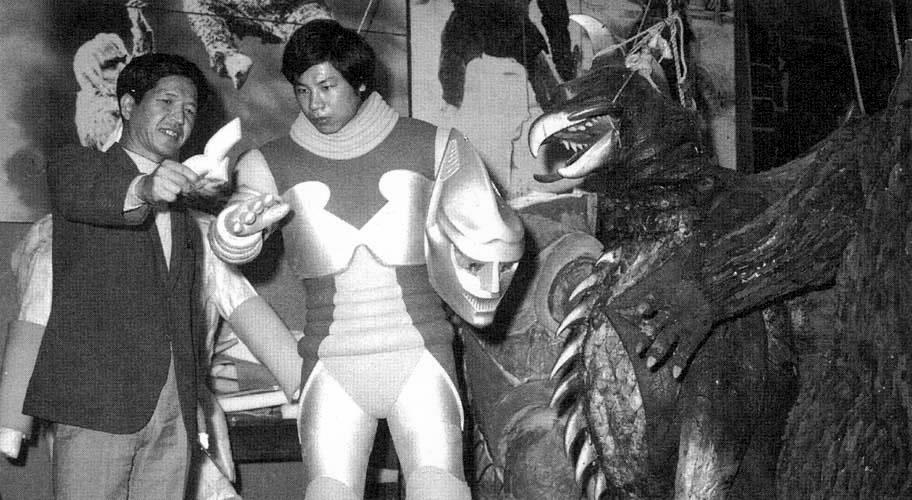
Jun Fukuda directed Ebirah, Horror of the Deep 1966, Son of Godzilla 1967, Godzilla vs Gigan 1972, Godzilla vs Megalon 1973, and Godzilla vs Mechagodzilla 1974, and, similarly to most cult directors we discuss here, these films are so oddly specific that they necessitate either a bizarre imagination, bizarre life or both. 


In Ebirah…, originally a Kong movie though that is a longer story than we have time for, the terrorist organization The Red Bamboo kidnap Infant Islanders and anyone else that stumbles upon them, prompting one man to move heaven and earth (steal a boat with two beach bums and a career thief played by Akira Takarada) to find his brother, crossing paths with monsters Godzilla, Mothra, crustacean Ebirah and inexplicably a Giant Condor. Son of Godzilla follows Goro Maki interrupting a weather experiment on Sollgel island that happens to contain mutated praying mantises, a completely naturally occurring giant spider, a baby Godzilla, an island girl taking care of the baby Godzilla, and Godzilla himself, who steps up to raise the child. Godzilla vs Gigan features a Scooby Doo cast of characters uncovering an alien conspiracy in an amusement park, involving giant cybernetic chicken monster Gigan and the return of King Ghidorah, while Godzilla vs Megalon is about destructive underground Seatopians, who somehow have the Nebulan aliens and their monster Gigan from the previous movie on speed dial. Finally, Godzilla vs Mechagodzilla establishes a new alien race of ape men and their robot Mechagodzilla, who impersonates Godzilla, all while ape men and James Bond spy characters follow the unwitting human ensemble. Those are the shortest possible descriptions I can give that still communicate the dreamy childlike quality Fukuda’s films entail, and that inspired me to look more into the man. But…


It has been very difficult for me to find properly cited information on Jun Fukuda, which is a shame, because, due to the quirks of this director in his “canonical 5” films, he is inevitably a very interesting figure in the cult genre space. The common motif of trying to save a missing or kidnapped sibling gets explored in all of these films except Son of Godzilla, which is an oddly specific trope to use that often unless something happened to his sibling (again, I was not able to find anything). 


More specifically, he directed in the crime genre, including spy films, which explains the James Bond type characters in Godzilla vs Mechagodzilla, as well as the plot beats of infiltrating the base of a hostile (terrorist or alien) enemy faction present in not only that film but also Ebirah, Horror of the Deep (also called Godzilla vs The Sea Monster) and Godzilla vs Gigan (and even the constant chase scenes in Godzilla vs Megalon).


It is actually surreal to me that Honda made King Kong Escapes and Jun Fukuda made Son of Godzilla, because, with the espionage elements to King Kong Escapes and more serious (by comparison) monster characterization in Son of Godzilla, it strikes me as following the tropes of the opposite guy. A better point of comparison though in gauging their different creative visions is Godzilla vs Mechagodzilla by Fukuda compared to its direct sequel Terror of Mechagodzilla by Honda. Both feature apelike aliens creating a giant robot while Interpol chases them down, but Fukuda’s film has a large and fun cast carrying out a spy thriller while Honda’s has realistically impotent leads struggling along a tragic romance.


Jun Fukuda was cynical about his own work on Godzilla as well as the franchise in total. In Fukuda’s view, Godzilla should have been all social commentary with no goofy personalities for the monsters. Far from internally inconsistent though, he hated his own Godzilla films and did not watch them even though he put his all into making them. Fukuda, despite this disdain for his own projects, was a competent and responsible director, employing both series mainstay Akira Ifukube and Masaru Sato for the music (based on his statements, it was to avoid a kind of moody monotony that would not have fit with his tone). Godzilla vs Gigan, due to studio interference, did feature some Ifukube tracks that do seem out of place within the tone, so he was onto something (the Ifukube tracks are great; they just don’t always fit the tone of every movie, and that is okay).


If any of this sounds interesting to you, you can watch all of Fukuda’s Godzilla films, Ebirah Horror of the Deep, Son of Godzilla, Godzilla vs Gigan, Godzilla vs Megalon, and Godzilla vs Mechagodzilla on Max, which houses the 60s and 70s Godzilla movies (including Honda’s Terror of Mechagodzilla, also celebrating its anniversary this month). Wingard’s Godzilla and Kong films (Gvk and GxK) with their late March anniversaries are streaming on Netflix, and GxK is also on Max. 


Though my thoughts here may reflect my opinion that Honda made more great Godzilla films, I feel that way because he had the opportunity to make more Godzilla films in general. Fukuda’s films are very unique and fluctuate wildly in quality, including some that were better than what Honda put out around that time. The simplest way to articulate that will be to rank these March releases, since that includes three of Fukuda’s best known films alongside Wingard’s films and Terror of Mechagodzilla. Below are some relevant videos and blog posts about these movies (especially Godzilla vs Megalon, Godzilla vs Kong and Godzilla x Kong), so you can look forward to using our established thoughts on Wingard’s films to contextualize the quality of some of Fukuda’s on this blog very soon. Because that might not be enough to really share our thoughts on this man and his Godzilla films, we may also have a video ranking just Fukuda’s films on our YouTube channel Plan9Crunch. Stay tuned and check us out wherever and however you’d like.


https://youtu.be/1HMV1hMPgzs?si=RSh91EaxZgxufHFe

https://youtu.be/pSosxtg51oM?si=yXrhVo8nOGFlo1jC

https://planninecrunch.blogspot.com/2023/06/review-godzilla-versus-kong-2021-remake.html

https://youtu.be/AI_FMxtTlIk?si=u6m7KvQj1eVYYFqR


https://planninecrunch.blogspot.com/2024/06/a-nuanced-deconstruction-of-godzilla-x.html

https://planninecrunch.blogspot.com/2024/06/part-two-nuanced-deconstruction-of.html

https://planninecrunch.blogspot.com/2024/07/part-three-nuanced-deconstruction-of.html


Thursday, November 7, 2024

Part Three - Godzilla vs Mechagodzilla II: Strengths and Stupidities


By Joe Gibson


Hi, and welcome back to Plan9Crunch’s review of Godzilla vs Mechagodzilla II. In the two previous parts (linked below), we went over an introduction of the context for Godzilla vs Mechagodzilla II and a plot runthrough. As we are now discussing and concluding on thematic content, this will make a lot more sense if you have read the previous parts.


https://planninecrunch.blogspot.com/2024/11/godzilla-vs-mechagodzilla-ii-strengths.html

https://planninecrunch.blogspot.com/2024/11/part-two-godzilla-vs-mechagodzilla-ii.html


Chapter Three - Moral Befuddlement or The Trolley Problem of Young Baby Godzilla


Based on what we just went over, I would summarize the themes of this film as intentionally confused and confusing. Our desired allegiances are unclear, because Mechagodzilla is an iconic villain now reimagined as an extension of human desires, while Godzilla (hero or villain that he can be) is finally acting on the sympathetic moments trickled within this Heisei chronology in order to step up as a slightly redeemed version of this character. Throughout all this is sparse commentary on life vs artificial life and responsibility vs self-interest.


Kazuma Aoki is an annoying, irresponsible, flaky, obsessed and pushy idiot with a stupid flying pteranodon robot, and half of the reviews I see of this movie focus on that, but the other half detail how he is a singularly relatable and funny character. Imagine for a moment growing up in the 70s, 80s and pre Jurassic Park 90s being a fan of dinosaurs or Godzilla, when the collective conscious reaction is to dismiss those things as dumb. Aoki’s passions lead him to court an attractive successful woman and be the hero without having to directly kill a monster but fighting both. Many viewers see themselves in him, and I think that is intentional when you contrast him with the well-intentioned but misguided officers and contractors of G Force, best exemplified through returning star Miki Saegusa choosing this film to realize killing Godzilla is not a simple noble thought anymore or the stern G Force commander softening up to Aoki.


One of the biggest complaints against this film is that its Mechagodzilla lacks a personality compared to the 70s one, and that is, I think, a benefit to the writing rather than a drawback. Mechagodzilla, in this film, is not a character, but a very glorified tank, with the thicker monochromatic design with sleek curves and bleeding-edge technology supporting this interpretation. Godzilla is the personality to focus on in this story; Mechagodzilla’s role in this story is to oppose and contrast Godzilla. 


In the hand-drawn poster for this film, Mechagodzilla is this hulking ugly menace over Godzilla and Rodan having inflicted gory injuries on them, and no such scene occurs, but it is representative of the power and morality shift that happens in act 3. A very popular format for stories involves the hero winning against the rival, losing against the villain and then getting the rival’s help to beat the villain, but this is also a very flexible format. Rocky III has Rocky beating Apollo as the intro backstory to spend more time on why Rocky then loses to Clubber Lang and how Apollo will help Rocky win, while Black Panther plays it more straight structurally (T’Challa beats M’Baku, Killmonger beats T’Challa, M’Baku supports T’Challa’s attack on Killmonger). This films holds off on Godzilla being the hero or even losing until the third act, giving Rodan more agency as a character than M’Baku and Apollo due to less screen time with Godzilla, and also assigning this persistent growing sense of dread that we do not know where to assign until Super Mechagodzilla starts acting like Showa Mechagodzilla.


Now this also raises a question. Who should we blame for Super Mechagodzilla’s ferocity: the mech itself, the pilots therein or the people giving the orders, and doesn’t that sound awfully familiar for a series originally existing to comment on destructive actions taken to end a war? Most other reviews I have seen for this film would have me believing I am seeing subtext that is not there, but again I return to what I said earlier. Where is the analysis that officially ruled this out and decided it was just a dumb light show? I am by no means the final say here, and, if I am wrong, please show me when and where and by how much. This movie still holds up as a mostly consistent popcorn flick, and Mechagodzilla’s design and purpose can be praised for subjective preference if not thematic content, but I genuinely see an attempt at brilliance here.


Heisei Rodan is my favorite incarnation of the character, despite the fact that he started the annoying trend of Rodan being smaller and weaker than Godzilla, so there is some degree of bias I hold in approaching this part of the analysis. I appreciate the design erring closer to Pteranodon than a winged guy in suit design, and I really like the three horns (as opposed to the usual two) and face equal parts ferocious and sympathetic depending on the scene. Because Mechagodzilla is a more long range then melee opponent, Rodan’s fight with Godzilla gives us the best tooth and claw action in the film, so I also appreciate that. But I also find his use very interesting in a way that ties into the tag team match of Godzilla x Kong: Godzilla and Kong vs a shadow Godzilla and a shadow Kong, Godzilla and Rodan vs Mechagodzilla and Mecha-Rodan??


Garuda is very interesting in this movie, designed mostly to mirror Rodan, as, in the climax, Garuda must join with Mechagodzilla to win, and Rodan must join with Godzilla to win. Aoki is no longer piloting Garuda at that point, just as Rodan sacrifices his mind and body to fuse with Godzilla. Aoki’s agency is often overlooked in this story, but he decided to name his anti-Godzilla weapon after a bird god that is the enemy to all snakes in folklore, and Garuda as a modern cryptid is speculated to be surviving pteranodon same as Mothman, Thunderbird, Batsquatch, etc, so Rodan = Garuda is by no means an absurd talking point. (Also, while Aoki only interacts with Rodan adversarially, he really does not get the option to study Rodan, and arguably does a lot of what he does because of that, as I have already detailed.)  I am not claiming it the richest subtextual layer in any film, but if we are giving this film the fairest shake possible, it deserves mention especially in view of what the film builds to with these ideas. If you doubt that Garuda joining with Mechagodzilla is an intentional thematic element to these characters, then you should recall that Garuda is the mount to Vishnu, inherently tied to a more powerful character.


Before I summarize my thoughts on Godzilla in this movie, I think it is wise to briefly compare this film to 1967’s Son of Godzilla, since many of the same building blocks exist in both. Godzilla’s redemption arc started sooner than Son of Godzilla in the Showa series, but there was a sort of unease in the mid Showa entries toward Godzilla (the humans willingly dump him and Rodan on Planet X in Godzilla vs Monster Zero, and he is merely the better of two bad options in Ebirah: Horror of the Deep) leading to a film where Godzilla is just on an island fighting villainous mutation monsters to protect a child, and the next time we see him after this, everybody knows he’s a hero. But, in terms of aforementioned similarities, Goro Maki (the Akira Kubo version in SoG, not the Ken Tanaka version from Godzilla 1984) is a campy and comedic journalist who pushes himself into dangerous situations out of genuine interest that annoys the people around him and wins over the girl, while Aoki is all of those things except a journalist. Rodan also slots into the Kamacuras role as a lesser kaiju killed by Godzilla at the beginning that also gets to the fight the villain monster at the end, be it spider Kumonga or Mechagodzilla (let it be said that Kamacuras’ puppetry is far more impressive). And then, of course, the female lead that serves as partial caretaker to the Baby Godzilla is present in both scripts. I have a lot of respect for Son of Godzilla, and it is interesting that Godzilla vs Mechagodzilla II seems to share that sentiment.


Godzilla, in this film, resembles the Baby, but it is not as exaggerated as in Son of Godzilla (which redesigned Godzilla to look closer to Minya). It is in subtle things, like the positioning of a couple teeth when they both tip their head up to roar the same way, and the more hunched-over stature of Godzilla that organically follows from his previous film to film Heisei redesigns but also matches this new version of Baby Godzilla. Aside from that, I just like the design, and I cannot point to a specific reason that I like this design so much for him except that he gets just shy of 27 minutes of screentime, much of it in daylight, to show off this look. 


The most major difference from previous Heisei Godzilla incarnations is that Godzilla’s beam is a lot more precise. Rather than aiming it down to bring it up to an opponent, he will often just land it the first time (except for a few blasts in the climax). I think, based on all of this other befuddlement, that this was done to challenge the audience as much as possible. Godzilla is more dangerous than he has ever been, but we understand him now for the first time. He has the capacity to instantaneously target anything he wants, so when he chooses not to, it also makes you wonder why he did not, and if he ever were to stop, could we leave well enough alone? The viewer ends up stuck between two options rather than being able to fully align with either side.


So, what is the answer then: do we dirty our hands to defeat a sympathetic but rampaging creature with G-Force, merely evacuate and hope to rebuild if Godzilla actually does stop attacking this time or throw our hands up and chase down our own special interests in the face of nuclear destruction as Kazuma Aoki does? That drama is where Godzilla, the nuclear allegory, and Heisei Godzilla, the antihero, operate best. Godzilla 1984 also had some version of this where, in the climax, two of our leads are carrying out the plan to dump him in a volcano, the other two are just trying to survive Godzilla’s nuclear destruction, and a homeless man enters the story to decadently feast in the chaos as a third option for what the natural human response to this crisis would be. (The homeless man is actually a decently complex character; I just don’t have time to get into it here.)


Chapter Four - Conclusion or How I learned to stop worrying and rate this film an 8 out of 10


I began this review touching upon the history of Godzilla’s reinterpretations and what they mean if you keep one eye trained on the original film. Godzilla is an icon because of nuance and meaning where it was unexpected. Why would anyone expect Godzilla, the villain of the piece, to be a sympathetic character that is as unfairly destroyed as its victims? Why should anyone predict that Dr. Serizawa, the one man with the knowledge to defeat Godzilla, is so deeply disturbed about his miracle weapon he would rather kill himself than see it used again?


I am of the opinion, open to hearing contrary ones, that Mechagodzilla should not be some cheap sadistic alien knockoff no matter how cool the 1974 Mechagodzilla was but instead a deeper thematic foil to Godzilla. Ghidorah can have that role, but the more important facet of their rivalry is that they are always on opposing sides no matter what those sides are (Ghidorah as a good guy worked well in Godzilla, Mothra, King Ghidorah Giant Monsters All Out Attack 2001, as did the aforementioned heroic Mecha King Ghidorah). But Mechagodzilla is literally a human or at least humanoid-created Godzilla, and that carries so much subtextual complexity based on what Godzilla is and how humans created him, just less intentionally so. When Godzilla crosses between anti villain and anti hero, it is so much more interesting to have this shadow version do the same. 


In Godzilla Against Mechagodzilla, Mechagodzilla is reimagined to be the original Godzilla unnaturally preserved into a new heroic being, and the normally destructive new Godzilla gets a somewhat sympathetic streak due to the implicit familiarity of his opponent, but, whereas, Kiryu (Mechagodzilla) resists his dark impulses, Godzilla proper falls into them, needing to be stopped. 


In Godzilla: City On The Edge of Battle (though I despise that film and trilogy), Godzilla and Mechagodzilla both took over their sections of Earth through mirrored means, and choosing either one over the other turns out to be just as self destructive in different ways for lead Haruo Sakaki. 


And finally in Godzilla vs Kong, Godzilla seemed to be slipping into a villainous role due to decreased proximity to the goals of humans, while Mechagodzilla emerges as a villain due to increased proximity to humans but really takes off for a rampage when it divorces itself from human input and the remaining humans default to Godzilla’s side, vindicating him.


But none of this matters. We are talking about Godzilla vs Mechagodzilla II and how it executes the complicated morality of rooting against the monster we built to defeat the monster we accidentally started rooting for. I have argued for its merits, and I spent less time arguing the flaws because I see less evidence of them.


It is important that you understand this: when it comes to ranking and reviewing media, there are three distinct areas you are sure to eventually disagree with me. 1. The flaws and merits we notice. 2. Our evaluation of the severity of those flaws and merits. 3. How we compare these flaws and merits to those found in other relevant media. 


Perhaps you are the kind of person that cannot fathom wasting money on one giant mech when you could make a Super X armada and will not listen to any symbolic justifications (Mechagodzilla as shadow Godzilla) or vague implicit ones (the head and shock anchors of Mecha Ghidorah are the stimulus tech, how in the hell would they put those into Super Xs?). In that case, the poorly fleshed out but ever more reasonable single gauntlet of Project Powerhouse in Godzilla x Kong will make more sense to you. 


As I see it, Godzilla vs Mechagodzilla II is a darn fine entry encompassing some of the best ideas of the Heisei series. Execution is where it falls a little short. While I primarily argue in favor of Aoki as the lead, more relevance given to his pteranodon enthusiasm could only have improved the script. If Godzilla Minus One is a 10 out of 10 for instance, how much lower would it be if Shikishima’s kamikaze background did not play into the final confrontation? Omae, as a very unscientific and quickly irrelevant Professor, also is a bit of a dud in this series of great scientist characters (Doctors Yamane, Serizawa, Mafune, and Shirigami to name a few).


We here at Plan9Crunch have a blog, podcast, YouTube channel, and TikTok page. If you enjoyed this analysis, feel free to check out any of our other content, and Happy (now belated) Godzilla Day.


Links to Godzilla focused Plan9Crunch articles and videos below:


https://planninecrunch.blogspot.com/2023/06/review-godzilla-versus-kong-2021-remake.html

https://planninecrunch.blogspot.com/2014/03/godzilla-is-on-this-authors-mind.html

https://planninecrunch.blogspot.com/2021/12/godzilla-2000-review.html

https://planninecrunch.blogspot.com/2010/02/godzilla-versus-monster-zero.html

https://planninecrunch.blogspot.com/2024/06/a-nuanced-deconstruction-of-godzilla-x.html

https://planninecrunch.blogspot.com/2024/06/part-two-nuanced-deconstruction-of.html

https://planninecrunch.blogspot.com/2024/07/part-three-nuanced-deconstruction-of.html


https://youtu.be/yV6i2xX0pf4?si=Nu9RWsP5k6CbT68H

https://youtu.be/1HMV1hMPgzs?si=1Iip-2qfPxDe6G_B

https://youtu.be/pSosxtg51oM?si=CoDIwTko6C5N5DCY


https://youtu.be/AI_FMxtTlIk?si=EA51lODIQp2LUVr1