Translate

Showing posts with label Kiss Tomorrow Goodbye: The Barbara Payton Story. Show all posts

Wednesday, June 18, 2014

Questions for Barbara Payton's biographer John O'Dowd -- Part 2


By Doug Gibson

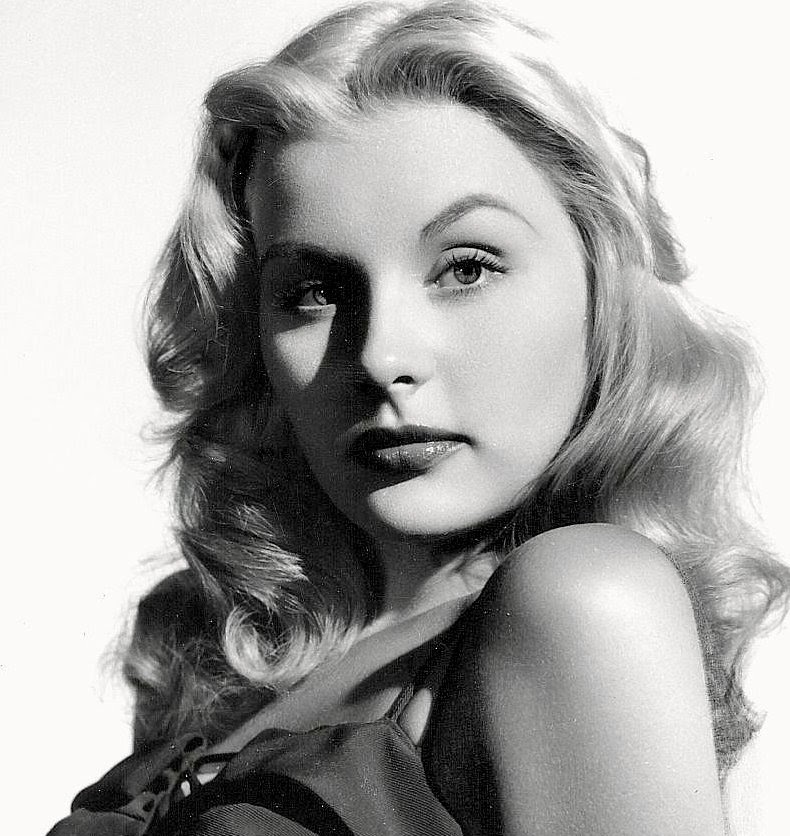
Recently, at Plan9Crunch, I reviewed John O'Dowd's biography of the ill-fated 1950s movie star Barbara Payton (seen above), "Kiss Tomorrow Goodbye: The Barbara Payton Story." (Buy) You can read the Plan9Crunch review here. (I also wrote a review for my newspaper, The Standard-Examiner, here.)

The reviews were popular reads, and O'Dowd was kind enough to agree to my request for an interview. I asked him 10 questions. The first five questions and answers were published several days ago (here). Here is part of the interview, which focuses more on Payton's slide into a hellish existence as an addict and a street prostitute in the 1960s. So read on, and enjoy! Photo above is courtesy of O'Dowd.
---

6)         Plan9CrunchWhy didn't anyone from "the business," former lovers, co-stars, friends, lawyer, anyone, help this woman, particularly when that tragic "autobiography" came out in 1963?

O'Dowd: By that time in her life, Barbara had become extremely resistant to accepting anyone’s help. I am convinced of that. Barbara was immersed in her feelings of self-loathing, and sick as it sounds, I believe she felt a sort of comfort in that lonely and isolated place. She was stranded on a very stony path that she may not have even wanted to leave, as it justified her feelings of wanting to punish herself. Barbara’s life by then was all about hating and hurting herself, and trying to destroy her health, and I know that sounds sad and gruesome, but I believe it to be true. Barbara’s sister-in-law and best friend, Jan Redfield, told me that she tried to help her many times, as did a few other friends and family members, but most times, Barbara would not allow it. She would often disappear, or, she would listen to these people, and agree to seek help, and then would never follow through afterward. Dealing with her back then grew to be maddening to Jan and a few other people who really loved her, and many of them told me they finally had to walk away to keep their own minds and lives intact. No matter how you look at it, Barbara’s life is a huge tragedy…not only to her, but also to all the people who loved her and couldn’t save her.


7)       7)        Plan9CrunchWhy didn't her family, so close to her in Southern California, never make an effort to have her committed?
           
          O'Dowd: Barbara’s younger brother, Frank Redfield, has admitted to me that he was locked in his own prodigious battle with alcohol abuse at the time, and that as a result, he wasn’t able to fully comprehend how badly Barbara needed help. Their parents, Lee and Mabel Redfield, were also severe alcoholics, and maybe they too, couldn’t see past themselves to help Barbara. I know that might sound incredible to many people who read this, but one needs to understand that this was a family who were deep in the throes of a longstanding addiction to alcohol. Frank’s wife, Jan, was not an alcoholic, but being the only sober person in the family, she had her hands full trying to raise her and Frank’s four children, as well as being a caretaker to her husband and her in-laws. That woman deserves a medal for all she endured back then. I know that if things had been different, Jan would have moved heaven and earth to help Barbara…she loved her very much (and she still does).

8)         Plan9CrunchWas the faux morality, predatory media coverage that Payton received the norm back then, or was she a particular target of venom?

O'Dowd: All you have to do is read some of the front covers of the tabloid rags of the 1950s (like Confidential and Exposed) and you’ll see that society’s faux morality, and its insatiable need to punish those celebrities who misbehaved in their private lives, was a very potent force in those days. Barbara was absolutely a kind of fall guy back then for the tabloids and media’s wrath; mainly, because she wasn’t a big star…and mostly, because she was a woman who thumbed her nose at convention by openly leading a very unconventional lifestyle. Barbara became totally expendable to WB Studios when she refused to rein in her personal life, and in time, the media followed suit and crucified Barbara in print. With the kind of life that Barbara insisted on leading back then, she never stood a chance.

9)              Plan9Crunch: Describe the key events in her life that turned Payton into a person who hated her self so much that she slid downhill so fast and for so long?

O'Dowd: The single most damaging event in Barbara’s life, in my opinion, was her losing custody of her son (and especially, of her being kept away from him afterward, and never seeing him again). I think that compounded Barbara’s guilt and self-loathing one hundred fold, and caused her to disconnect even further from any desire she may have had to lead a respectable life. Earlier, the brawl between Franchot Tone and Tom Neal had laid a huge guilt trip on Barbara. (Immediately after it happened, Barbara cut her hair very short, and I have long felt that she did that as a response to what had happened. I think she was trying, in a way, to make herself less desirable to men, as she knew that was the source of most of the problems in her life, and especially, the cause of the brawl.) Barbara’s completely thoughtless shuffling of Tone’s and Neal’s affections, and the anguish it had caused them, probably also added to her feelings of self-hatred. I have come to believe that Barbara was not just troubled, but severely emotionally ill. And I think her emotional illness only grew stronger as the years (and her other personal problems) progressed.
           
10)       Plan9CrunchWhat are some unanswered questions about her life?


O'Dowd: One of the things I often wonder about is what happened to Barbara in her “lost years” (from about 1959, right up to her death in 1967). We know about some of those events, but I have long had the feeling that the rest of what she experienced is probably far worse than anyone of us could ever imagine. What we do know is pretty horrific, but I think the rest of her story might actually be even uglier and sadder. (And if that’s the case, maybe it’s best that we don’t know.) I would also like to know why she felt she was so unworthy of help. How could she feel that bad about who she was? I am also confused about her father’s treatment of Barbara. Was it due to something inappropriate happening between them, or was it that he was sickened by (and ashamed of) her rampant promiscuity? I’m pretty sure we will never know the answer to that question. Barbara and her father know, however, and I believe that wherever their souls exist now, that healing between them has taken place. That’s one of the things I really believe. Another is that Barbara is now in a place of perfect peace and comfort and enlightenment. Her life was not for naught. After all she went through, here on earth (most of which, she put herself through), Barbara has experienced healing, and I know her story has the ability to heal others, too. At least, that’s what I’ve always hoped for (and will continue to hope for).     

Thanks so much, John O'Dowd, for this really interesting interview about the life of Barbara Payton, who remains iconic despite the tragedy of her life.                

Sunday, June 15, 2014

Questions for Barbara Payton's biographer John O'Dowd -- Part 1


By Doug Gibson

Recently, at Plan9Crunch, I reviewed John O'Dowd's biography of the ill-fated 1950s movie star Barbara Payton (seen above), "Kiss Tomorrow Goodbye: The Barbara Payton Story." (Buy) You can read the Plan9Crunch review here. (I also wrote a review for my newspaper, The Standard-Examiner, here.)

The reviews were popular reads, and O'Dowd was kind enough to agree to my request for an interview. I asked him 10 questions. The first five questions and answers are below. In several days Plan9Crunch will publish the second half of the interview. So read on, and enjoy! Photo above is courtesy of O'Dowd.

---

PLAN9CRUNCH: What do you think Payton's finest film performance was?
         
          O'DOWD: I think Barbara’s finest acting performance was in her first WB film, “Kiss Tomorrow Goodbye”. Although she had only been acting professionally for two years, Barbara’s performance in the film was strong and nuanced and totally believable. Barbara worked extremely well with the film’s director, Gordon Douglas, and if she had been able to rein in her personal life during that time and had concentrated more on her acting career, she might have stayed at WB for several years (instead of for just a little over a year), and worked with Douglas a lot more times. Gordon Douglas really pulled a great performance out of her in KTG…more so, I think, than he was able to do in Barbara’s film with Gregory Peck, “Only The Valiant”. (Barbara seemed really distracted in that picture, but then again, her role in the film was quite small and I’m not sure how much more she could have done with what little she had been given to do in it.) But, getting back to “Kiss Tomorrow Goodbye”, Barbara very believably took her character through several personality changes, according to the requirements of the script. Her character of Holiday Carleton started out as a very naïve and impressionable young woman, but as she fell deeper under the spell of the character that James Cagney played in the film (that of a sadistic and unregenerate criminal named Ralph Cotter), she gradually transitioned into a greedy and reckless person who came to completely overlook Cotter’s evil ways. Several people who knew Barbara have told me that her real-life personality was closest to the character she played in KTG. Barbara, it seems, was naïve, trusting, thrill-seeking and reckless throughout her entire life. She was inherently goodhearted (like Holiday), but also tragically drawn to the very unhealthy influences which usually surrounded her. Knowing this, it has made watching her work in KTG even more fascinating.

PLAN9CRUNCH: What contemporary star is most like Payton as an actress?

O'DOWD: I’m not sure I can answer that question as I am nearly completely unfamiliar with the work (and even the names) of most contemporary film actresses (especially those in their 20s and 30s). There is a film project on Barbara’s life (titled “Bad Blonde”) that is currently in development in Los Angeles, and I am trusting that the two producers who are shepherding the project (Ira Besserman and Barrett Stuart) know a lot more about today’s actresses than I do, because unfortunately, I know very little. I am not a big fan of the majority of today’s films, as they seem to concentrate more on special effects than on character-driven storylines (which is what I prefer). I am far more interested in, and have more knowledge of, the films and stars of Classic Hollywood.

 PLAN9CRUNCHWhat was Payton's top feature as an actress or as someone that would appeal to fans and be a star?
          
          O'DOWDI believe Barbara was a very effective performer who was usually responsive and totally present if she felt connected to the material she had been given. In “Kiss Tomorrow Goodbye” and “Murder is My Beat”, for instance, which are two of her better films, there is an innate honesty and intelligence in both Barbara’s line readings and in her facial expressions, that is very apparent. I really wish she had been given the opportunity to work a lot more and to build up her film credits with good projects, because I think she would have surprised a lot of people with the strength and scope of her acting talent.

PLAN9CRUNCH: Who was the greatest positive influence in Payton's life?
            
          O'DOWD: Unequivocally, that person would have to be her son, John Lee Payton. Every person I interviewed for the book who knew Barbara personally, stressed to me how much she loved and cherished him. That she would end up losing custody of him (and, in fact, would never see him again for the rest of her life) makes that, of course, a huge irony. While she truly loved John Lee, and never treated him with anything other than the utmost warmth and kindness, Barbara was severely devoid of proper parenting skills. Amazingly, when John Lee was just a child, Barbara not only regularly exposed him to her horrendous lifestyle of indiscriminate sex, drug use and excessive drinking, she also often left him alone for long periods of time. No matter how you look at it, that is unforgivably irresponsible of her. However, over time, I have come to understand just how skewed Barbara’s thinking was, and while she doesn’t get a pass from me for this really terrible behavior, I do “get” it (and her), and John Lee does, too. In fact, he has long ago forgiven her for all the mistakes she made in raising him, and has remained totally loyal and loving to his mother’s memory. I believe that says a lot for the man himself, as well as the positive and lasting influences of the people who greatly picked up the slack for Barbara, and helped raise John Lee (mainly, Jan Redfield and her family, and John Payton, Sr.)

PLAN9CRUNCH: Who was the great love in her life and why?

O'DOWD: Again, I would have to say, her son, John Lee. But then again, that was a pure,            maternal love. In terms of whom she loved romantically, I have to believe the greatest love          of her life was Tom Neal. Then again, that may have also been the sickest and unhealthiest          relationship she was ever involved in, as well. The dynamic there was very strong, very              passionate, and more than a bit sado-masochistic. Barbara was drawn to Neal’s intrinsic “bad boy” qualities, and I think she wanted him to stay that way every bit as much as she wanted to tame him. They were drawn to each other in an almost feral way, and the fever-pitch of their relationship, I think, doomed it from the start. They shared a big and messy life together and they had to burn out in a big and messy way, which they did. I don’t believe, though, that Barbara ever got over Tom Neal. I am not certain if he ever got over her, but I tend to think their breaking up added a few layers to the damage in Barbara that was already there. Her behavior certainly grew more unhealthy after Neal exited her life…that’s for sure.

Surf back to Plan9Crunch soon, readers, to read part 2 of our interview with Barbara Payton biographer, John O'Dowd. One question focuses on why no one was able to successfully help Payton as she spiraled into a living hell.

Sunday, May 25, 2014

Bio of ill-fated starlet Barbara Payton is a horrifying Hollywood tale


Review by Doug Gibson

"Kiss Tomorrow Goodbye: The Barbara Payton Story," 2007, Bear Manor Media, by John O'Dowd, is a horrifying story. It's very tough to read, particularly if one knows the very public fate of the very beautiful early 1950s Warner Brothers starlet Payton, who rivaled Marilyn Monroe in beauty. The actress, who was once earning several thousand a week, was a mere 10 years later a street hooker in the shabby sections of Hollywood, perpetually intoxicated, frequently stoned, and dispensing blow jobs to derelicts for $5. Payton didn't live long; her heart and liver gave out at 39.

As mentioned, it's a horrifying tale; author O'Dowd has chronicled Payton's life in an interesting manner. He deserves credit for compiling a tremendous amount of information. Payton's remaining family members, an ex-husband, a former booze and sleeping partner, film executives, former lovers, people who only knew the ill-fated actress a few minutes, all are eager to share their memories. (This can be carried to a fault. Did we really have to hear from the scuzzy former low-low level employee of the old Hollywood Citizen-News newspaper who recalled paying Payton $5 for oral sex outside the newspaper office?)

Nevertheless, O'Dowd is fond of his subject, even as the disgusting details of Payton's unfortunate life are splayed on the pages. The author sees Payton's life as a morality tale, in which the subject is both perpetrator and victim of her own downfall. Barbara Redfield, born in Minnesota and later raised in Odessa, Texas, was blessed with tremendous beauty. Her life seemed to be moving toward success. She married John Payton, an World War II pilot and a war hero. The attractive couple moved to Los Angeles County, and had a baby.

Not long after, Barbara, who had began modeling, left her husband, taking the baby with her. She began a successful quest in films, earning roles in western shorts and bit parts in larger studios. She was a contract actress. She also began what would be a long series of affairs with stars. Her first major lover was Bob Hope, who set her up in an apartment with an allowance.

Eventually, Payton's beauty and acting talent led to a major role with James Cagney in the film "Kiss Tomorrow Goodbye." That led to the Warner Brothers deal and wealth for the 20-something Payton. That should have meant a long, prosperous acting career. Instead, it was the peak of Payton's career. While she would become far better known over the next several years, it was bad publicity, that gradually destroyed her career. Warner Brothers loaned her out for minor films, including the cult film, Bride of the Gorilla.

As described in her biography, Payton liked to party, and she liked to hook up. She might have survived the occasional bad publicity if she had not met Tom Neal, a low-budget acting "hunk" with a bad temper. Payton initiated an affair with Neal when she was engaged to actor Franchet Tone. One day Neal savagely beat Tone, who was hospitalized. Despite the aggression, Payton continued her affair with Neal, even after she married Tone. After the divorce, Payton and Neal tried to be a team, making a few films and doing plays, but they eventually broke up. (Neal would eventually go to prison for the manslaughter death of his later wife.) (The much-older Tone would spend the rest of his life not thinking about Payton. He would die 17 months after Payton.)

That was it for Payton's career. She stayed beautiful for the rest of the 50s, living a bohemian life, marrying a much younger man and living in poverty in Mexico. In LA, she was Vampira's neighbor in a roach-infested apartment complex. She may have plied a trade as a high-priced hooker in Chicago. She lost custody of her young son, John Lee Payton, and only saw him once more.

In the late 1950s, Payton, slimmed down, made a final attempt to get back in pictures. It was a failure. The only star who tried to help her was Raymond Burr, whom she had helped get a role in "Bride of the Gorilla." Burr wanted her to guest on his TV show "Perry Mason," but the producers said no. At that point, Barbara Payton slipped out of respectable society and drowned in the filth of the streets.

Except for a pathetic, exploitative, mostly fictional "autobiography" "I Am Not Ashamed," published in 1963, and the recollections of bit movies actor John Rayborn, who lived with Payton in the mid-1960s, there's not much insight into what caused Payton to choose a life of degradation. She had family in southern California, her parents and her brother's family as well. She would make occasional stops at her parents' home in San Diego but return to the streets, where she could earn money for booze by prostituting.

Her body finally gave out, and she was discovered early one morning -- next to a drug store/market -- unconscious. After several weeks in a hospital, she was sent to her parents' home. Not long afterwards, she died there in May 1967.

Payton likely suffered mental illness, exacerbated by her alcoholism and periodic drug abuse. Much of her intellect -- she had been an intelligent woman, a talented actress, and a superb cook -- was likely destroyed by her addictions. O'Dowd theorizes that Payton hated herself and believed that her fall was appropriate, that she had lived a wicked life.

The seeds of Payton's problems may have began early. Her family was dysfunctional. Both her parents, Lee and Mabel Redfield, were severe alcoholics. Barbara suffered from a lack of warmth from her father, who acted as if she disgusted him. Some wonder if Barbara was abused by her father. There's strong evidence that Barbara was statutorily raped by a middle-aged man in her teens. She also eloped as a teenager with a friend. It was quickly annulled. It's possible that these crises engendered deep self-loathing in the actress.

If Payton had been born a generation or two later, she might have received help. Instead, the gossip magazines, forerunner of cheap reality shows, exploited her. The top gossip columnists, Louella Parsons, Hedda Hopper and others, savaged Payton with glee, often ignoring the male celebrities she coupled with. The 1960s was not a great time for celebrities' redemption.

O'Dowd's biography is superb, even if I criticize him for throwing in even the kitchen sinks of the sordid details. According to the Bear Manor Media website (here) it will become a movie. If it has a capable director and a strong star, it could be Oscar material. The story is that compelling, and tragic.

What happened to Payton happens all the time to hundreds of thousands of others every decade. But her story is unique. She was a Hollywood star, and she was so very beautiful. Find one of her films of the early 1950s and you'll see. Cult film fans might enjoy Bride of the Gorilla. The hell this beauty descended into was far worse than a quick overdose death or even a violent end. Those would have been merciful compared to the last several years of her life.