Translate

Sunday, October 30, 2022

Doctor X a wonderful choice for a gripping, grisly pre-code scare film


---

Review by Doug Gibson


As it's almost Halloween, I want to pitch a pre-code thriller that's perfect for the spooky season, or any time of the year when you want some great vintage horror.


"Doctor X," 1932, Warner Brothers/First National, is a gem. One of famed Hungarian director Michael Curtiz' three '30s horror films -- the others are "Mystery of the Wax Museum" and "The Walking Dead" -- it's a two-tone color tale of grisly sadistic murders roiling a city. Through investigation, police believe that the murders are occuring at or near the home of a prominent scientist, played by Lionel Atwill. His daughter is played by Fay Wray.


Lee Tracy steals the movie playing a part he excelled at, that of a rogue reporter with questionable scruples but an overdose of aw-shucks charm that allows him to survive uncomfortable situations. Eager to scoop his press competitors on the murders, he hucksters and charms into Atwill's home. After meeting his daughter played by Wray, he has two motivations: getting the story on the murders, and romancing the beautiful daughter.


This is a very pre-code film. It's grisly at times. And the climac is gripping as Atwill gathers all the researchers in his home/laboratory to try to discover the mass murderer. I'll only tease readers with the phrase ... "SYNTHETIC FLESH."


Despite the gory goings-ons, there is also a maid, played by Leila Bennett, a popular comic actress of the time, who provides some light moments which do not clash with the serious story. I highly recommend readers purchase a beautiful recent Blu-Ray release. The film was a big hit in Depression-era 1932, grossing almost $600,000 against a budget of $224,000. That is akin to spending roughly $4.852 million today and getting a return of just under $13 million.


--


Below are newspaper clippings from the time "Doctor X" was released. They were gathered by my friend David Grudt, a film and media history buff who lives in Long Beach, Calif. I particularly appreciate David unearthing the film review below from the Hollywood Citizen News, Thursday, June 2, 1932. Then there's a blurb from Monday, Oct. 24, 1932, where "Doctor X" played on a double bill at the Fox La Brea Theater with the Marx Brothers comedy "Horsefeathers"! Finally, there is an ad for "Doctor X" from Saturday, Sept. 24, 1932, at two theaters. The 25-cent price is about $5.50 today.


---


Saturday, October 22, 2022

Talking with the authors of the new TCM Underground must-see films book


At Plan9Crunch blog we have already reviewed the book, “TCM Underground: 50 Must-See Films From the World of Classic Cult and Late-night Cinema,” by TCMUnderground's Millie de Chirico (directly above) and film critic and writer Quatoyiah Murry (above middle). We love this book and TCM Underground, which is can’t miss TV for us. Take your pick: it’s either the Bible or Apocrypha of cult film fans. The book, from runningpress.com and TCM's website, is for sale Oct. 25, 2022. It's a best-seller on Amazon right now! Don’t miss it. I was thrilled to chat with both authors. – Doug Gibson


----


What goes into selecting a film to air on TCM Underground? Is there a group that meets to discuss films, or is it a one-person decision. Do you work with filmmakers, or DVD/Blu-ray releasing companies; do they pitch films? Or do you respond to viewers requests on website or Twitter ... I ask that because for years I emailed TCM urging Andy Milligan to be represented.


MDC: It’s basically a one-person decision (me) but I’m very open to suggestions from my co-workers and viewers. Sometimes filmmakers or rights holders will pitch to me but I also come to them a lot, asking what they have available. I wish I had more time to respond to viewer requests online but I do make note of them.

QM: That’s all Millie working her magic behind the scenes! But she’s a great collaborator who takes suggestions from various places. It’s usually a question of rights and advanced planning, but I’ve been lucky to have had a say in a few titles that have aired on TCM Underground. It’s a truly sensational feeling when that happens!


I like how TCM Underground, and its book, have discovered genres worthy of cults and TCM Underground inclusion beyond the traditional. These include anime, shorts, Asian horror films, and so-called "blaxploitation." Are there other film genres out there, under-appreciated, that merit notice?


MDC: There’s a section in the book called Domestic Disturbances that focuses on movies that are basically melodramas with a twist, or dark dramas about families or relationships. I’m responsible for a lot of those entries in that section because I’m a big fan of melodrama. I feel that’s a genre that definitely deserves cult status. And it seems like they haven’t been included much in the canon over the years because cult has mostly been defined by genre movies like horror or action. Melodrama was also maligned for many years where they were thought of as just “women’s pictures” or soap operas, which maybe turned people off. But some of them can be really weird! SECRET CEREMONY (see a scene from that film below) is such a wild movie but was never presented to me as a cult film when I was growing up. Or maybe, these films get categorized as horror or slasher because of the violence (like BUTCHER, BAKER, NIGHTMARE MAKER) but at its core are basically melodramas.


QM: It was super cool getting to write about folk horror, which is a genre that I’m really intrigued by and love that it’s getting more attention from filmmakers and within film studies. Outside of the book though, my favorite underappreciated microgenre is probably techno-horror, where the film’s horror is technology related or connected, so films like Pulse (2001), Unfriended (2014), Host (2020), and VHS (2012). Generally found-footage horror has a special place in my heart too. I'd love to deep dive into it and write more about the genre someday.


I enjoyed the book thoroughly. I'll read it often. But there are so many films within TCM Underground. Could we see future editions of this book with other films discussed and analyzed?


 MDC: I hope so!

 QM: That would be a dream come true! Tell your friends and anyone who will listen to buy this one and maybe our publishers will want a part two.


Just like Danny Peary did two generations ago, you included films I learned about for the first time, or hadn't realized were unique -- Secret Ceremony, Remember My Name, are examples -- and had grown fan bases. "Little Darlings" is another example. I saw it 40-plus years ago, thought it was interesting, and hadn't thought of it since. Reading the chapter, I wonder if it could be made today. What are some films released in the past generation that you think may become TCM Underground films?


MDC: I think there are obviously now people who grew up in the 1990’s and 2000’s who are starting to look back into their youth and pluck out some of the weird movies they remember. If I had to make some guesses, I think something like HACKERS or THE NET would maybe become cult films -- you gotta love anything that tried to capitalize on those early internet days. There was also a lot of teen horror that came out in the late 90’s and early 2000’s that was trying to cash in on the SCREAM franchise but maybe weren’t as successful, which conceptually, is a good place for a movie to become a cult film. There was also a huge independent film scene in those days and there’s a lot of movies from it that are now out of print. It would be interesting to see what gets taken out of obscurity and restored. I can’t wait to see what’s next.  

QM: Ooh that’s a great question. I think a lot of A24 films could be contenders considering how the company has amassed a cult fan base and each film creates its own pocket of fanatics. Personally, I could see a huge variety of films in the near future being options on TCM Underground. My wish list would be Palindromes (2004), Kids (1995), Gummo (1997), some Gregg Araki, a James Spader pic like Bad Influence (1990) or Jack’s Back (1988), Tales from the Hood (1995), and Belly (1998). A few of us behind the scenes at TCM love campy erotic thrillers, which is also another favorite microgenre of mine, so The Crush (1993) or Body of Evidence (1993) would be so wild to see on TCM Underground!


We appreciate both of you for taking the time to chat with Plan9Crunch blog and hope the book is a big success.  On the evening of the book's publication, Oct. 25, 2022, TCM will air several of the films mentioned in the book, including "Secret Ceremony," "Mac and Me," "Emma Mae," and "Hausa."


Sunday, October 9, 2022

Bela Lugosi turns 140 years old, our reviews of 'Dracula'

On October 20, 2022, the great Bela Lugosi celebrates his 140th birthday. Bela is a founding participant of Plan9Crunch blog, of course. He is forever the iconic Count Dracula. Read these two Plan9Crunch reviews of the 1931 Universal "Dracula" by your bloggers, myself, Doug Gibson, and Steve D. Stones. 


On with the reviews, and don't forget to watch "Dracula" this month!


Dracula, 1931, 75 minutes, Universal, black and white. Directed by Tod Browning. Starring Bela Lugosi as Count Dracula, Helen Chandler as Mina Seward, Dwight Frye as Renfield, David Manners as Jonathan Harker and Edward Van Sloan as Dr. Van Helsing. Schlock-Meter rating: 9 and 1/2 stars out of 10.

By DOUG GIBSON

As a film, Dracula too often appears like a stage play. Most of the actors aren't particularly strong, and the climax of the film (Dracula's death) foolishly takes place off screen. Nevertheless, thanks to Bela Lugosi -- and to a lesser extent Dwight Frye -- the film remains a classic, a true cult film that brings viewers back for repeat visits to Transylvania, foggy London and Carfax Abbey, the lair of the Count. The plot: Dracula prepares for a move to London. He drives Renfield (a Londoner in Transylvania to help him move), mad, and then arrives in London. He soon ingratiates himself with the Seward family, and lusts for the blood of two ladies. He is foiled when a family friend (Van Sloan) suspects he is a vampire, and pretty Mina Seward (Chandler) is saved when Dracula is destroyed.

It's safe to say that first half hour of this film is perfect, in atmosphere, Lugosi's Dracula, etc. After it moves to Carfax Abbey and the Seward sanitarium, it dips a tad in quality, but returns to perfection when Lugosi is in a scene.

Lugosi's performance is magnificent. He is truly the Count, with his urbane charm, his sly humor (I never drink ... wine.), his greedy eyes sighting blood, his melodramatic answers to questions, and his artful fencing with vampire hunter Van Helsing. However, few critics capture another personality of Lugosi's Dracula: His desire to die. In a poignant scene at an opera, Dracula expounds in melodramatic fashion the peace of death. One realizes in that scene the Count wants to die, that he's as much a prisoner of fate as his victims. He simply lacks the will power to end his long existence.

Frye's Renfield is marvelous. He succeeds in convincing viewers that the secret of the Count -- discovered first hand -- is so horrible that it would drive anyone insane. His mad chuckles when discovered on a deserted ship are chilling. Frye also conveys terror and adoration when pleading with Dracula late in the film. Manners and Chandler are barely adequate as two lovers threatened by Lugosi's Dracula, but Van Sloan is pretty strong as Van Helsing. He manages a sense of humor despite the seriousness of his task, and reminds me of Donald Pleasance's slightly crazy psychiatrist who pursued monster Michael Meyers in Halloween.

Lugosi's eyes, used to seduce victims, are hypnotic. He knew this character -- he'd played Dracula on Broadway. Director Browning conveys atmosphere early in the film with scenes of a coach in the wilds of Transylvania and a ship tossed at sea. Unfortunately, the last two-thirds of the film is often too static and talky. But every scene with Lugosi is a pleasure, and he turns an ordinary film into a classic of the genre.

--


By STEVE D. STONES

Listen to them. Children of the night. What music they make.” — Dracula

Creeky castle doors, thick spider webs, a fog-infested cemetery and coffins filled with earth from Transylvania. These items stir up images of one of the greatest screen villains in cinema history — Dracula. The vampire Dracula has appeared on screen and stage more than any other fictional character in the history of literature and films.

What would Halloween be like without Dracula and vampires? We have Irish writer Bram Stoker to thank for the count's immortal image. Considering the fact that Stoker's novel was thought by many critics to be nothing but a trashy, late-19th century exploitation pot boiler that many readers didn't want to know about, it's amazing to think just how long the story and image of Dracula have lasted.

From the moment Hungarian actor Bela Lugosi emerges from his coffin in Tod Browning's 1931 “Dracula,” Hollywood history was made. Lugosi's old-world mannerisms, receding hairline, thick Hungarian accent and flowing cape set the standard for every vampire movie that followed. No actor who portrayed Dracula after Lugosi has been able to top him.

Seeing Dracula on the big screen is a sight you will never forget. Close-up shots of Lugosi's face show just how menacing the immortal count can be. His image both attracts and repels the viewer. He is the ultimate boogeyman who will stop at nothing to leave behind a trail of victims. When Dracula says “there are far worse things awaiting man than death,” we believe him.


Dracula's contribution to popular culture cannot be overestimated. He appears on everything from T-shirts to coffee mugs, action figures, comic books, Halloween masks, postcards and lunch boxes.

After the success of “Dracula,” Lugosi became a victim of the fickle Hollywood industry who typecast and pigeonholed him as an actor who could only play Dracula. He appeared as a vampire a total of three times, which included the hugely successful  “Abbott and Costello Meet Frankenstein” in 1948. Lugosi was never able to obtain the riches of his rival, Boris Karloff. Today, sales of merchandise associated with Lugosi surpass those of Karloff’s.

May the story and image of Dracula live on for centuries.

Originally published in the Standard-Examiner newspaper.

Tuesday, September 20, 2022

Kidnapped Coed a quirky, interesting grindhouse film from 1970s


Review by Steve D. Stones


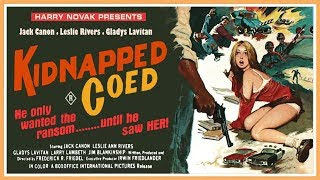
Severin Films has released an excellent double feature Blu-ray of director Fredrick R. Friedel's two only known features – Axe (1975) and Kidnapped Coed (1976). Both films star Jack Canon, an underrated actor who should have gone on to make a bigger name for himself and to star in bigger-budget films. Canon is excellent in both films and steals every scene he is in. Kidnapped Coed was also known as Date With A Kidnapper and The Kidnap Lover. Here is the trailer under the title Kidnap Lover. 


In Kidnapped Coed, Canon plays a down-on-his-luck gangster named Eddie Mattlock, who kidnaps a young red-haired beauty named Sandra Morely (Leslie Ann Rivers). Sandra leaves her boarding house one morning and is held up at gunpoint in the back of her car by Eddie. He threatens to kill Sandra if she makes any attempt to escape. Eddie calls Sandra's father and demands ransom money for the safe return of his daughter. Although some reviews of this film suggest that Eddie is indebted to the mob as his motivation for kidnapping Sandra, the film never really makes this clear as his motivation.


Eddie takes Sandra to a sleazy, run-down hotel. The hotel clerk, played by Larry Lambeth, appears to be a questionable character who does not take his job very seriously as he lounges behind the counter all day drinking vodka and smoking as he tells his guests that today is his last day on the job. The camera pans to a closet behind the clerk's desk with a body laying next to cases of bottled soda. The viewer immediately suspects that there is something very wrong going on in the hotel and the clerk has something to do with it.


After entering their hotel room, Sandra locks herself in the bathroom and pretends to be taking a shower. She writes a desperate message in lipstick on a roll of toilet paper and throws it out the window. The hotel room is up three stories high, so she cannot jump out of the window. A young boy in the street down below kicks the toilet paper roll into the gutter.


While brushing her hair on the hotel room bed, a knock is heard at the door. Sandra opens the door to see the hotel clerk and another man pointing a gun at her and Eddie. She thinks the two men are detectives who have come to rescue her. The clerk and the other man tie up Eddie to a chair as the clerk rapes Sandra on the bed in one of the most brutal sequences of the film. Director Friedel builds great tension in this scene by showing close ups of Eddie's frustrated and bloody face as he watches the rape take place on the bed. The sex act is never shown on screen, yet the viewer fills in the blanks by imagining this sadistic act as Eddie's face helps to reveal the uneasiness of it.


Eddie is able to untie himself from the chair and shoot both men in the genitals with a gun. The couple flee the room and drive to an abandoned farm shack. Here Eddie paces back and forth in the shack, smoking a cigarette, as he decides what his next move is. The two flee the shack when they hear a car approaching. They encounter a group of women bird watchers. One of the bird watchers is the store clerk in Axe, who has a bottle of ketchup shot above her head.


Director Friedel throws in little bits of weirdness in the film that give it some strange yet surreal characteristics. A close up of an old man rocking in a chair with a cane out in the street after Eddie shoots the clerk and his sidekick in the genitals is one example. A strange red-colored telephone booth not connected to any wiring appears out in the middle of barren fields in a number of scenes where Eddie goes to make a phone call.  He uses the telephone booth to call his mother, who hangs up on him. A child sitting on a curb flips Eddie the middle finger as he drives by shortly after kidnapping Sandra.


Perhaps the most effective aspect of both Axe and Kidnapped Coed is that both films have very sparse use of dialogue. Both films rely more on visual aspects to tell a story and to keep the narrative moving forward. The viewer is not always given any explanation for why many of the characters behave the way that they do, or why they are in the situation that they are in. This ambiguity keeps the viewer wondering and questioning the motivations of many of the characters in both films.


Also of interest are the many extras contained on the Severin Blu-ray. One of the extras interviews the cast, crew and director Friedel. In one interview, Friedel expresses his frustrations with producer/distributor Harry Novak, who completely took over the rights and distribution of both films, leaving Friedel with practically nothing in return. Friedel spent time at Novak's run-down office, combing through piles of old dusty boxes to look for the negative of Axe and Kidnapped Coed. He was able to locate both films for this official Severin release. The extras are every bit as interesting and exciting as watching both films. Happy viewing.


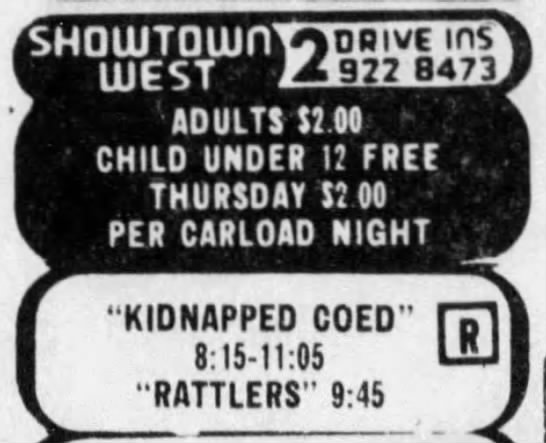
(Kidnapped Coed was defintely marketed as grindhouse/drive-in fare. Here are a few more newspaper ads. We'd like to thank David Grudt, of Long Beach, Calif., for his help in locating some of these vintage ads.)